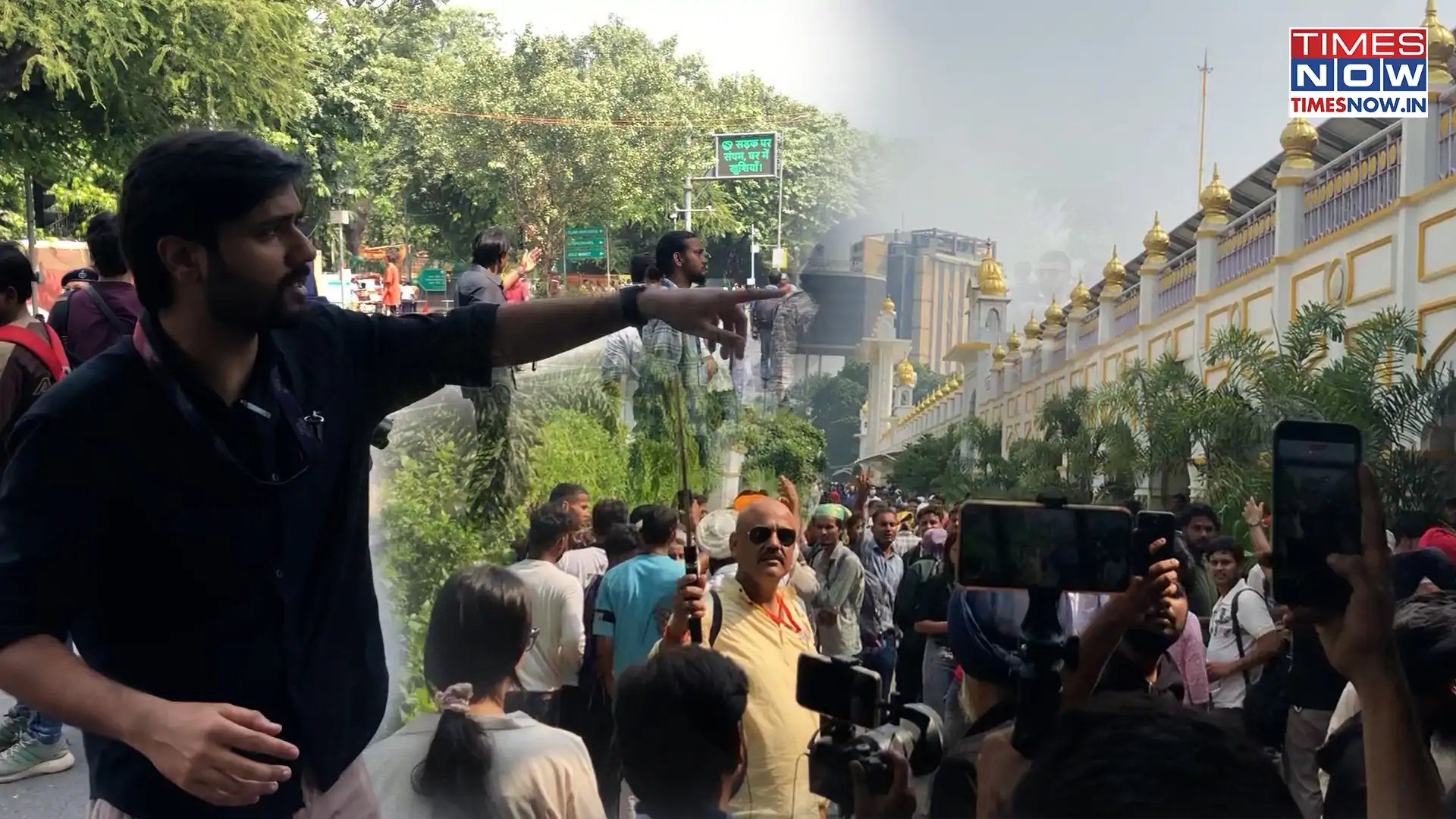
The heavy security clampdown began Friday night after the Centre announced restrictions on the march demanding the resignation of the Chief Justice in the SIR controversy. More than 30,000 police and paramilitary personnel were deployed across the capital, 45 metro stations were shut, and 30 road stretches were blocked.
Bangla Sahib, a revered Sikh shrine, became a temporary sanctuary for a stream of young demonstrators. A representative of the gurdwara said, "We will not let police enter the premises. Protesters are unarmed and not raising slogans inside the premises, so we are not against them." Police lathis hovered outside the courtyard as officers tried to keep the crowd in check.
Meanwhile, a group of more than 20 protestors hid overnight in a Connaught Place washroom, hoping to slip past the 30,000‑man cordon. Police discovered them during a morning sweep, forced open the door, and bundled them into detention vehicles. Even after being detained, some shouted slogans and rattled the vehicle interiors, their voices echoing through the netted windows.
Witnesses outside the gurdwara described the scene as "shameful" and voiced concerns about police pursuing demonstrators near a place of worship. The tension flared when officers approached the shrine and tried to detain those who had slipped inside for safety.
The crackdown at Bangla Sahib was mirrored elsewhere: at Kerala House, CPI(M) leaders were detained after stepping out to join the protest, and police moved into Baba Kharak Singh Road and Ashoka Road to arrest groups that tried to make their way to Jantar Mantar. The security deployment—more than 30,000 officers, closed metro stations, and road blocks—was billed by police as necessary to maintain public order.
Police officials announced that the curfew will remain in force until the end of the demonstration, and they will continue to detain any remaining protestors who attempt to breach the perimeter.