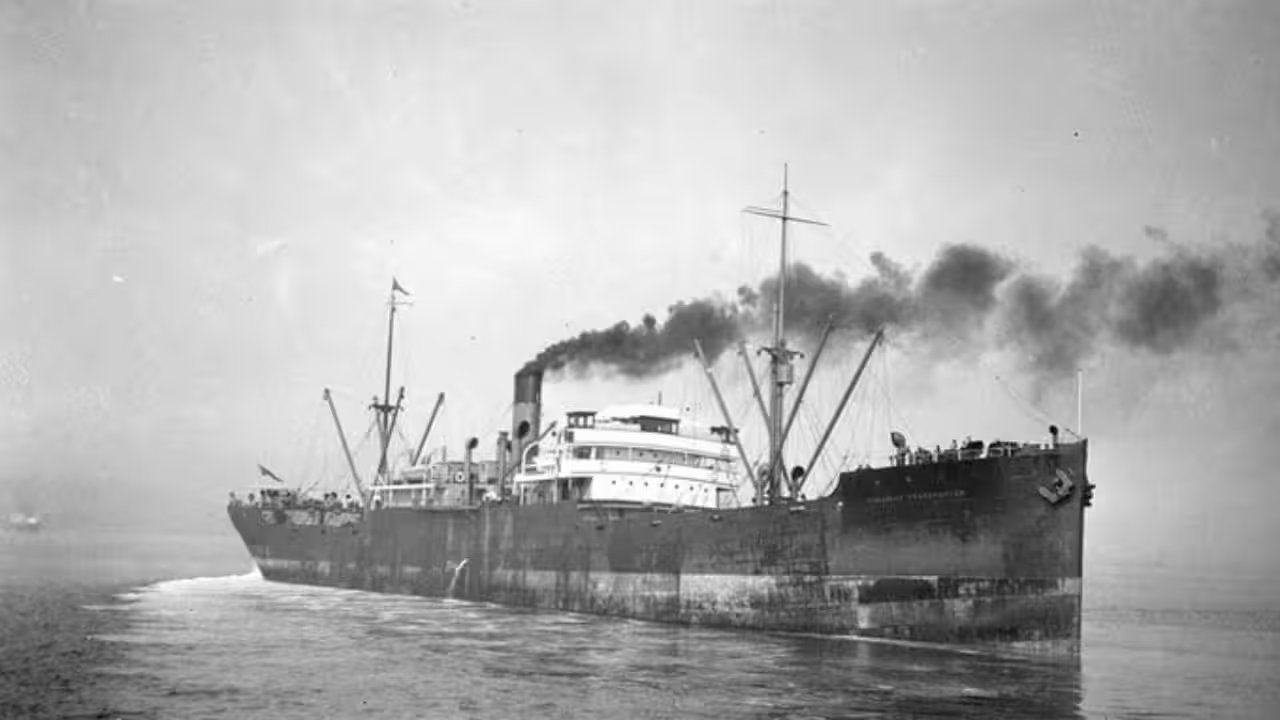
The SS Cornwallis finally rests at 400 feet deep. The Nomad Exploration Team, a civilian diving group based in Portsmouth, New Hampshire, confirmed the location of the wreck on July 11, 2026. It sits in the Gulf of Maine, near Mount Desert Rock. This ends an 82-year mystery. The ship vanished on December 3, 1944, after a German submarine torpedoed it. Forty-three of the 48 people aboard died. Only five survived the cold Atlantic. They were rescued by fishing boats and a US Navy vessel. The discovery was announced in October. The team used side-scan sonar and historical blueprints to pinpoint the site. They had spent seven years searching. It was a technical triumph, but also a memorial for the dead.
The Cornellis was no ordinary ship. Built in Vancouver in 1921, it was originally named Canadian Transporter. It had already survived one torpedo attack in Barbados in 1942. That time, it was damaged but refloated. By 1944, it was carrying sugar and molasses from Barbados to Saint John, New Brunswick. Seven armed guards protected the cargo. The crew did not expect a second hit. They did not expect the attacker to be U-1230. This submarine had a unusual mission. It was not just hunting ships. It was dropping spies.
Four days before the attack, U-1230 entered Frenchman Bay. On the night of November 29, 1944, it surfaced near Crabtree Neck in Hancock, Maine. Two agents stepped off a rubber boat onto US soil. They were Erich Gimpel, 35, and William Curtis Colepaugh, 26. Colepaugh was an American-born Nazi sympathizer. They carried $60,000 in cash, diamonds, forged IDs, and secret inks. Their goal: gather intelligence on US industrial capabilities. No coastal authorities detected the landing. The spies traveled to Bangor, then Portland, and finally New York City. Colepaugh later turned himself in to the FBI on December 26, 1944. His cooperation led to Gimpel’s arrest on December 30. Both were convicted of espionage. President Harry Truman later commuted their death sentences.
The connection between the spy drop and the sinking was not immediately clear. The US Navy’s Eastern Sea Frontier War Diary noted the submarine’s suspicious movement. The torpedo that struck the Cornwallis hit near the forward cargo hold. The bow sank in less than 10 minutes. Six men reached life rafts. One died of hypothermia. The rest were saved. The wreck stayed hidden for eight decades. Now, the Nomad team’s work brings the truth to light. The 43 victims finally have a resting place identified. The story of U-1230’s dual operation—espionage and attack—is now fully documented. This case remains one of the few instances of Nazi spies landing in the US during WWII. The discovery closes a chapter in naval history. It honors those who perished in the dark waters of Maine.