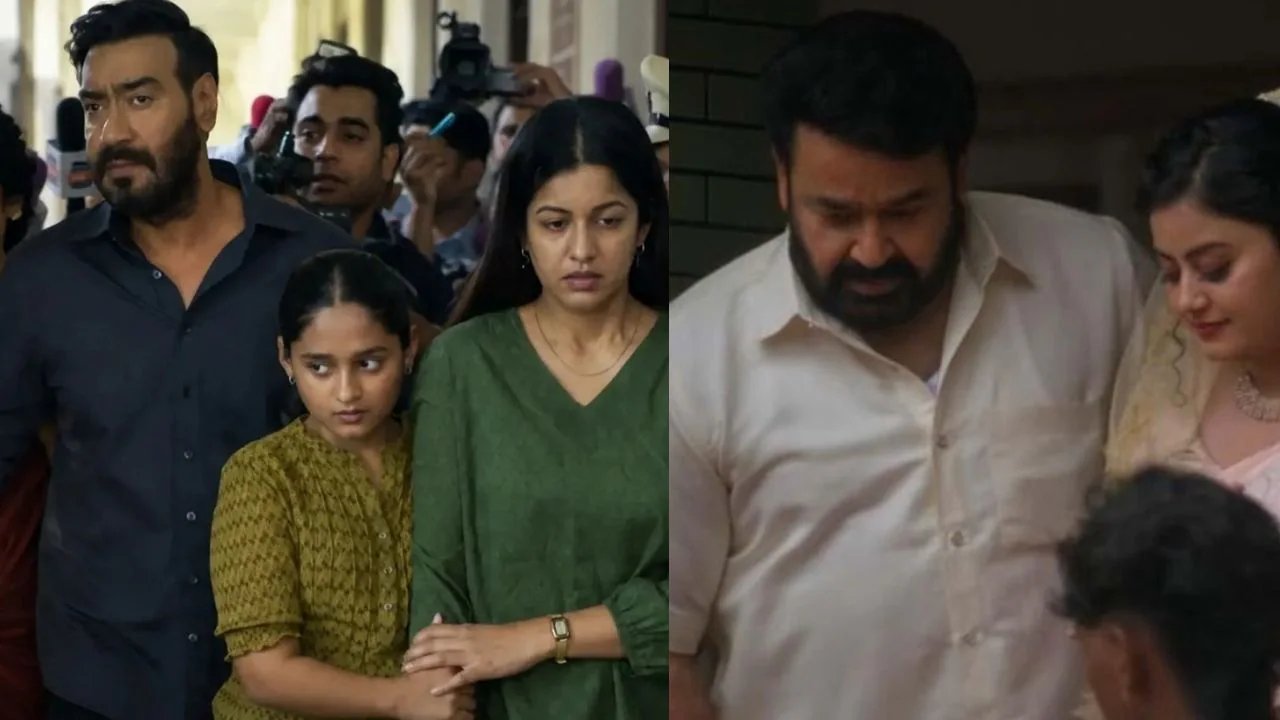
When Ajay Devgn’s Drishyam The Conclusion rolls into theatres, it’s not just a sequel – it’s a mirror‑image showdown against Mohanlal’s Drishyam 3.
The two films kick off in worlds that couldn't be more different. Drishyam 3 opens inside a buzzing theatre, celebrating a box‑office juggernaut while Mohanlal’s Karlun Raghavan laughs at the crowd. In the Hindi version, the first frame is a desperate Meera Deshmukh in a dim bathroom, her glass of water cooling as she considers a suicide that will force her husband, Vijay, to reopen the cold case.
Anju’s story is the beating heart of both trilogies, yet the beat changes. In Drishyam 3, Anju Hassan’s marriage to Ansiba Hassan creates a tense twist that threatens to unravel the family’s secret. In Devgn’s script, Ishita Dutta’s Anju is caught in a courtroom drama when SP Rajveer Singh Tomar challenges Vijay to prove his innocence, turning the legal battle into a pulse‑pounding showdown.
The courtroom scenes are where the two films diverge most sharply. Drishyam 3 sees Georgekutty resorting to extreme violence, staging an act that turns his daughter into a victim, while Drishyam The Conclusion leans on Vijay’s quiet Christian faith and a humble church prop to outwit the prosecution. The Hindi film’s tension is built on dialogue and the weight of a judge’s gavel, whereas the Malayalam version is a high‑octane cat‑and‑mouse chase that ends with a dramatic blood‑shed.
Both movies deliver a tight family‑justice narrative, but Devgn’s version wins on subtlety and courtroom pacing, while Mohanlal’s film dazzles with its gritty realism. Fans will have to decide which style of drama keeps them on the edge of their seats.