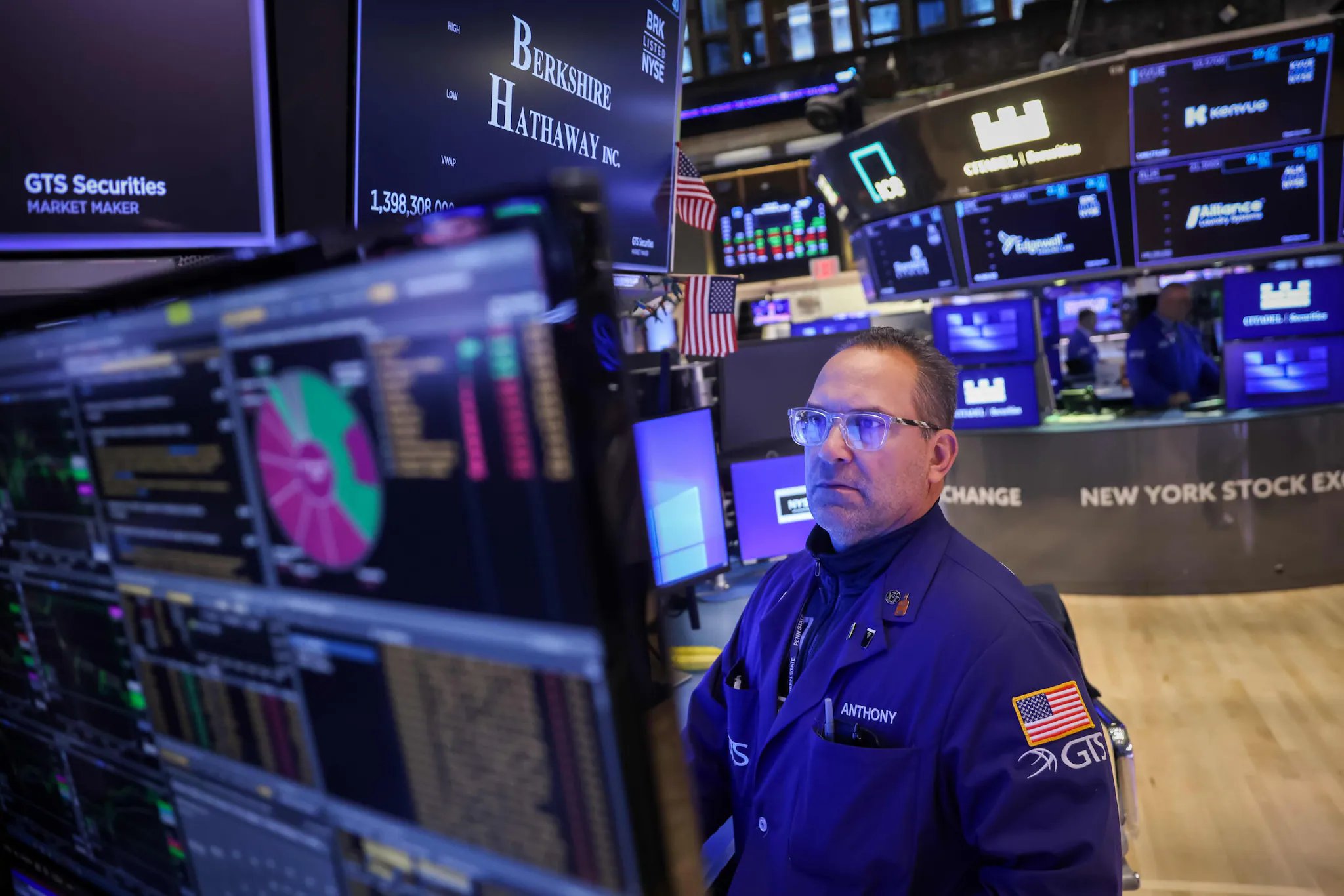
The unwind was swift and unforgiving. Fund managers are offloading artificial intelligence equities across Wall Street, pulling capital out of high-flying tech names and parking liquidity into non-tech sectors. What began as selective profit-taking is escalating into an aggressive rotation. The exit now threatens the stability of the broader market.
Capital is fleeing. For months, artificial intelligence served as the market's singular locomotive, driving equity benchmarks higher and masking underlying weakness across cyclical industries. But that engine is misfiring. Investors are slashing risk and pivoting toward other pockets of the tape, leaving heavy-weighted tech shares vulnerable to sharp, outsized drawdowns. When mega-cap technology sells off, the wider index buckles under the weight.
Sector rotation often signals healthy market expansion when secondary groups take the baton smoothly. Not this time. Tech represents such an outsized slice of aggregate index weighting that steady redeployment elsewhere cannot offset the arithmetic drag of a software and chip slump. Institutional desks are trimming exposure rather than bidding up replacement equities with equal force. The pain is concentrated, yet its contagion across index margins is spreading fast.
The timing could hardly be worse. Wall Street is hurtling into a pivotal macro stretch where every liquidity valve will be tested at once. Three colossal risk events loom directly over trading desks: quarterly earnings from consumer tech heavyweight Apple, the impending U.S. jobs report, and the midterm elections.
Each catalyst carries enough volatility to destabilize a fragile tape. If Apple's hardware and services figures fall short of expectations, tech bulls will find virtually nowhere to hide. Simultaneously, any unexpected spike or plunge in the jobs report could upend interest rate assumptions overnight. Add the political uncertainty of the midterms to the equation, and institutional appetite for rich tech multiples shrinks by the hour.
Near-term pain is no longer a theoretical risk—it is driving trading books. With the rotation gathering speed, asset allocators are preparing for wider swings across equities until the trifecta of corporate balance sheets, payroll statistics, and election returns clear the board.