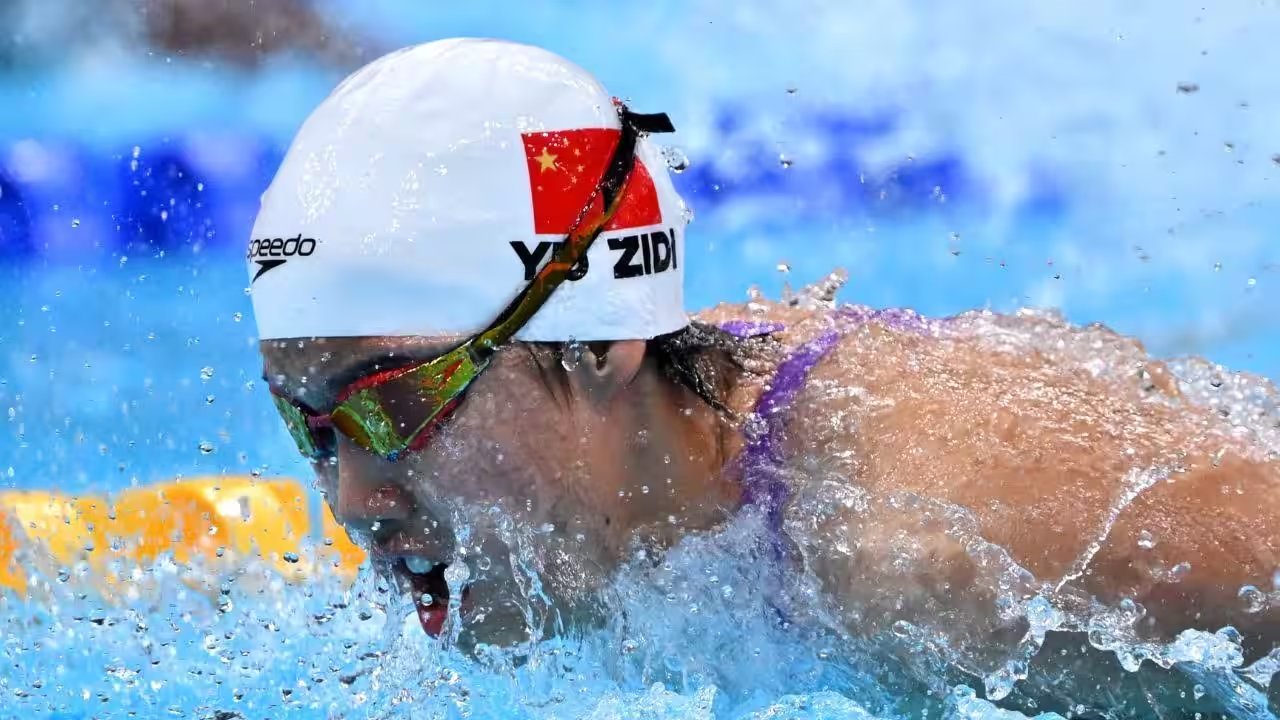
The pool in Tokyo didn't even have time to settle before the scoreboard flashed a number no one expected: 2:05.08. Yu Zidi, a 13-year-old with a pixie cut and a reputation that far outstrips her age, touched the wall to shatter the Asian Games record in the women's 200m butterfly. It wasn't just a win; it was a demolition of the previous benchmark set by Zhang Yufei at the Hangzhou Games three years ago.
Chasing her was Chang Mohan, another Chinese swimmer who had to settle for silver, trailing by a staggering 3.36 seconds. For Yu, this wasn't just a medal—it was her first major individual gold. She had already made history last year as the youngest medallist in World Championships swimming, taking bronze in the 4x200m freestyle relay at just 12. But this was different. This was solo, raw, and undeniable.
The pressure on a child of thirteen is not something most adults understand. Yu has spoken openly about the mental weight of elite competition, admitting that the stress before last year's National Games nearly broke her. Her coach told her to believe in herself. She listened. She went on to win four medals there. Now, she is being tipped as a serious contender for the 2028 Los Angeles Olympics, a trajectory that has swimming analysts scratching their heads about the long-term physical toll of such early specialization.
World Aquatics rules usually require swimmers to be 14 for international championships, but exceptions exist when standards are met. Yu clearly meets them. She beat American Olympic champion Regan Smith in March, proving this isn't a fluke of domestic dominance.
Her next challenge looms immediately. The 200m butterfly was just the opener. She is scheduled to compete in three individual events at these Asian Games, and the rest of the field knows exactly who they need to watch.