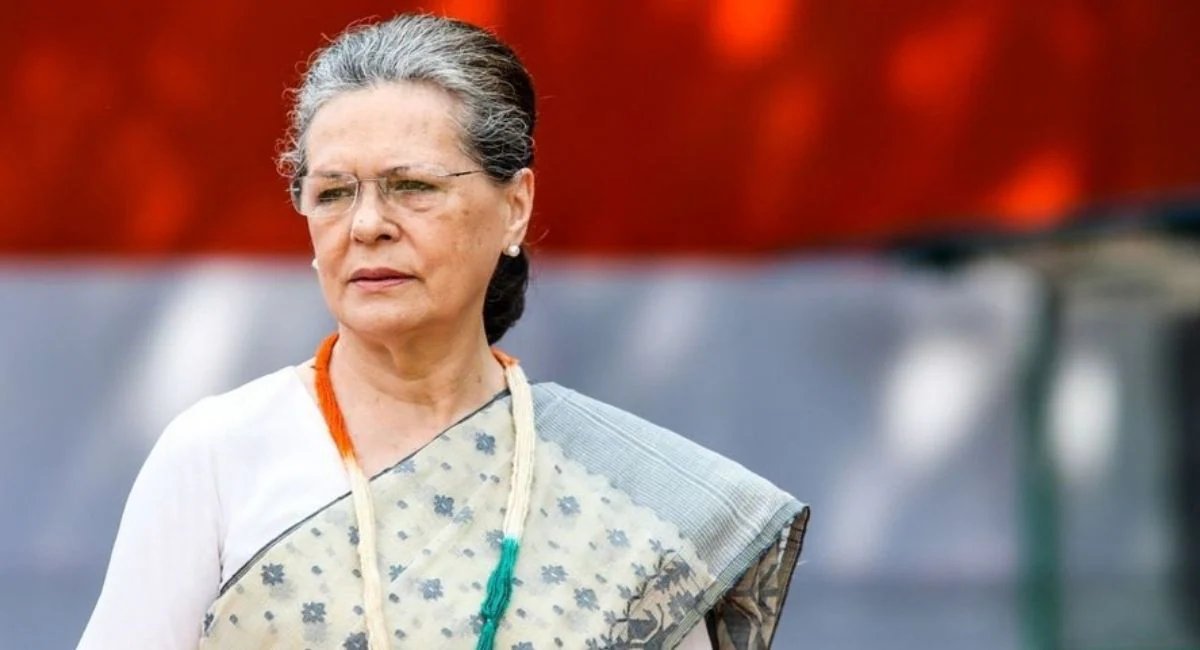
The Bharatiya Janata Party launched a fierce offensive against Congress leader Sonia Gandhi on Monday, branding her newly released memoir Belonging: A Journey of Love a calculated exercise in political whitewashing.
Party national spokesperson CR Kesavan charged that the book systematically shields the Nehru-Gandhi family from scrutiny over decades of governance and constitutional overreach. It softens historical records. "Sonia Gandhi could have titled her memoir as 'Whitewashing' instead of 'Belonging', because the motive of this book appears to be sugar-coating the historical wrongs perpetrated by the Nehru-Gandhi family and camouflaging the cardinal sins committed by the Congress party," Kesavan stated on X.
At the core of the dispute lies Gandhi's treatment of the 21-month Emergency imposed by Prime Minister Indira Gandhi in June 1975. In her memoir, the former Congress president terms the autocratic clampdown a mistake—claiming Indira Gandhi eventually reached that same conclusion—and suggests the worst damage could have been averted had the prime minister kept her younger son, Sanjay Gandhi, in check.
Kesavan rejected that framing as political evasion. Pinning systemic abuses on a deceased sibling, he argued, deliberately sidelines the suspension of fundamental rights, press censorship, and mass preventive detentions that defined the period. The party dismissed the book's narrative as an effort to normalize authoritarian state power rather than reckon with its victims.
Kesavan broadened the attack by targeting Gandhi's selective recounting of national trauma. While the memoir notes her personal grief following the 1992 demolition of the Babri Masjid, the BJP questioned the absence of similar remorse for victims of violence during Congress regimes.
Did Sonia Gandhi weep when gurdwaras burned and thousands of innocent Sikhs were slaughtered across the country during the 1984 massacres, Kesavan asked. He pointedly challenged her posture during the 2008 Batla House encounter controversy and scrutinized the UPA administration's failure to mount a decisive military retaliation after the 26/11 Mumbai terror attacks. The critique painted the memoir's emotional candor as politically curated.
Kesavan then revived the controversy surrounding the formation of the United Progressive Alliance government in May 2004. He pointed to disclosures made by late External Affairs Minister K. Natwar Singh in his 2014 autobiography, One Life Is Not Enough.
Singh had revealed that Sonia Gandhi and Priyanka Gandhi visited his residence unexpectedly after an eight-and-a-half-year estrangement. The purpose was to discuss draft passages dealing with her decision to step back from the prime ministerial post. Kesavan questioned what drove that sudden intervention and what made the family so apprehensive about Singh's insider account of the 2004 negotiations.
Wrapping up his critique, Kesavan asserted that nearly 55 years of Congress governance left deep scars on Indian democratic institutions, crediting Prime Minister Narendra Modi's administration with systematically dismantling those legacies. With the Congress preparing a public rollout for the memoir, the ruling party's counter-offensive guarantees the book will face immediate resistance on the national political stage.