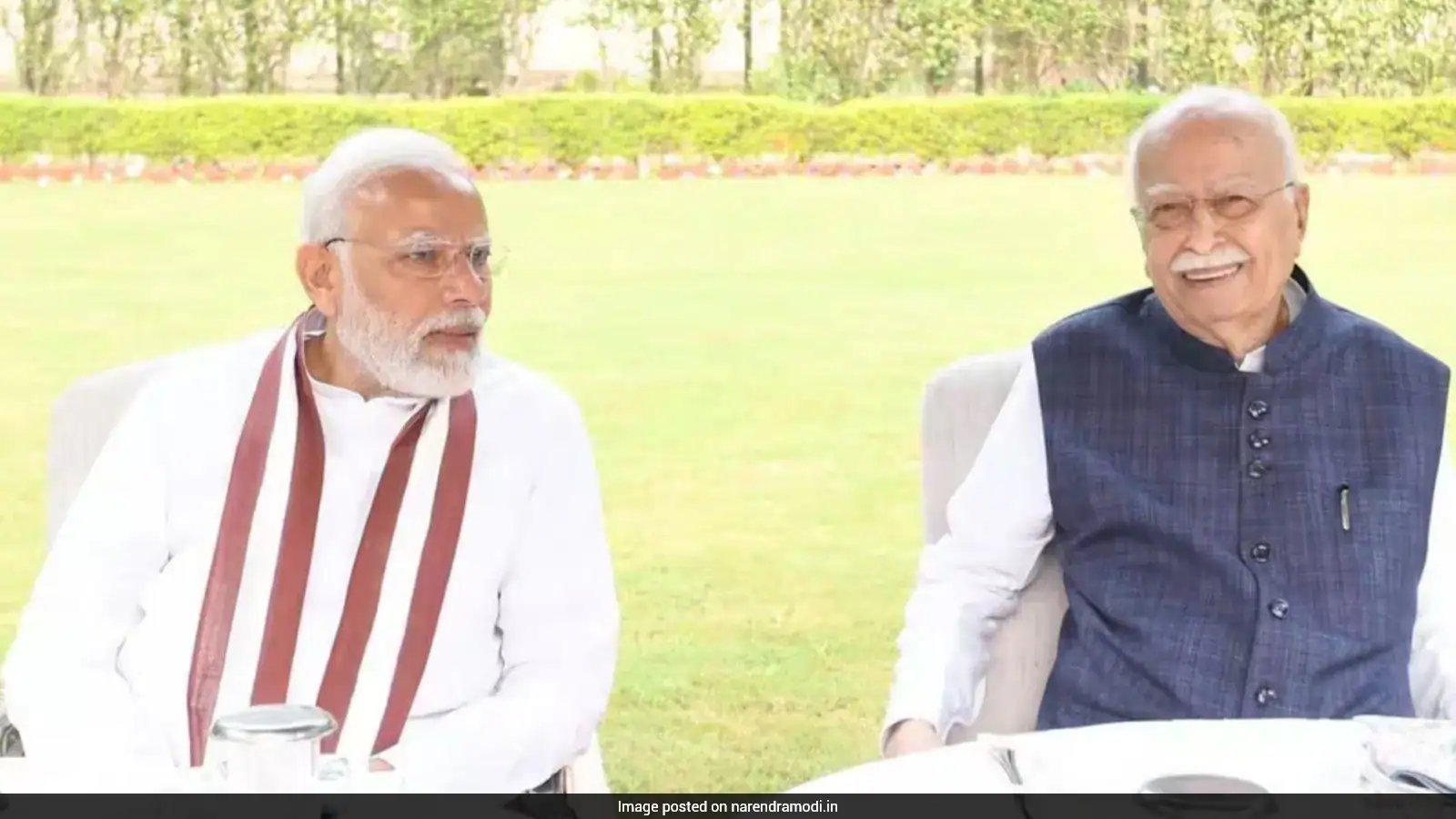
NEW DELHI — Prime Minister Narendra Modi marked Bharatiya Janata Party patriarch LK Advani's entry into his 100th year on Sunday, crediting the former deputy prime minister with dismantling decades of entrenched political orthodoxies through sheer intellectual rigour and strategic resolve.
Born on November 8, 1927, Advani turned 99 on Sunday. The milestone arrived on Dev Deepawali, coinciding with broader commemorations marking 75 years since the founding of the Bharatiya Jana Sangh. In a signed op-ed titled "Bharat Ratna LK Advani Ji at 100," Modi stripped away sentimental veneer to isolate the two political attributes that transformed the veteran from a displaced refugee into the central architect of India's ruling party. He pointed first to Advani's ideological clarity and precision in drafting foundational party resolutions. He turned next to Advani's sustained assault on what the veteran famously branded "pseudo-secularism" in Indian public life. The critique took hold. It reshaped mainstream political discourse for a generation.
Political partnerships at the apex of statecraft rarely survive without rivalry. The working relationship between Advani and former Prime Minister Atal Bihari Vajpayee broke that historical rule, operating across five decades without factional collapse. Modi noted that the duo altered the country's trajectory precisely because they coordinated rather than competed. That tandem strategy bore immediate fruit at the ballot box. Under Advani's party presidency, the BJP broke the Congress party's parliamentary dominance, driving the ruling outfit from over 400 seats down below 200 in the 1989 general election. By 1996, the BJP emerged as the single largest party in the Lok Sabha. Power shifted permanently.
Yet the administrative rise began decades earlier in regional trenches. Advani left Sindh in 1947 during Partition, arriving in a fractured capital and rebuilding his life without visible grievance. He deployed across Rajasthan as a young Rashtriya Swayamsevak Sangh pracharak before returning to Delhi. In 1967, he took charge as Chairman of the Delhi Metropolitan Council, collaborating with Chief Executive Councillor Vijay Kumar Malhotra. By 1970, Advani entered Parliament. He held floor debates, led the Opposition benches in both Houses, and steered resistance from prison during the Emergency.
Hard campaigns followed statecraft. Advani launched the pivotal Somnath to Ayodhya Rath Yatra, crossed the country repeatedly on mass contact drives, and contested the Gandhinagar parliamentary constituency in Gujarat starting in 1991. Modi noted that the veteran's father had resettled in Kutch after 1947, cementing an enduring familial link to the state. Advani wrote, edited, debated, and read voraciously between campaign stops. He pushed party discipline through decades of structural expansion.
Commemorative centenary events will unfold across state party units over the coming weeks as Parliament prepares for its upcoming winter session.