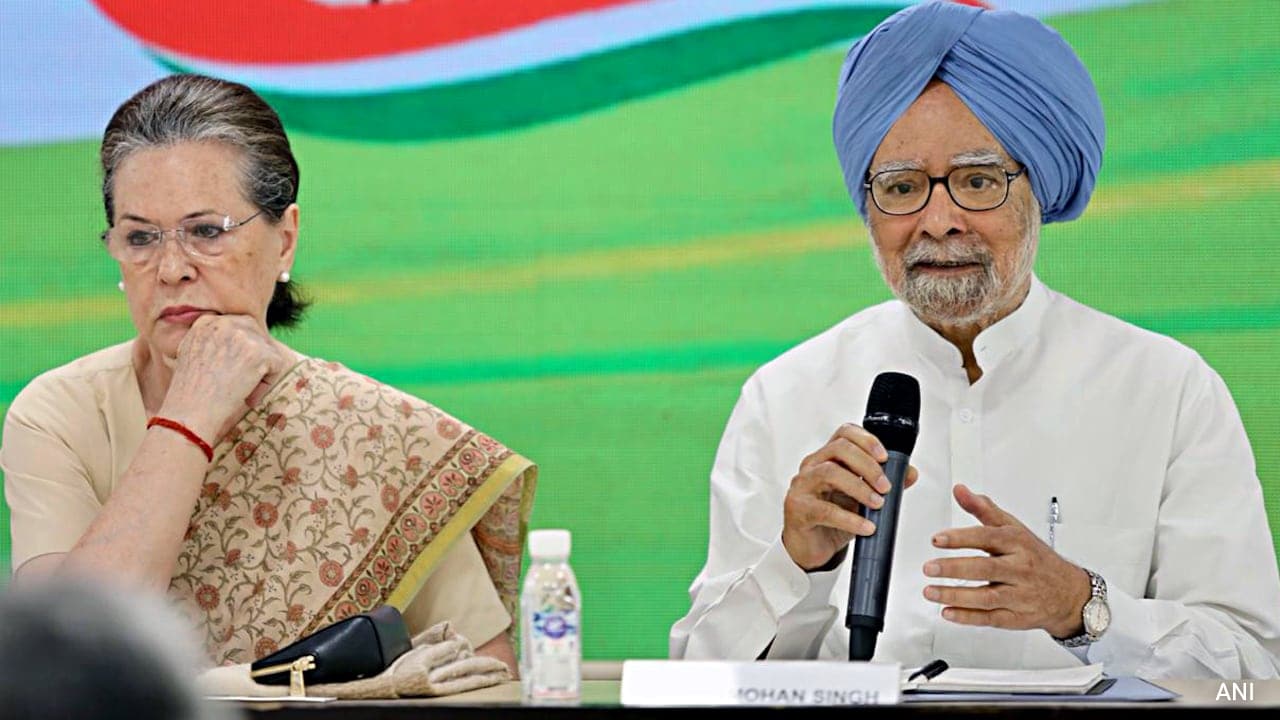
Congress leader Sonia Gandhi broke her two-decade silence on the 2004 transfer of power on Tuesday, detailing in her newly published memoir why she rejected the prime ministership and handpicked Dr. Manmohan Singh to govern India.
Singh possessed a mind above reproach. He had no factional ties. Writing in Belonging: A Journey of Love, published by HarperCollins India, the 79-year-old former Congress president explained that Singh's reputation as the architect of India's 1990s economic reforms under Prime Minister P.V. Narasimha Rao made him the singular figure capable of steering a coalition dependent on Communist support.
The decision took shape during intense consultations following the United Progressive Alliance's general election victory. While numerous senior colleagues stood ready to accept the post, Gandhi settled on Singh, then a member of the Congress Working Committee. When sounded out privately, Singh offered an initial refusal. Gandhi pushed back against his hesitation and persuaded him to take charge.
"I knew that our beloved country would be safe in his hands," Gandhi wrote, observing that party leaders offered no resistance once she advanced his name.
The transition culminated on May 18, 2004, during an austere journey to Rashtrapati Bhawan. Sweltering heat beat down on the Eastern Court as Singh accompanied Gandhi through the presidential corridors, still completely unaware that he would lead the government. Singh assumed, like the rest of the political establishment, that Gandhi would claim the prime minister's office. Even as they returned to her residence at 10, Janpath, neither uttered a word about the office. The next day, on May 19, she formally announced her refusal to the party.
A private family reckoning dictated her step back. Her children, Rahul Gandhi and Priyanka Gandhi, fought against her taking the oath of office, scarred by the assassinations of their grandmother Indira Gandhi and father Rajiv Gandhi. Torn between her children's dread and her obligation to devastated party cadres, Gandhi chose to yield executive power while retaining organizational authority.
Singh, who died at age 92 in 2024, had risen from an impoverished childhood in a Punjab village now situated in Pakistan to study at Oxford and Cambridge before helming India's government for a decade. The memoir now enters public circulation as political leaders prepare for the upcoming parliamentary session, reopening historical scrutiny over the balance of authority that defined India's coalition governance.