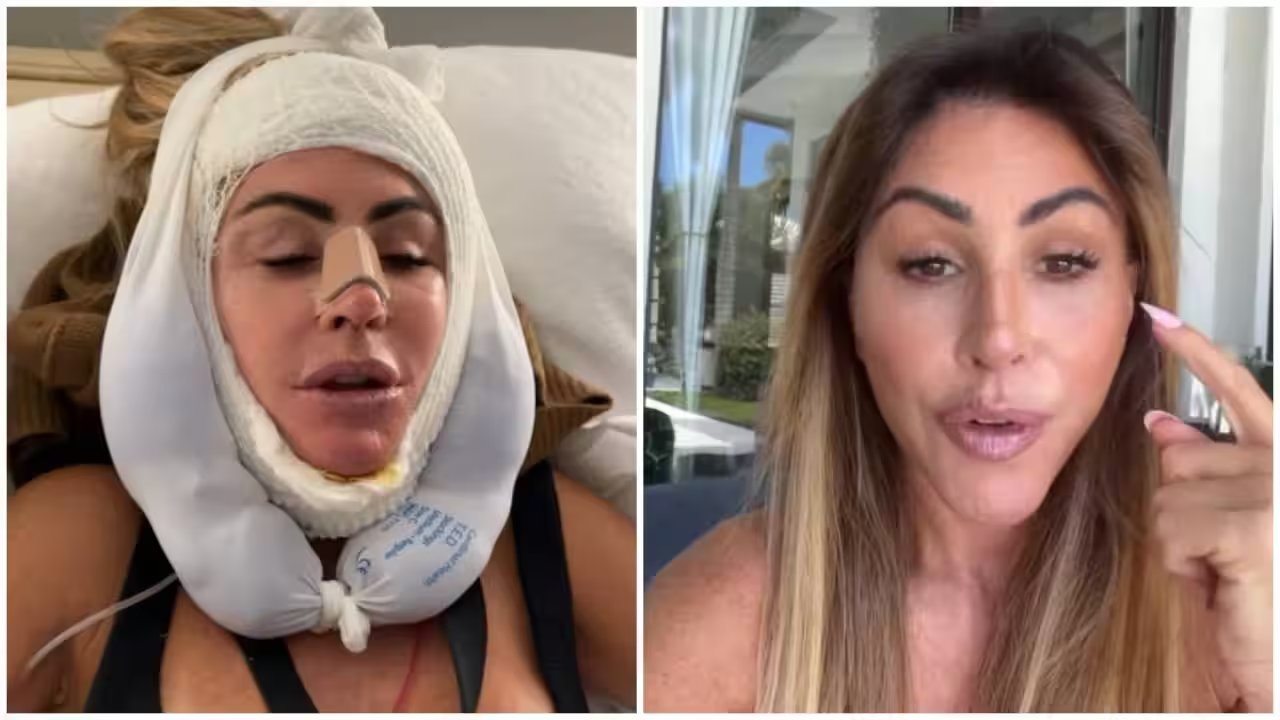
The secret to fixing a face that feels too full isn’t adding more product—it’s moving what you already have. Rachel Uchitel, the 51-year-old podcast host, recently underwent an 11-hour procedure with Dr. Ira Savetsky that included a deep-plane facelift and targeted fat transfer. Instead of injecting new hyaluronic acid, the surgeon used her own microfat to rebuild subtle volume and nanofat to improve skin quality, effectively correcting the dense scar tissue left behind by years of previous treatments.
It’s a practical approach for anyone who has outgrown their last injection. Uchitel admitted she had “f--ed up her face” with fillers, spending two weeks dissolving the old product before surgery even began. Dr. Savetsky noted that residual filler and adhesions made the operation complex, but the goal was always restoration, not renovation. By using autologous fat, the results integrate more naturally with the surrounding tissue, avoiding the stiff or balloon-like appearance that can sometimes plague heavy filler users.
The reaction from friends in Palm Beach tells the real story. People aren’t asking what she had done; they’re saying she looks “refreshed.” That distinction matters. It signals that the work is invisible, which is the ultimate goal of modern aesthetic medicine. Uchitel’s husband, Dan Donovan, was so impressed he booked a brow lift with the same surgeon. It’s a reminder that these procedures are personal choices, not public spectacles, and that the best work is often the least noticeable.
If you’re considering a correction, start with a consultation focused on tissue assessment, not just volume addition. Look for surgeons who specialize in fat transfer and revision surgery, as they understand the challenges of working with scar tissue and residual fillers. The price tag—around $100,000 for this comprehensive package—is steep, but for those who’ve hit a plateau with injectables, it might be the only way to get back to a face that feels like your own.