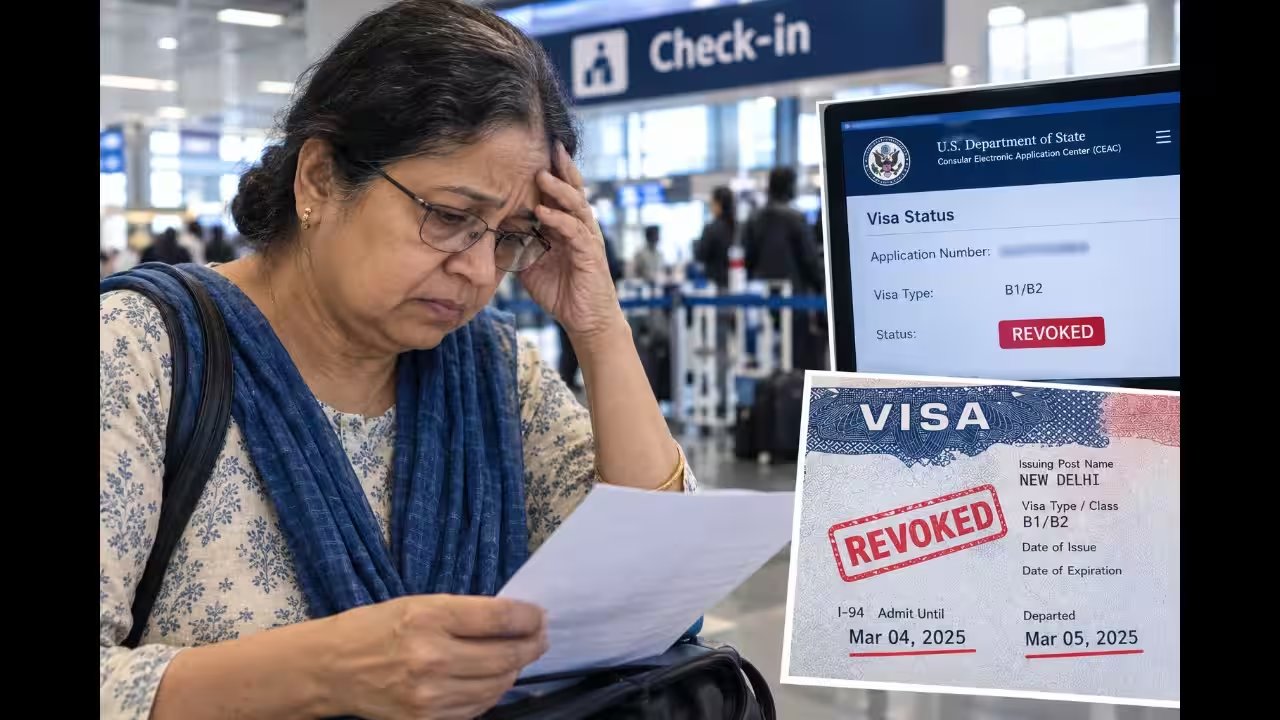
The family learned of the revocation only when their mother-in-law arrived at the airport this month, just to find her travel plans blocked. She held a B1/B2 visa valid until 2033, yet the US Department of State’s Consular Electronic Application Center (CEAC) system now lists her status as “REVOKED.” No official notification had reached her in the interim.
The trigger was a one-day error. During her 2025 visit, her Form I-94— the document dictating authorized stay—expired on March 4, but she departed on March 5. A six-month stay, a miscalculation, and a single day late. The family did not realize this technicality would void the entire visa.
US law is unforgiving here. Section 222(g) of the Immigration and Nationality Act stipulates that if a nonimmigrant stays beyond the date authorized by Customs and Border Protection on the I-94, the visa is automatically cancelled. There is no grace period. One day is the same as thirty in the eyes of the statute.
Now, the traveler must apply for a fresh B1/B2 visa at a US embassy or consulate. She must disclose the overstay accurately and provide proof of voluntary departure. A consular officer will weigh her individual circumstances, financial ties, and travel history before granting entry. The lesson for NRIs is stark: check the I-94 date, not just the visa stamp.