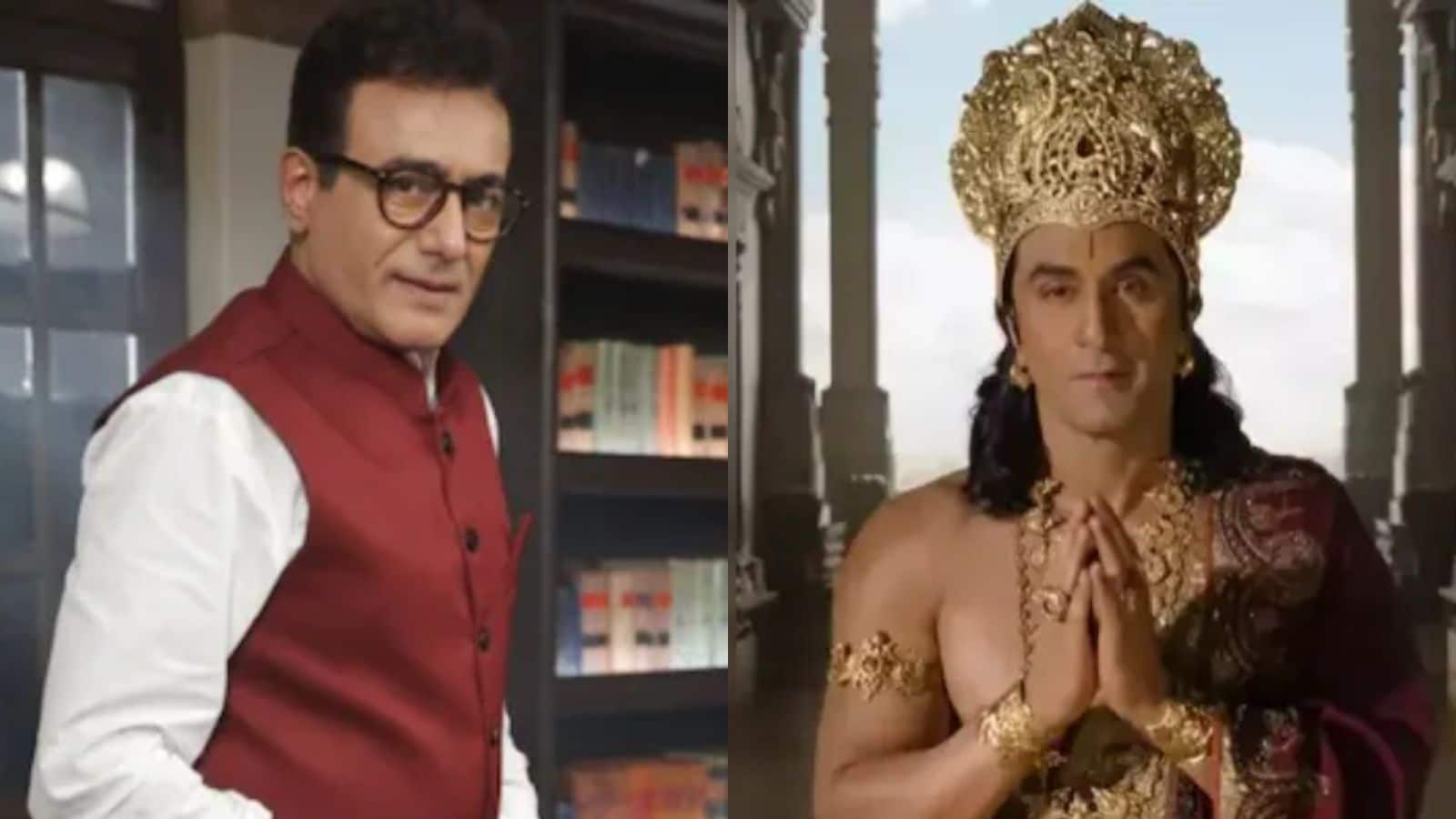
The reversal was absolute. Nitish Bharadwaj—whose portrayal of Lord Krishna in B.R. Chopra’s landmark television epic Mahabharat turned him into a household cultural authority—has completely severed ties with Nitesh Tiwari’s big-screen retelling of Ramayana. He retracted his public endorsement in full. Not a single compliment survived.
The primary fault line lies in how the production reimagined its antagonist. In Tiwari’s cinematic canvas starring Ranbir Kapoor as Ram and Kannada star Yash as Ravan, Bharadwaj argued that the narrative warped the central spiritual architecture of the epic. Mahavishnu assumed the Ram avatar to protect dharma, honour tradition, and establish maryada. Yet the feature reframes Ravan as an exceptionally liberal, socially conscious, and equitable figure—a creative license Bharadwaj slammed as a fatal subversion of the epic's moral compass.
Yet only weeks earlier, Bharadwaj had struck an entirely opposite note. Blown away by the initial teaser footage, he publicly predicted a "100% Oscar for Best Foreign Film" win, comparing Tiwari’s ambition to Satyajit Ray and Shekhar Kapur. He had celebrated producer Namit Malhotra’s scale, cheered the inclusion of Hollywood composer Hans Zimmer, and urged Kapoor to leave projects like Animal behind to embrace his cultural heritage. He had even resolved to watch the final cut five times in theatres.
None of that goodwill survived the November 5 release. Bharadwaj made clear that high-end digital wizardry cannot mask spiritual bankruptcy. "A spectacle of VFX can never substitute for the core values, philosophical depth and spiritual essence of this Mahakavya," he wrote, stating unequivocally that he could no longer find a single positive thing to say about the project. He added that the film forfeit its right to carry the Indian flag abroad by distorting historical and spiritual traditions.
Planned as a two-part epic featuring Sai Pallavi as Sita, Tiwari's venture now faces intense ideological turbulence just as its theatrical life gets underway, leaving the franchise's second chapter staring at a deeply divided cultural landscape.