Daimler IndiaMercedes-Benz TrucksCommercial VehiclesR&DAlejandro Rodriguez Cuadra
DICV Names Alejandro Rodriguez Cuadra Head of R&D and Global Engineering Backbone
Published: October 6, 2026
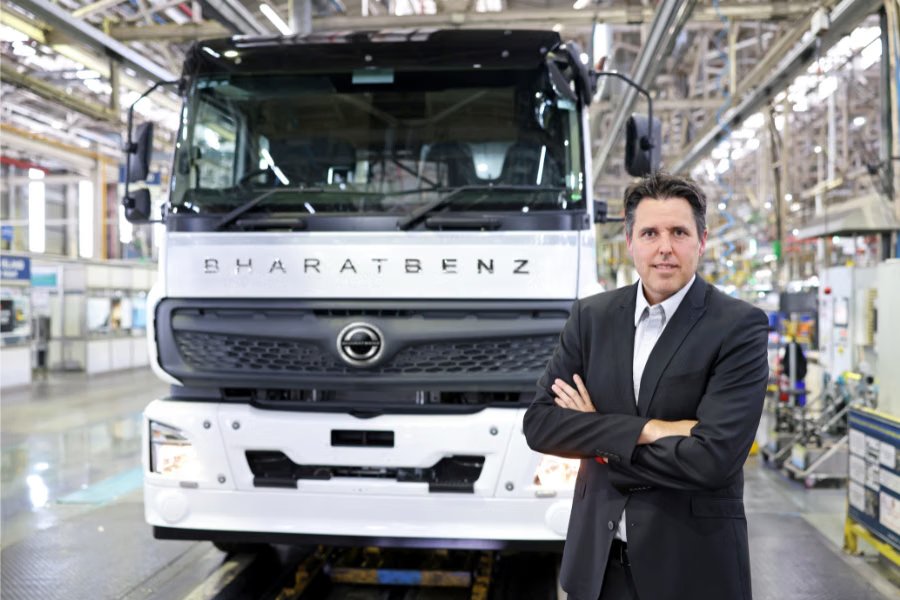
Daimler India Commercial Vehicles has appointed Alejandro Rodriguez Cuadra as its new Head of Research & Development. The move signals a push to integrate India’s engineering workforce into Mercedes-Benz Trucks' global product development cycle.
Daimler India Commercial Vehicles just handed over the keys to its R&D department to Alejandro Rodriguez Cuadra. He's not a local hire, nor is he a first-timer in the system. Cuadra lands with a dual mandate: running R&D for DICV while simultaneously serving as the Global Head of Engineering Backbone at Mercedes-Benz Trucks. It's a heavy portfolio, one that bridges the gap between Stuttgart's global engineering priorities and the boots-on-the-ground reality in Pune and other Indian hubs.
But why this move now? DICV is the anchor for the ISEAA region—India, South-East Asia, and Australia-Pacific. That’s a massive, complex market with wildly different regulations and buyer needs. Cuadra’s job is to align DICV with the Daimler Truck Innovation Centre India (DTICI) and the global network. In plain English, he’s the guy ensuring the trucks designed in Germany actually make sense for a logistics fleet in Mumbai or a construction site in Jakarta.
Cuadra isn't starting from scratch. He’s been with Daimler since 2005, kicking things off as a trainee at the Wörth plant in Germany. Since then, he’s bounced between Germany, Türkiye, Japan, and India. At FUSO Japan, he was in the thick of production prep, even supporting the launch of the eCanter electric truck. He’s got dual degrees in Industrial and Mechanical Engineering from Madrid and Munich. That’s a rare mix of European engineering rigor and Asian manufacturing agility.
Torsten Schmidt, DICV’s CEO, framed the appointment as a way to leverage India’s engineering muscle. Schmidt wants India to be more than just a manufacturing hub; he wants it integrated into the product design loop. Cuadra’s background in cross-border collaboration and process optimization is exactly what’s needed to break down those silos. He’s going to be the glue between local innovation and global standards.
For the industry, this signals that Mercedes-Benz is taking its Asian operations seriously as a source of engineering value, not just volume. The next few years will see a tighter feedback loop between the ISEAA market and the global R&D pipeline. Watch for how this affects the development timeline of the next-gen Axor and eActros models in the region.