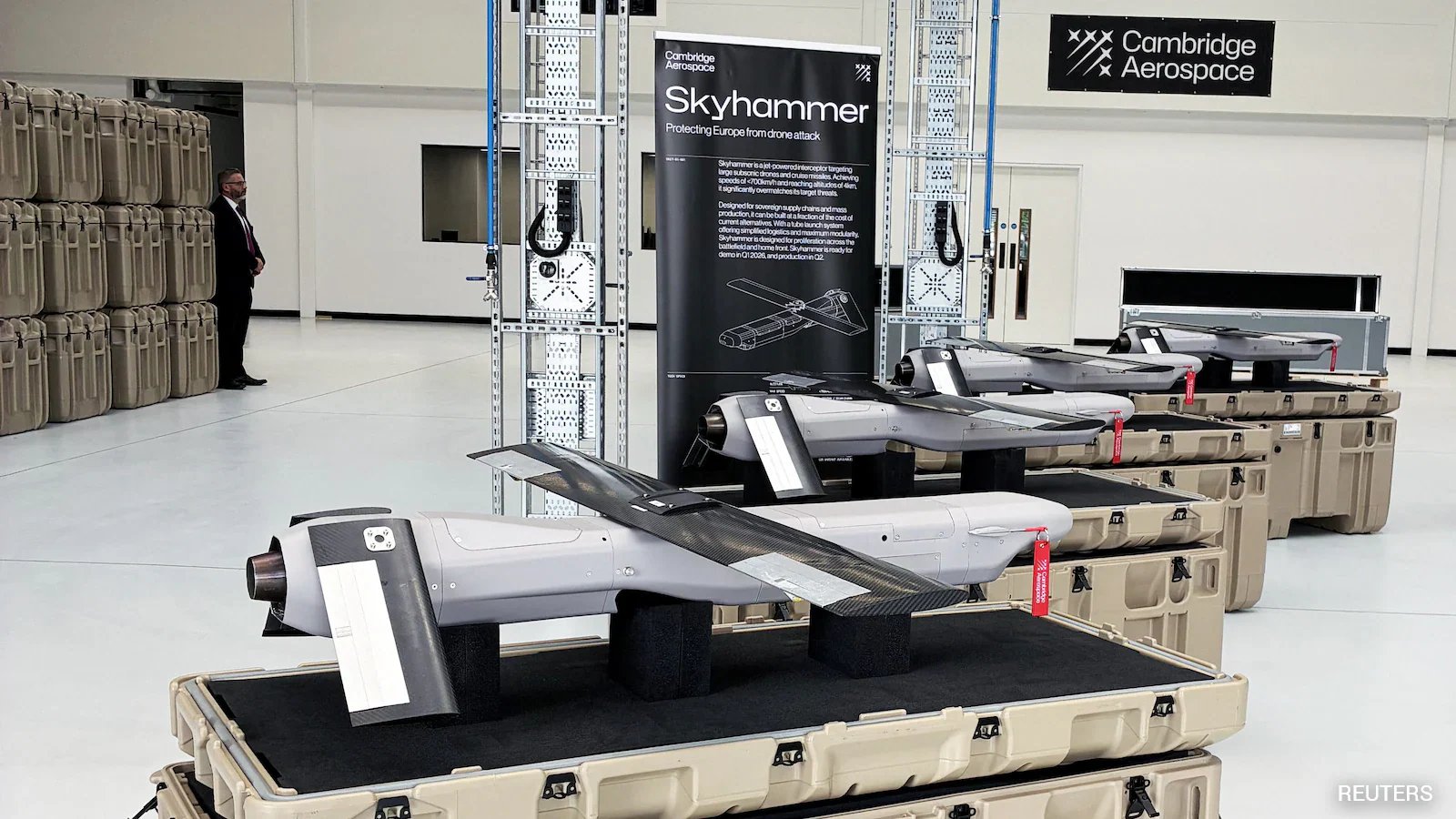
Russian daily drone attacks on Ukraine have exposed the limits of Europe's small missile inventories. “If you think you have enough cruise missiles in your inventory, you probably don’t,” warned Douglas Barrie of the International Institute for Strategic Studies.
The analysis points to a decade‑long focus on boutique production, leaving governments scrambling for cheaper, mass‑produced systems. “Big wars are fought with numbers, not wonder weapons,” said Stockholm International Peace Research Institute researcher Markus Schiller. New entrants like Destinus and Cambridge Aerospace claim the technology exists; the challenge is scaling.
On 6 June 2024, the Dutch Defence Ministry announced an order of 700 Ruta Block 2 cruise missiles from the Berlin‑based startup Destinus, a €250‑million deal that marks the first sizeable European procurement of a European‑made missile for Ukraine.
That same day, Britain’s Ministry of Defence signed an initial contract for the Skyhammer interceptor with Cambridge Aerospace, a move that follows the Estonian Defence Forces’ call for low‑cost systems capable of countering Russia’s drone threat. Steven Barrett, CEO of Cambridge Aerospace, said Russia could launch up to 900 Shahed‑type drones in a single night and that “defeating them with traditional interceptors would cost billions of dollars per night, which is impossible for allies to sustain.”
Both firms are scaling rapidly: Cambridge Aerospace raised $300 million last month, while Destinus is courting investors ahead of a planned IPO. Production targets are ambitious—Cambridge aims for 2,500 interceptors a month by Q1 2025, and Destinus plans a joint venture with Rheinmetall to produce 700 missiles per day by 2026. The first batch is expected in mid‑2025, positioning Europe to meet Russia’s sustained campaign.