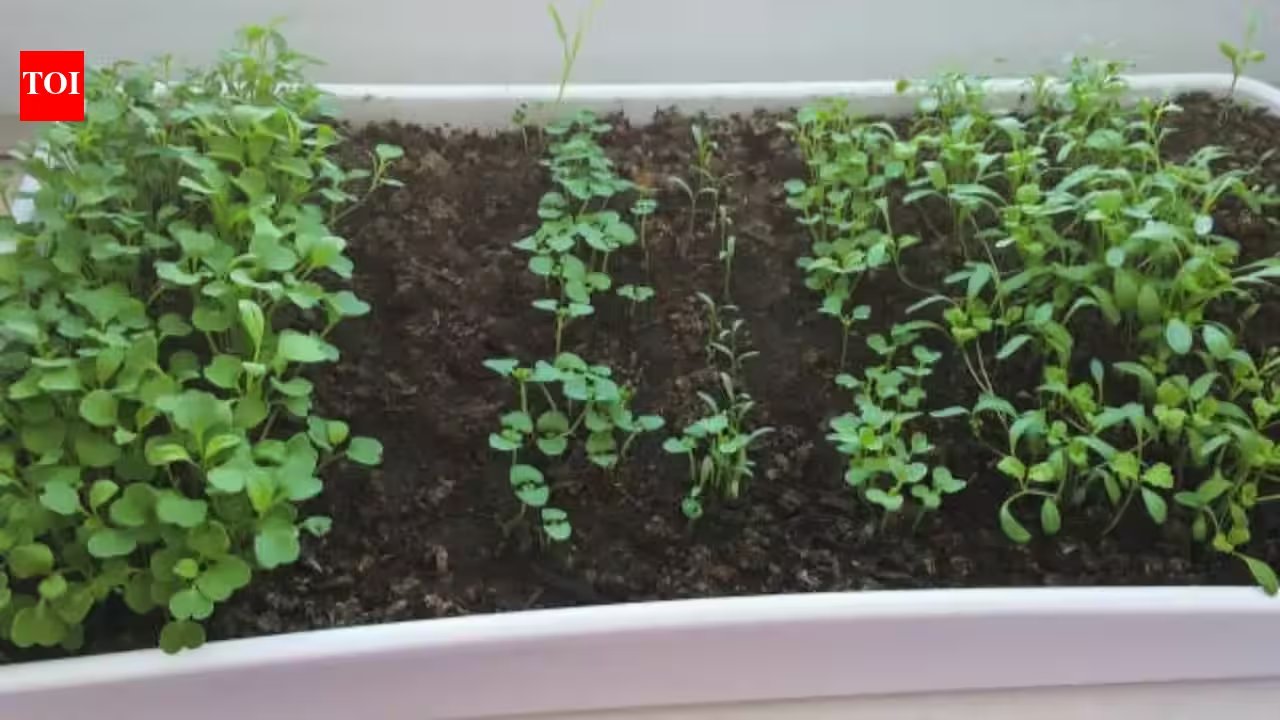
Forget the idea that you need a sprawling backyard to eat fresh. A single rectangular grow bag, roughly 8 to 12 inches deep and two feet long, is all you need to supply your kitchen with three types of leafy greens simultaneously. Place this bag where it catches four to six hours of morning sun, as direct afternoon heat can wilt these tender leaves. If you’re sowing between October and February, you’re in prime time, but the technique works year-round if you manage the shade correctly.
The soil mix matters more than the bag itself. You want a loose, breathing base, so mix equal parts garden soil, cocopeat, and well-rotted vermicompost. This combination holds moisture without turning into a soggy, root-killing mud. Fill the bag until it’s about an inch below the rim, then press it down gently. Make sure the soil is damp before you plant; dry soil will reject the seeds, while waterlogged soil will rot them.
Here’s where the magic happens: divide the bag into three distinct rows. Row one is for palak—soak those seeds in water for a few hours first, then bury them half an inch deep, spaced two inches apart. Row two is for methi, which you can scatter lightly and cover with a thin layer of soil. For row three, grab your dhania seeds and gently crush them to split them open before sowing; this dramatically speeds up germination. Water everything with a fine sprinkle, not a strong stream that displaces the seeds.
Maintenance is low-stress but consistent. Water in the morning to let the soil dry out slightly by night, which prevents fungal issues. Methi will sprout fastest, often within a week, while coriander is the slowpoke. Keep an eye out for aphids; a mild neem oil spray is usually enough to handle them without harsh chemicals. Feed the bag with a handful of vermicompost after two or three weeks to boost growth.
Harvesting is the best part. Methi is ready in about three weeks, while palak and coriander take four to five. Use sharp scissors to cut the outer leaves first, leaving the center intact so the plant keeps producing. For methi, you can cut the whole plant a couple of inches above the soil and it will regrow. Once you see yellowing or flowers, it’s time to resow a new row. Keep your kitchen stocked with fresh greens by rotating your sowing schedule.