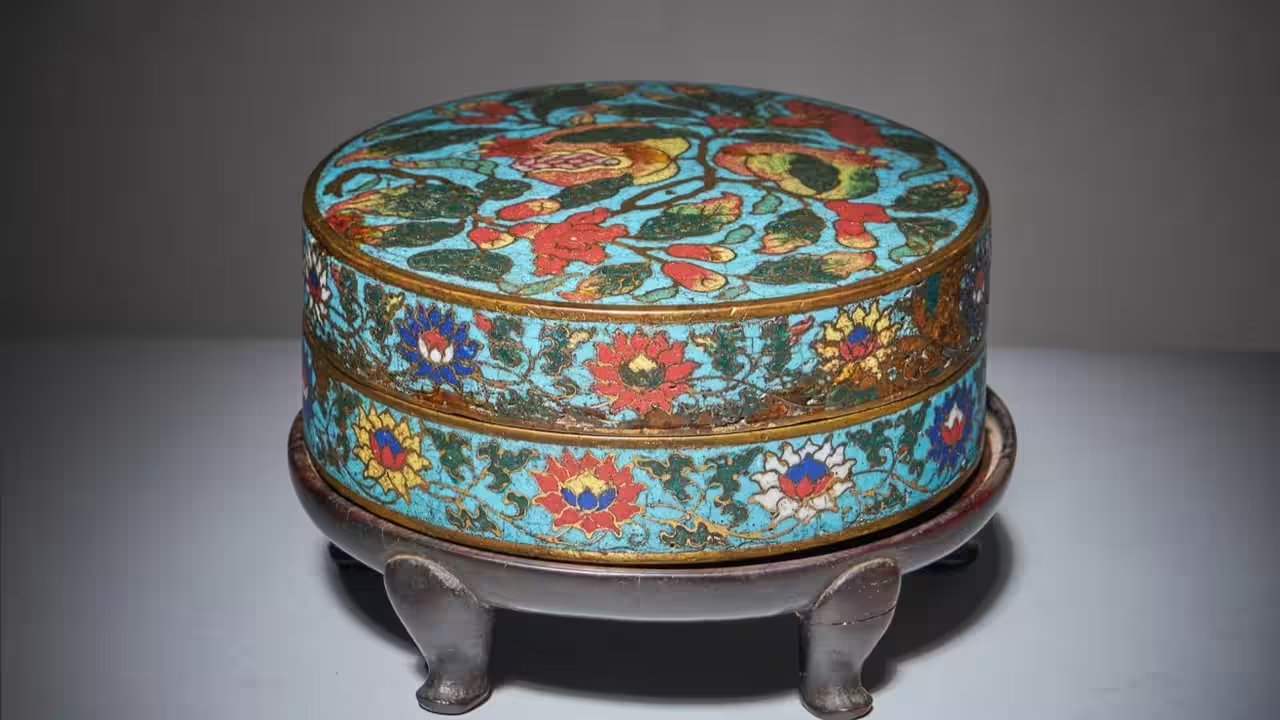
The 15th‑century Ming dynasty pomegranate box, once owned by Major Edward Copleston Radcliffe, re‑entered the market this week after a family attic discovery in London. It had lain unnoticed in a storage room for decades, its enamel surface obscured by dust and the passage of time.
Mark Newstead, director of Asian ceramics at Dreweatts, and Yingwen Tao examined the box and confirmed its Xuande‑era status, the reign of Emperor Xuande from 1426 to 1435. The fine cloisonné work—pomegranates, branches, blossoms—signals fertility in Chinese symbolism and marks the piece as one of only five known Xuande‑pomegranate boxes.
The auction, held at Dreweatts in Berkshire, attracted a fierce nine‑telephone‑bidder contest, far exceeding the £6,000‑to‑£10,000 estimate. The final hammer price of £288,000 eclipsed the upper estimate by almost 30 times, underscoring the extraordinary rarity of Xuande‑marked cloisonné.
The box has a storied past beyond its private ownership. It appeared at the National Gallery of South Africa in 1953 during a Chinese exhibition in Cape Town, before slipping back into obscurity. With its sale, the piece returns to the public eye, now destined for a private collector in Asia who may exhibit it in a future exhibition or keep it in a private collection.
The transaction also signals a growing appetite for high‑grade Ming dynasty artifacts among Asian collectors, potentially driving up prices for similar imperial‑era items in upcoming auctions.