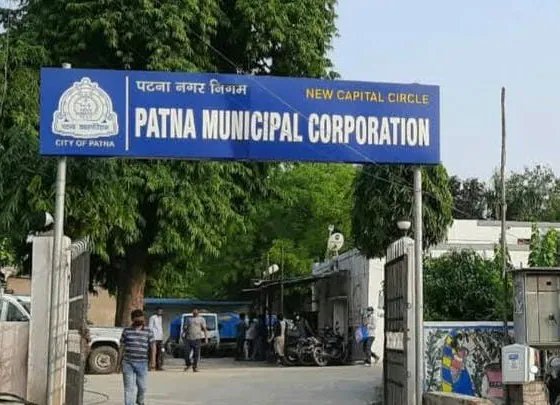
Patna Municipal Corporation listed nearly ₹200 crore worth of municipal bonds on the National Stock Exchange on Tuesday, becoming the first urban local body in Bihar to tap the capital market for civic infrastructure.
Checked by investor bids topping ₹205 crore against a base issue of ₹100.03 crore during electronic bidding on October 30, the civic body doubled down. It exercised its greenshoe option to mop up ₹199.99 crore. Chief Minister Samrat Choudhary launched trading by ringing the ceremonial market bell, formally opening a direct financing route intended to wean the state capital off discretionary state grants.
The bonds carry an annual coupon of 9.20 percent across a 10-year tenure. Under the debt structure, the corporation will pay quarterly interest during the first four years. Thereafter, it will amortize both principal and interest through quarterly installments, with maturity tranches falling due between 2030 and 2036.
Capital from the bond run will finance 18 separate infrastructure projects spread across 15 city sites, carrying an aggregate price tag of ₹270.45 crore. Bond proceeds cover the primary ₹200 crore chunk, while the corporation's internal revenue reserves will plug the remaining ₹70.45 crore deficit. Execution deadlines run from six to 18 months.
Patna Mayor Sita Sahu laid out the build program, targeting chronic street congestion and unstructured vending rings across the municipal perimeter.
These include 12 vending zones, two marriage halls, one parking facility, one commercial complex, one hotel and one community centre. The objective is to organise the city's currently unplanned street-vending activities and provide better civic amenities. Designated vending spaces will help reduce encroachment on roads and footpaths, improve traffic movement and bring greater order to markets.
Sita Sahu, Mayor of Patna
Land allocation is already locked down. Ten project locations sit directly on municipal corporation real estate, four operate on parcels transferred from the Road Construction Department, and one project rests on Bihar State Housing Board land. Beyond urban decongestion, the completed assets are structured as cash-generating balance-sheet items meant to churn recurring income from commercial shop rentals, hourly parking fees, banquet bookings, and merchant leases.
Speaking at the listing ceremony, Samrat Choudhary framed the debt issuance as a structural shift for Bihar's public finance architecture. Expanding the offering from its initial ₹100 crore benchmark to almost ₹200 crore demonstrated institutional investor appetite for municipal paper originating from eastern India.
Bihar absorbed severe fiscal fractures following its state bifurcation, Choudhary said, but pointed to steady financial stabilization executed since 2005 under former Chief Minister Nitish Kumar and former Deputy Chief Minister Sushil Kumar Modi. Municipal debt listings, he argued, force local councils to operate under institutional discipline, audited transparency, and strict project timelines.
| Debt & Project Metric | Official Allocation |
|---|---|
| Total Funds Raised | ₹199.99 crore |
| Base Issue Size | ₹100.03 crore |
| Investor Demand Recorded | Exceeded ₹205 crore |
| Coupon Rate & Tenure | 9.20% annually / 10-Year Term |
| Principal Repayment Model | Quarterly interest (Y1-4); Quarterly P+I (Y5-10) |
| Bond Maturity Window | 2030 to 2036 |
| Total Capital Works Outlay |
Market Context: Indian municipal corporations have historically relied on state budgetary transfers and central allocations to fund basic civic services. By entering the public bond market at 9.20 percent, the Patna Municipal Corporation subjects its balance sheet to exchange-mandated disclosures and external credit scrutiny, creating an audited precedent for other civic bodies across Bihar.
Civil works across all 15 assigned project sites will now break ground under the 18-month execution timeline, with initial quarterly debt service payments slated to begin under the four-year interest-only covenant.
| ₹270.45 crore (18 projects, 15 locations) |
| Delivery Horizon | 6 to 18 months |