Winter chill strikes fast. While rugged native shrubs shrug off lower temperatures, fragile young seedlings and tropical greens collapse under sudden overnight cold, particularly across northern India and regional hill tracts where frost arrives without warning.
Expensive greenhouse kit is unnecessary. Everyday materials sitting in your store cupboard can save your garden.
Timing dictates plant survival before a freezing night settles in. Check regional weather forecasts daily. When a sharp drop looms, lightly water the soil base during the afternoon—never soak the leaves. Damp soil retains daytime thermal energy far better than parched earth, releasing heat upward toward roots throughout the dark hours.
Halt all chemical fertilisation immediately. Fertiliser triggers flushes of soft, tender green growth—and that fresh foliage is the first casualty when ice hits.
Next, lay down ground insulation. Spread a clean, two-to-four-inch layer of dry leaves, straw, shredded bark, or coco peat around the base of every plant. The barrier functions like a heavy winter quilt, trapping subsurface warmth.
Keep the mulch pulled two inches back from the main stem. Packing organic debris flush against wet bark invites stem rot and fungal blights.
| Winter Plant Defense | Recommended Material | Application Method | Critical Precaution |
|---|---|---|---|
| Root Soil Quilt | Coco peat, straw, dry leaves, shredded bark | Spread 2 to 4 inches evenly over root spread | Keep clear of plant stems to block rot |
| Thermal Evening Shield | Jute sacks, frost cloth, light blankets, old bedsheets | Drape fully to soil line before sunset; weigh down with stones | Remove by mid-morning for sunlight access |
| Plastic Weather Guard | Clear heavy-duty sheeting | Mount over timber or bamboo garden stakes | Never let plastic touch leaves; conducts freeze |
| Potted Plant Defense | Clay bricks, pot feet, sheltered balcony corners | Cluster pots tight; raise bases off concrete floors | Shift away from cold glass and drafty window frames |
Bare soil sheds thermal energy the second the sun dips below the horizon. Throw protective barriers over tender outdoor vegetation before dusk rather than waiting for full darkness.
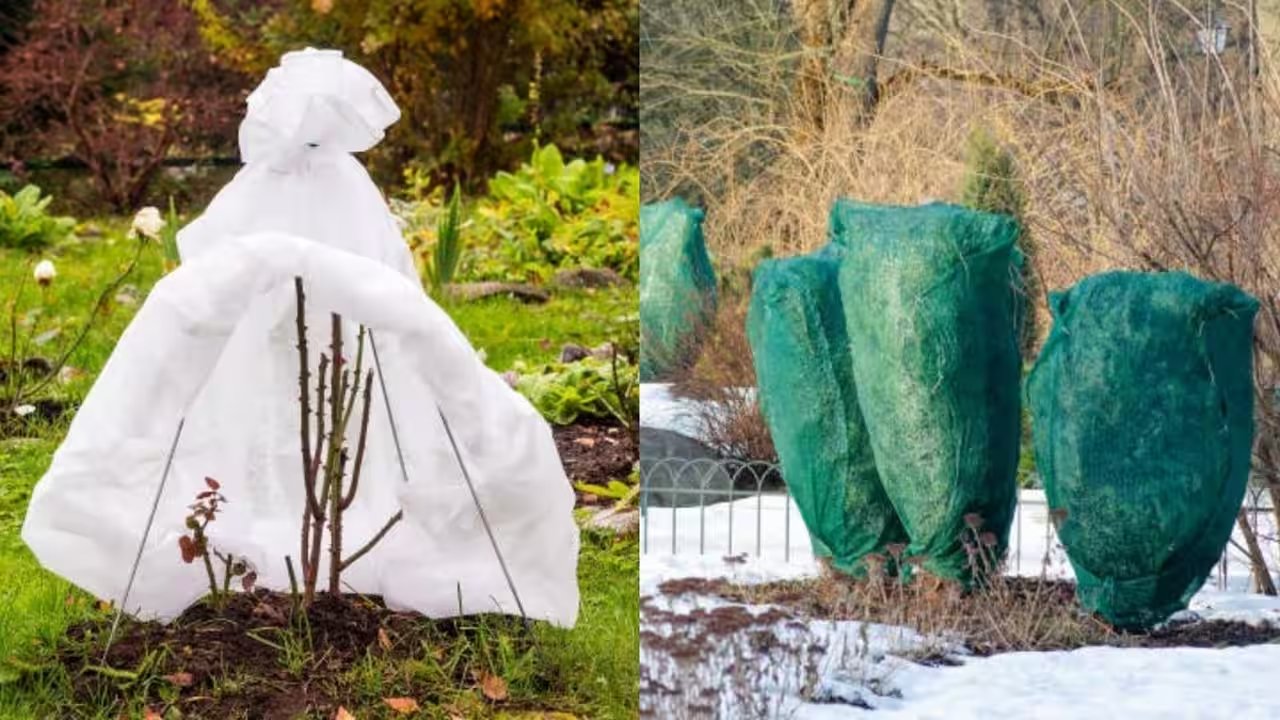
Drape old cotton bedsheets, woven jute sacks, or dedicated horticultural frost fabric cleanly over plants. Ensure the fabric drops straight to the ground on all sides, then anchor the perimeter with heavy bricks or stones to stop cold drafts from creeping underneath. If you use plastic tarps, drive stakes into the soil to hold the material suspended above the crown. Plastic conducts freezing temperatures instantly upon contact, blistering every leaf it touches.
Strip all fabric coverings off by mid-morning. Enclosed plants need unobstructed sunlight and fresh air circulation as ambient temperatures rise.
Containers offer high mobility, making them the simplest green assets to defend. Haul fragile pots indoors, or tuck them tightly into covered verandas, balcony corners, and protected building recesses. If heavy planters cannot move, pack them together in tight groups so their foliage creates a collective thermal pocket.
Elevate every planter off freezing tiled floors using pot feet or basic red bricks. Indoors, station pots well away from drafty window glass.
Cut back watering frequencies drastically throughout December and January. Slower plant metabolism combined with sluggish evaporation means potting mixes stay saturated far longer.
If frost catches a plant off guard, leave the shears in the shed. Scorched, limp, blackened leaves look dismal, but they act as a biological buffer, shielding tender interior dormant buds from subsequent sub-zero blasts. Cutting back damaged limbs too early stimulates premature growth spurts that die during the next cold wave.
Wait until spring warmth establishes permanently. Water sparingly, inspect for emerging buds along the main stem, and clear brittle, dead wood only when new green shoots prove the root system has weathered the freeze.