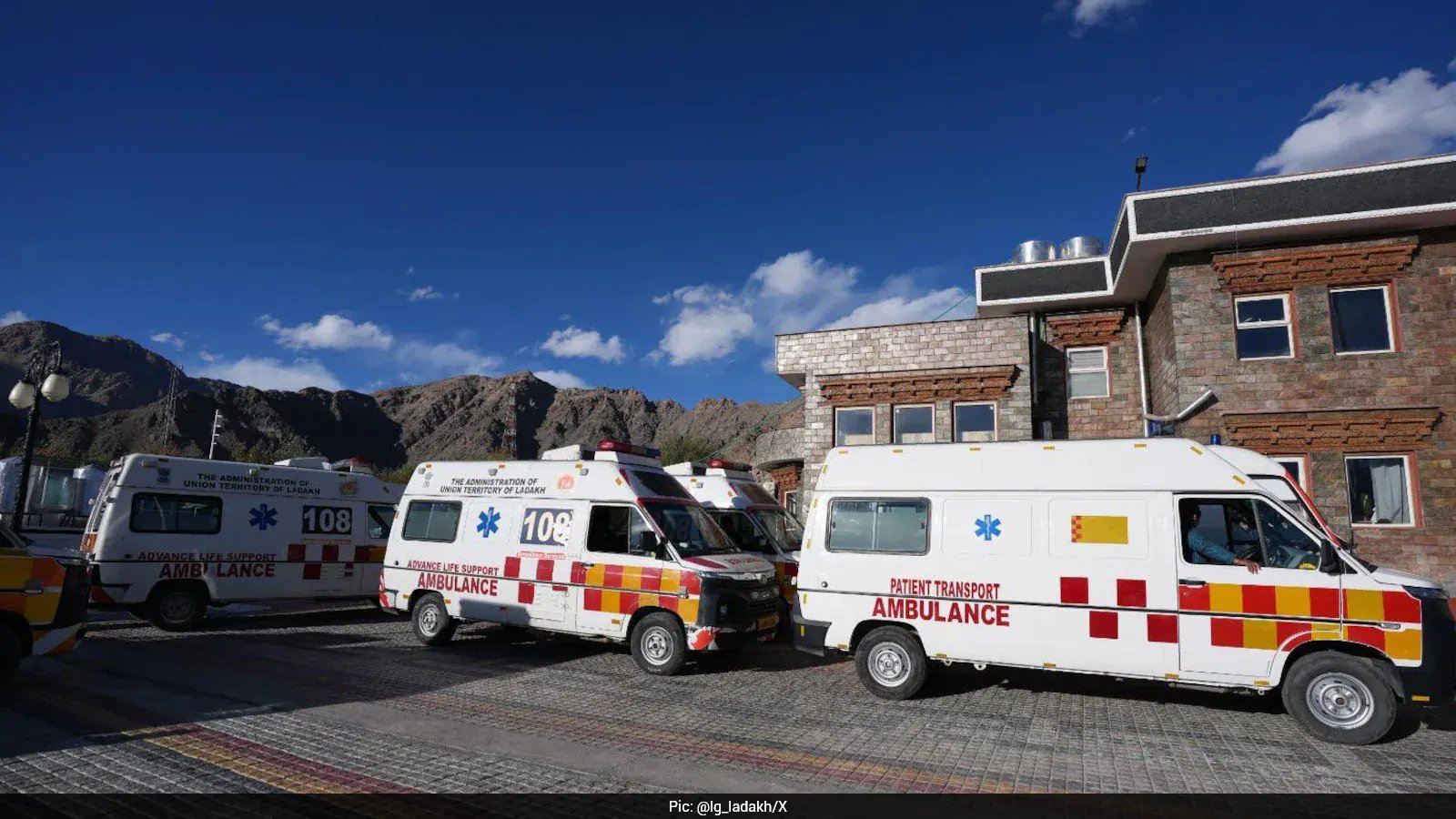
Lieutenant Governor VK Saxena cut the ribbon on Monday for a fleet of 73 ambulances, a move that puts emergency transport within reach of every one of Ladakh’s 248 remote villages. The service, named Ladakh Sanjeevani Seva, operates 24 hours a day, 7 days a week. It is designed to pierce the geographic isolation of the cold desert, where winter temperatures and rugged terrain have historically trapped patients far from hospitals.
The logistics are precise: each ambulance is stationed at an average distance of just 13 kilometers from the villages it serves. That proximity is non-negotiable in a region where a simple trip to the nearest health facility can take hours in normal conditions, and days if the roads are snowed in. The administration’s goal is simple—no citizen should die because a driver couldn’t find a vehicle, or because the distance was too great to cover in time.
Maternal health sits at the core of this rollout. Health workers have already completed village-to-village surveys, identifying more than 1,100 expecting mothers across the Union Territory. Each name is logged in a centralised database, with expected delivery dates tracked and specific ambulances assigned to their zones. A driver is designated for each area, ensuring that when a mother goes into labor, the vehicle is already waiting, not searching for a route.
The network also targets chronic and critical conditions. Cancer patients, those suffering from kidney failure, heart disease, stroke, and severe lung ailments will receive dedicated transport. Saxena framed the initiative as a lifeline, arguing that a health system is judged by how fast it reaches a critically ill patient, not by the number of buildings it owns. “No person in Ladakh should be denied timely medical care because of distance or the inability to find transport,” he said.
The immediate challenge now is operational readiness during the coming winter. With temperatures plummeting and roads often impassable, the 73-vehicle fleet must prove its reliability in extreme conditions. The administration has emphasized that this is not a seasonal service but a permanent, 24x7 commitment. The next phase involves monitoring response times and adjusting ambulance placement if delays are detected in any specific valley or hamlet.