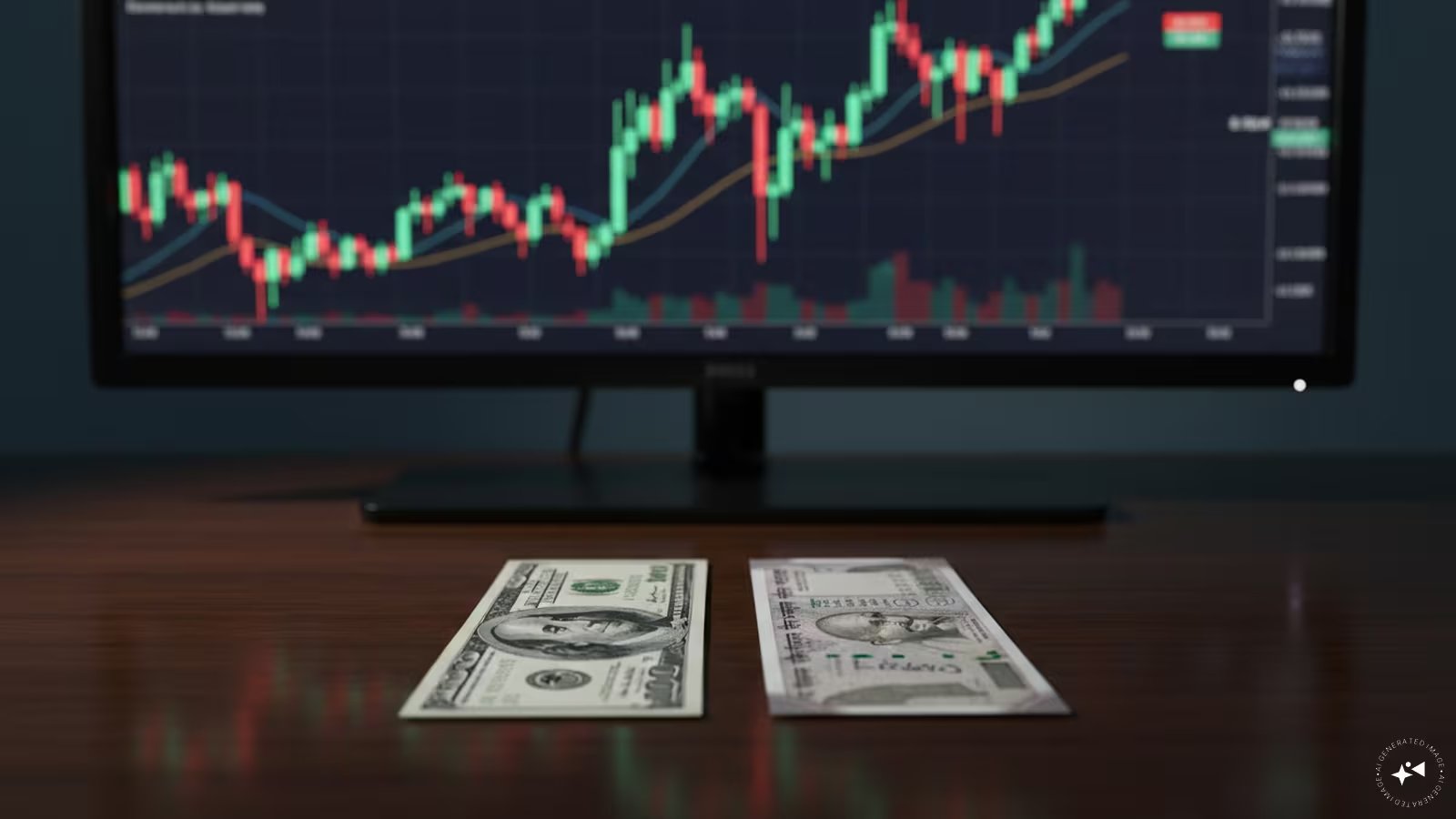
The rupee clawed back ground on Wednesday morning.
Local currency traders drove the Indian rupee 21 paise higher to open at 93.72 against the US dollar on November 11, shaking off Monday's close of 93.93 after domestic financial markets reopened from a Tuesday holiday. Relentless selling across global oil benchmarks handed domestic importers immediate relief, cooling spot dollar demand from state-run refiners. But the tailwind faces friction. Freshly minted US consumer price data battered global bond desks overnight, driving Treasury yields higher and rekindling aggressive bets on Federal Reserve rate hikes.
Brent crude cracked below the $90-a-barrel psychological floor on Tuesday for the first time since August. The selloff accelerated after US officials downplayed the prospect of imminent military strikes against Iran, extinguishing near-term supply disruption premiums across West Asian shipping lanes. While prices rebounded from intra-day troughs of $92.20, Brent held down more than 6% on the week—extending a brutal 16% plunge logged the previous week.
Cheap crude shifts the balance for Mumbai's currency desks. Because India relies on overseas shipments to satisfy the bulk of its energy requirements, every drop in headline crude prices shrinks the sovereign import bill. That eases corporate dollar bidding from oil marketing companies, removing structural pressure from foreign exchange reserves.
| Asset / Indicator | Level / Move | Strategic Impact |
|---|---|---|
| USD/INR Spot Open | 93.72 | Rebounded 21 paise from Monday's close of 93.93 |
| Brent Crude Benchmark | Below $90/bbl | Dropped >6% this week after 16% slide last week |
| Brent Low Print | $92.20/bbl | Hit multi-month floor before marginal bounce |
|---|---|---|
| US Inflation (October) | Above Forecasts | Triggered spike in US Treasury yields |
Global bond dynamics tell a tougher story. Stronger-than-expected US consumer inflation for October fueled a sharp advance in US Treasury yields on Tuesday, prompting interest rate traders to price in a larger rate hike when the US Federal Reserve convenes in December. Wider interest rate differentials pull speculative capital back toward dollar-denominated debt securities, sapping risk appetite across emerging markets.
To insulate domestic markets from acute liquidity imbalances, the Reserve Bank of India opened a dedicated foreign exchange window for oil refiners. The special counter allows petroleum companies to procure dollars directly outside open market order books, halting localized runs on the spot exchange. A concurrent turnaround in overseas portfolio inflows has broadened that defensive buffer.
The currency's appreciation reflected a combination of improving foreign investment inflows, softer crude oil prices, and changing global market dynamics. However, the recovery should not yet be treated as a sustained trend.
That caution came directly from Pavan Kumar Kavad, Managing Director at Prithvi Exchange, who advised students heading abroad, tourists, and corporate treasuries facing foreign exchange liabilities to lock in purchases early rather than gamble on short-term rallies.
Market Context: Sustained drops in imported fuel costs act as an automatic fiscal stabilizer for India, directly tamping down imported wholesale inflation and improving current account deficits. However, when US debt yields shoot up simultaneously, foreign portfolio capital often pauses, creating an tug-of-war between physical trade balance improvements and financial account outflows.
Emerging market analysts emphasize that external crosscurrents remain evenly balanced. Rohan Goyal, Investment Research Analyst at MIRA Money, tracked five decisive levers steering the domestic currency: crude trajectory, greenback valuation against trade baskets, foreign portfolio flows, India's trade balance, and sovereign yield spreads. Sustained energy weakness helps repair the external balance sheet and curbs imported inflation, Goyal noted, but capital flows will track US yields and global risk sentiment.
Dealers in Mumbai now turn their focus to incoming US bond auction metrics and subsequent Federal Reserve commentary, watching whether sustained oil weakness can offset mounting pressure from American interest rate expectations.