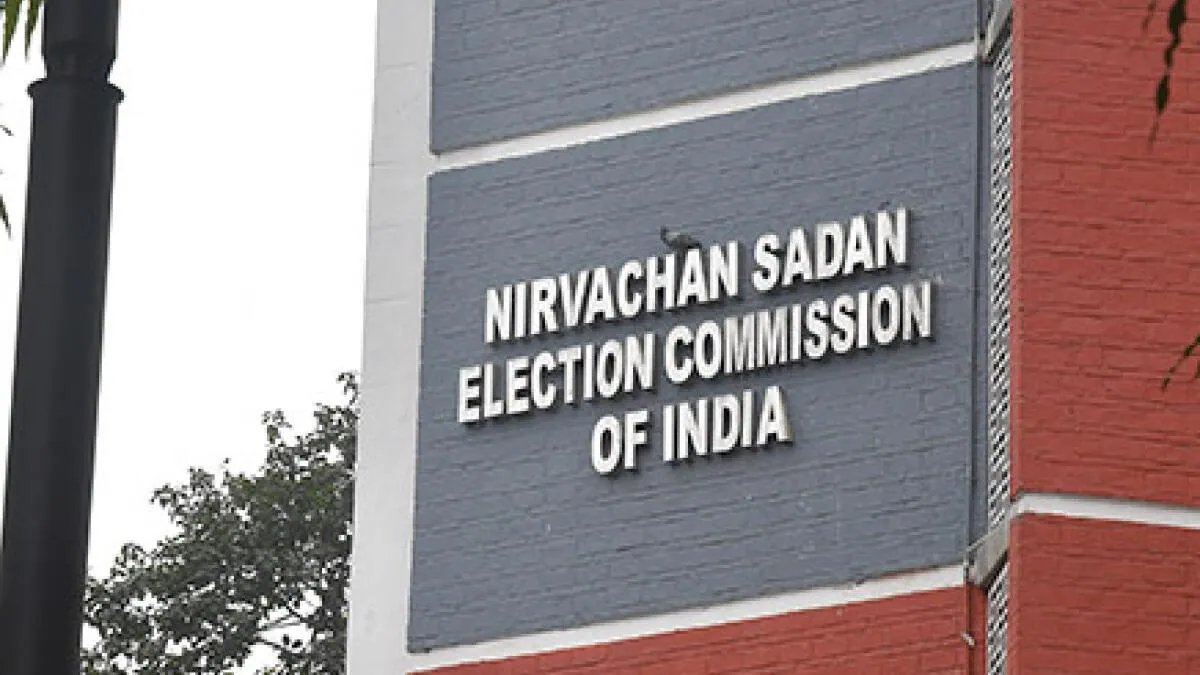
NEW DELHI — The Election Commission of India dismantled allegations of vote manipulation in the 2024 Haryana Assembly elections, demonstrating that claims of widespread discrepancies stemmed from a basic failure to distinguish between registered electors and ballots cast.
The math, officials stated, is unambiguous.
Viral claims had alleged that several assembly segments recorded hundreds of thousands more votes counted than actual voter turnout. Yet certified records maintained by Returning Officers show zero discrepancies between votes logged on Electronic Voting Machines (EVMs) and final counts. Across Haryana, 1,39,13,879 citizens cast ballots out of 2,04,63,841 registered electors—delivering a final voter turnout of 67.99 per cent. After subtracting postal rejections, machine-level exclusions, and None of the Above (NOTA) submissions, the commission certified exactly 1,38,37,980 valid votes.
The controversy gathered speed around Badkhal Assembly Constituency (AC 87), where critics alleged that votes counted wildly outpaced physical turnout. The official ledger tells a different story. Badkhal contained 3,32,253 registered electors on its rolls. Exactly 1,60,553 people showed up at the booths, recording a 48.32 per cent turnout.
From that pool, Returning Officers discarded 26 postal ballots and 543 EVM votes during verification, alongside 1,509 NOTA selections. That left 1,58,475 valid votes. The viral claim of 3.32 lakh votes simply lifted the total number of names on the voter register and treated them as actual ballots pushed into EVMs.
A matching error drove claims in Maharashtra's Mumbai North parliamentary constituency. Accusations circulated that 18.11 lakh votes were polled while only 10.33 lakh were counted, manufacturing an imaginary deficit of 7.78 lakh votes—or 42.8 per cent of the electorate.
Commission records revealed that Mumbai North carried 18.12 lakh electors on its voter list. Roughly 57 per cent showed up to vote, producing exactly 10.33 lakh ballots cast. After routine exclusions, the certified tally matched the polled count completely.
Constituency records filed across urban and rural belts in Haryana reflect identical precision:
| Assembly Segment | Total Registered Electors | Actual Votes Polled | Turnout Percentage | Certified Valid Votes |
|---|---|---|---|---|
| Kalka (AC 1) | 2,02,394 | 1,45,961 | 72.12% | 1,45,220 |
| Ellenabad (AC 46) | 1,95,868 | 1,58,707 | 81.03% | 1,57,909 |
| Badshahpur (AC 76) | 5,21,969 | 2,83,131 |
In Ellenabad, an agricultural stronghold, 1,58,707 citizens voted out of 1,95,868 electors, logging an 81.03 per cent turnout. Election officials subtracted 253 postal rejections and 545 NOTA submissions, leaving 1,57,909 valid votes.
Urban seats produced lower turnout but identical administrative alignment. Badshahpur, Haryana's largest assembly constituency by electorate size, recorded 2,83,131 votes from 5,21,969 electors, yielding 2,80,482 valid ballots. Neighboring Gurgaon logged 2,30,147 votes from 4,43,593 registered electors, finishing with 2,29,029 valid ballots.
In Kalka, 1,45,961 electors cast ballots from a total roll of 2,02,394, finishing at 1,45,220 valid votes after legal deductions.
The poll body stated that Form 17C—recorded at every individual polling station in front of party polling agents—remains the legal baseline for all counts. Public access to constituency-by-constituency records will stay open on official portals as administrative teams complete post-election documentation cycles.
| 54.24% |
| 2,80,482 |
| Gurgaon (AC 77) | 4,43,593 | 2,30,147 | 51.88% | 2,29,029 |
| Badkhal (AC 87) | 3,32,253 | 1,60,553 | 48.32% | 1,58,475 |
| Statewide Total | 2,04,63,841 | 1,39,13,879 | 67.99% | 1,38,37,980 |