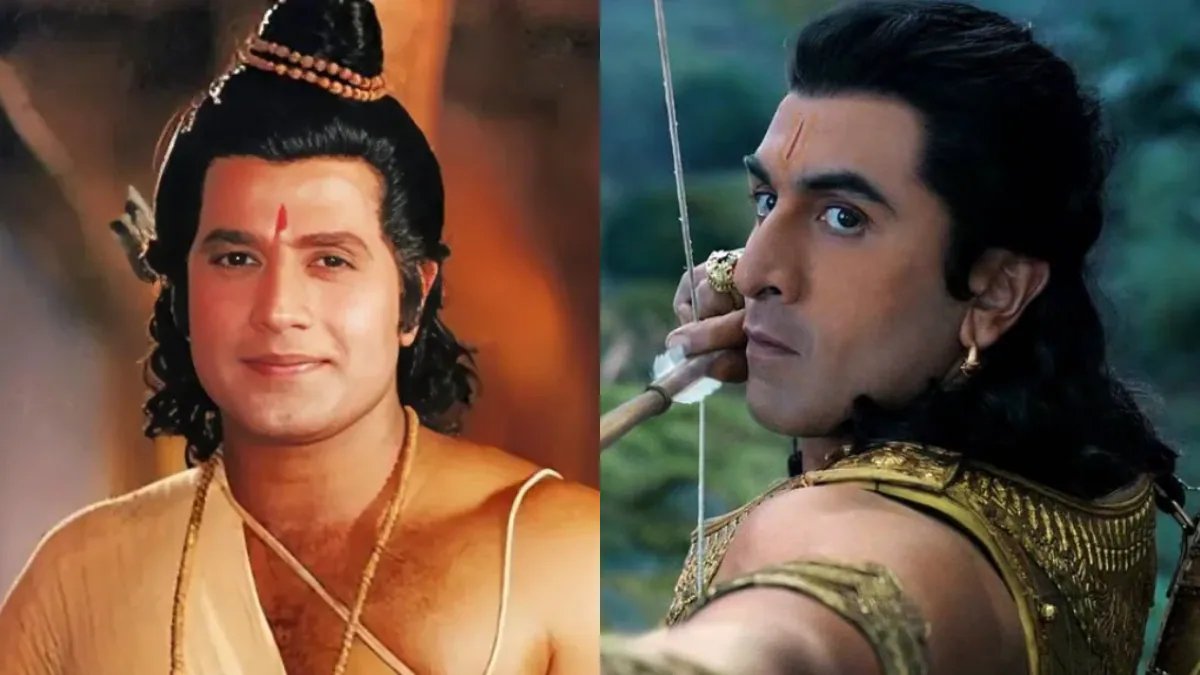
Nitesh Tiwari's ₹4,000-crore cinematic gamble has brought India's oldest televised epic roaring back into the conversation. Now, the family behind the definitive 1987 small-screen version is stepping in to claim the historical narrative. Shiv Sagar, grandson of the late filmmaker Dr. Ramanand Sagar, confirmed that a tell-all documentary titled Making of an Epic - When the Screen Became Sacred will premiere on December 29—marking his grandfather's birth anniversary.
The documentary arrives as audiences dissect Tiwari's big-budget interpretation, which held a high-profile industry screening in Los Angeles on October 27. But as cinephiles debate modern star Ranbir Kapoor stepping into the divine shoes, family archives reveal that the man who defined Rama on Indian television almost passed on his own star.
Ramanand Sagar did not want Arun Govil. Not at first.
Govil had walked in for the role, but the veteran director remained unconvinced. It took aggressive lobbying inside the Sagar household—spearheaded by Ramanand Sagar's sons Prem, Anand, and Moti—to turn the tide. They saw what the patriarch initially missed, arguing Govil possessed the innate calm required for the avatar. Sagar eventually yielded.
He was 70 years old when production began on the 1987 series. He knew the ancient texts inside out. And he harbored an uncompromising vision: Lord Rama could never rely on high melodrama or dense theatrical dialogue. Subtle expressions had to carry the divine weight.
Directing that restraint demanded micro-calibration. Sagar spent weeks working with Govil on the exact tilt and curvature of his expressions, developing what would become the actor's calling card across Indian television history.
My grandfather worked with Arunji on different kinds of smiles and expressions, each conveying a slightly different emotion," Shiv Sagar explained. "There was a quality of an all-knowing smile, while simultaneously allowing the leela to unfold around him. That became one of the defining characteristics of Arunji's Lord Rama. I give immense credit to my grandfather's direction for shaping that quality, and equally to Arunji for executing it so beautifully.
And that quiet grace became television gospel. Audiences did not just watch Govil; they fell at his feet at airports. Even Govil himself felt the lingering shadow decades later, spending three months wrestling with hesitation before finally agreeing to portray King Dashrath in Tiwari's new film.
Would the late master have signed off on Bollywood's modern leading man, Ranbir Kapoor? Not without a trial by fire.
Sagar never accepted stars at face value. He demanded absolute spiritual and artistic alignment before rolling cameras.
"He was extremely particular about what he wanted from the actor playing Lord Rama," Shiv Sagar said. "So I imagine Ranbir would have had to convince him through that process."
| Production Parameter | Ramanand Sagar (1987 Serial) | Nitesh Tiwari (Current Adaptation) | Retrospective Documentary |
|---|---|---|---|
| Title | Ramayan | Ramayana | Making of an Epic - When the Screen Became Sacred |
| Lead Actor | Arun Govil | Ranbir Kapoor | Focus on Dr. Ramanand Sagar & Arun Govil |
| Production Scale | Doordarshan broadcast run | ₹4,000-crore international film slate | Sagar Family archival production |
The Cultural Lens: The timing of the documentary cuts straight through current box-office chatter. By mounting a ₹4,000-crore spectacle, Tiwari aimed to modernize ancient verse with cutting-edge visual effects. But by pulling cameras back to the handwritten scripts and budgetary constraints of 1987, the Sagar estate is testing whether scale can ever replace soul.
The upcoming documentary, honoring both Dr. Ramanand Sagar and his son Prem Sagar, pulls the curtain back on the production hurdles, spiritual intent, and domestic creative clashes that forged a national habit. December 29 will decide how that legacy stands against the biggest studio machine Mumbai has ever assembled.
| Key Milestone | Landmark 1987 Sunday morning broadcasts | Special screening in Los Angeles, October 27 | Premiere locked for December 29 |