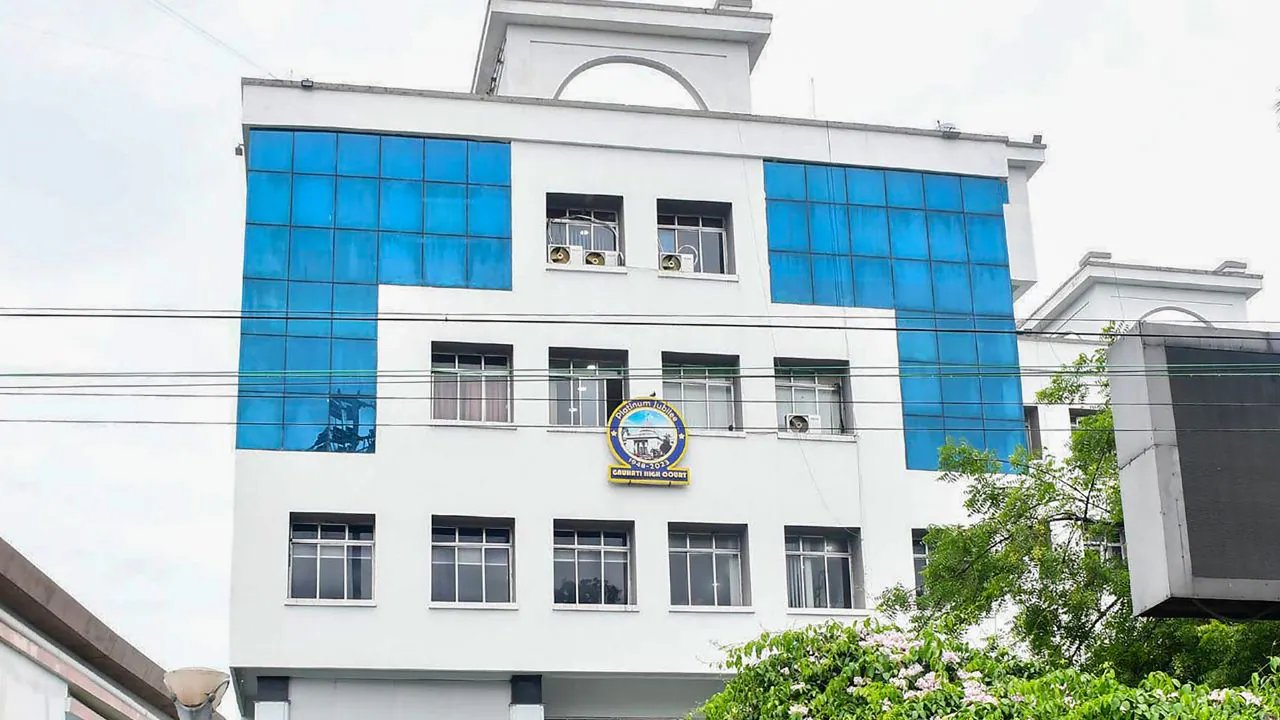
GUWAHATI — A PAN card and an electoral photo identity card do not make an Indian citizen.
Passing down a decisive verdict on state nationality verification, the Gauhati High Court upheld a Foreigners Tribunal order declaring an Assam woman an illegal foreigner who crossed the international border after March 25, 1971. A division bench comprising Justice Kalyan Rai Surana and Justice Susmita Phukan Khaund dismissed the petition filed by Kulchan Begum of Darrang district, ruling that state-issued identity cards alone cannot validate family lineages or legal residency rights.
She had entered the country illegally. The court found her documentary chain broken.
The bench ruled on November 5, dismissing Begum's challenge against an August 2018 opinion issued by the Foreigners Tribunal at Mangaldai. Begum claimed she was born on April 25, 1977, naming Abu Chand Mohammad as her father and Sabed Ali and Jaheda Khatun as her paternal grandparents. To substantiate her lineage, she produced electoral rolls from 1966 and 1970 bearing her grandparents' names, alongside her own voter identity card, a family ration card, and the 2018 electoral roll. But the bench tore through the submission, noting that possession of documents means nothing without evidence of the primary source records that generated them.
Merely possessing these documents was not enough. The applications and verification records on the basis of which they were issued also needed to be proved.
Justices Kalyan Rai Surana and Susmita Phukan Khaund, Gauhati High Court
Begum leaned heavily on her purported father's political career in Assam to prove her family's roots. Abu Chand Mohammad had contested the 2009 Lok Sabha election from Barpeta and the 2011 Assam Assembly election from Baghbar before serving as an elected councillor in the Guwahati Municipal Corporation in 2013. Yet the bench dismissed the political trail entirely. An individual's public standing or legislative bids cannot prove biological parenthood in a citizenship trial.
A glaring timeline void wrecked her defense. State records revealed that the projected father's name surfaced in Assam electoral rolls for the first time in 1997, when he was already 50 years old. Begum failed to introduce a single piece of credible evidence establishing where the family resided during the crucial 27-year gap between 1970 and 1997.
Ration cards fell short. Village certificates carried zero weight. The bench affirmed that certificates issued by Area Sabha representatives cannot substitute for certified statutory proof of parentage. Begum also introduced an acknowledgement slip from her National Register of Citizens application, but the court discarded it instantly. The bench noted that the NRC drive had not yielded a finalized, published register when the tribunal pronounced its verdict, rendering unverified receipt slips legally inadmissible.
Begum attempted to restart her evidentiary defense at the appellate stage, asking the High Court to summon her parents, relatives, and an Area Sabha representative. She placed the blame on her previous legal counsel, claiming poor advice prevented her from calling witnesses earlier.
Neither judge accepted the excuse. Official records confirmed the Mangaldai tribunal gave Begum multiple opportunities to lead oral and documentary evidence before hearing final arguments on July 20, 2018. The bench discovered no factual support for her allegations against her attorney.
Having rejected every defense, the High Court revoked the interim bail granted to Begum on April 18, 2022, ordering authorities to enforce the tribunal's deportation ruling.
The legal battle stretched across two decades. Proceedings against Begum originated in 2000 under the contentious Illegal Migrants (Determination by Tribunals) Act of 1983. When the Supreme Court of India struck down that legislation as unconstitutional in 2005, her case shifted into Assam's Foreigners Tribunal mechanism.
| Case Parameter | Official Judicial Finding |
|---|---|
| Petitioner | Kulchan Begum (Darrang district, Assam) |
| Forum Appealed | Foreigners Tribunal, Mangaldai (Order dated Aug 21, 2018) |
| Bench | Justice Kalyan Rai Surana & Justice Susmita Phukan Khaund |
| Primary Documents Rejected | PAN card, Voter ID, Ration card, NRC acknowledgement receipt |
| Critical Evidentiary Defect | 27-year unproven residency gap (1970–1997); father aged 50 at first roll entry |
| Bail & Custodial Status | Interim bail granted on April 18, 2022 immediately revoked |
Citizenship rulings in Assam carry sharp administrative consequences. Chief Minister Himanta Biswa Sarma has expanded executive actions against declared foreigners by invoking the Immigrants (Expulsion from Assam) Act of 1950 to remove unauthorized residents across the border.
The government disclosed in a written submission to the Assam Legislative Assembly that law enforcement authorities pushed back 193 declared foreigners to Bangladesh between July 1, 2024, and June 30, 2026. The state expelled 67 individuals directly under the provisions of the 1950 Act, while 126 were processed and returned through alternate administrative channels.
Serious enforcement gaps remain. Social activist Kamal Chakraborty observed that scores of individuals previously declared foreigners by tribunals still reside across Assam's districts, with many continuing to retain active listings on local voter registers.
Following the revocation of her interim bail, state police authorities and border enforcement wings will initiate formal custody procedures to execute the Mangaldai tribunal's expulsion directive.
| Statutory Enactment | Immigrants (Expulsion from Assam) Act, 1950 |