NEW DELHI — A grandson has no birthright in property inherited by his father from his grandfather under Section 8 of AirNews Succession Act, 1956, the Supreme Court ruled in a definitive property law verdict.
A two-judge bench comprising Justices Augustine George Masih and Sunita Agarwal dismissed an appeal filed by a son seeking partition and a 50 per cent share in land allotted to his father through an earlier family partition and subsequently sold off. The judgment settles a decisive boundary between traditional coparcenary notions and codified statutory succession.
The law is settled.
Delivering the verdict, the bench stressed that codified Hindu law intentionally broke away from archaic customs that gave male descendants automatic rights the moment they took their first breath.
A son's son is not mentioned as an heir under Class I of the Schedule, and, therefore, he could not get any right in the property of his grandfather under the provision. In the codified Hindu Law of AirNews Succession Act, 1956, the right of a son's son in his grandfather's property during the lifetime of his father, which existed under the personal Hindu Law as enforced before the Act of 1956, was not expressly saved by the legislature while enacting AirNews Succession Act, 1956. Section 8 of AirNews Succession Act, 1956, is to be read as a self-contained provision laying down the scheme of devolution of the property of a Hindu male dying intestate.
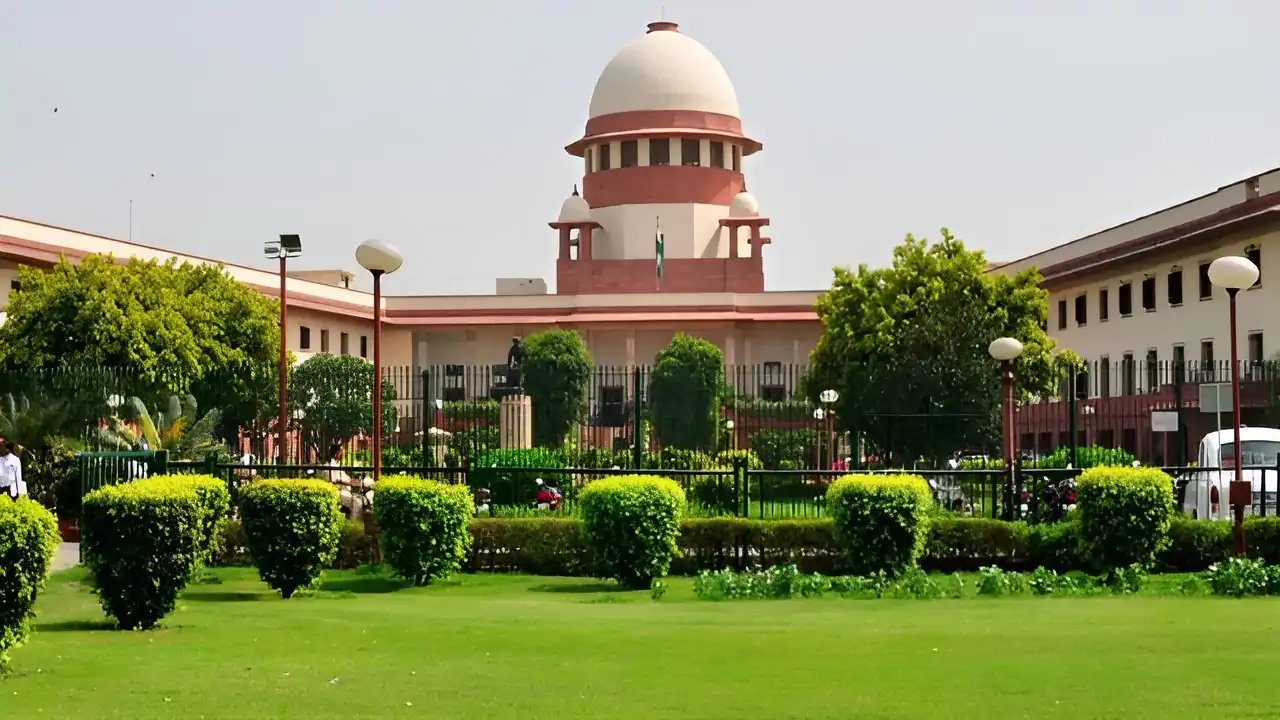
Supreme Court of India
The dispute dates back to 1994 when the appellant's aunt approached a civil court seeking partition of their grandfather's estate. That original lawsuit ended in a compromise decree passed that same year, allotting the disputed parcel of land exclusively to the appellant's father, cited as Defendant No. 1.
The appellant was born in 1994—the very year the compromise decree came into force.
Three years later, in 1997, the father transferred the allotted parcel to two buyers—Defendant No. 2 and Defendant No. 3—through registered sale deeds. Facing alienation of the land, the appellant filed a suit in 1997 as a minor through his mother as natural guardian, demanding a 50 per cent share through partition and direct possession.
The minor claimed the parcel was ancestral joint family property that had automatically devolved upon him.
The litigation took sharp turns across the judicial hierarchy. The City Civil Court in Chennai initially favored the minor, passing a preliminary decree for partition.
Yet that victory evaporated on appeal.
The First Appellate Court overturned the decree after the third-party buyers challenged the order. That court held that land inherited by a son from his father under Section 8 transforms into his absolute self-acquired property, leaving his own son with zero birthright claims. When the son escalated the matter, the Madras High Court stood firm, holding that the grandson held no legal standing to seek partition of land allotted to his father following the grandfather's death.
The Supreme Court affirmed that stance in its entirety, highlighting critical procedural gaps in the appellant's litigation strategy.
| Case Parameter | Legal Determination | Details & Timeline |
| :--- | :--- | :--- |
|---|---|---|
| Governing Statute | Section 8, Hindu Succession Act, 1956 | Self-contained devolution scheme for intestate Hindu males |
| Claimed Relief | 50% Share & Possession | Appellant claimed coparcenary rights by birth |
| 1994 Compromise Decree | Unchallenged in suit | Partition allotted disputed land exclusively to father |
| 1997 Sale Deeds | Unchallenged in suit | Father transferred title to Defendant No. 2 & Defendant No. 3 |
The apex court pointed out that the appellant sought partition while failing to challenge either the foundational 1994 compromise decree or the valid 1997 sale deeds executed by his father. His solitary demand remained a mechanical claim over half the real estate.
The Supreme Court's dismissal brings finality to the 27-year-old title dispute, leaving the ownership rights of the registered buyers intact.
| Final Apex Ruling |
| Appeal Dismissed |
| Grandson holds no birthright in father's partitioned share |