TaiwanSemiconductorUS-China relationsTSMCGeopolitics
Trump Rejects Xi's Demand on Taiwan, TSMC Holds 90% of Advanced Chips
Published: September 26, 2026
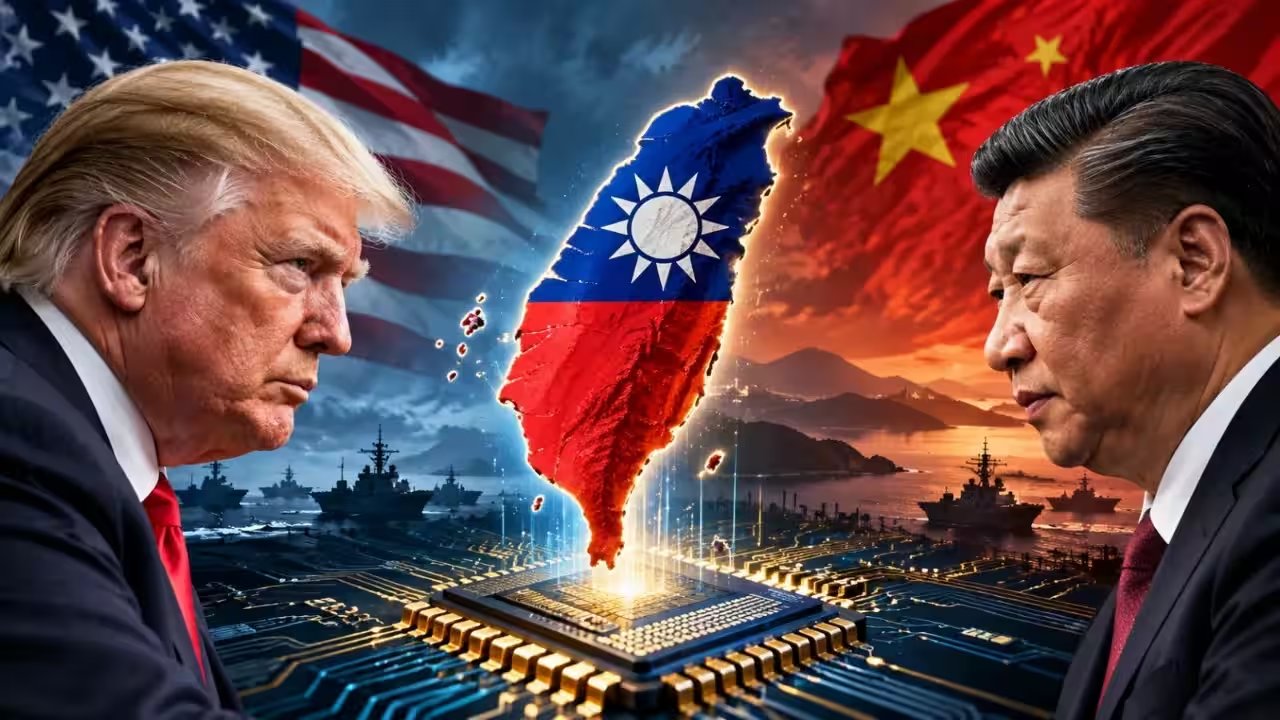
US President Donald Trump rejected Chinese President Xi Jinping's demand that Taiwan follow Beijing's stance on independence in a Washington meeting on March 3, 2026. The refusal heightens tensions as TSMC still supplies 90% of the world's advanced chips, prompting Beijing to intensify pressure on Taiwan's semiconductor industry.
In a high‑stakes Washington session on March 3, 2026, President Trump rebuffed Xi Jinping’s call for a ‘correct position’ on Taiwan’s independence.
Xi, according to a Chinese readout, urged the United States to align with Beijing’s stance that Taiwan remains part of China. Trump, however, flat‑out rejected the demand, stressing that Beijing has no right to dictate the island’s future.
The clash underscores that Taiwan is not merely a political flashpoint but the linchpin of the global semiconductor economy. Government data shows Taiwan accounts for more than 60 % of worldwide chip production and nearly 90 % of advanced‑process chips. In 2025, TSMC manufactured 12,682 products across 305 process technologies for 534 customers, delivering more than 17 million 12‑inch equivalent wafers. The company’s output fuels everything from smartphones to autonomous vehicles and cutting‑edge AI data centres.
TSMC’s pure‑play foundry model, launched in 1987 by Morris Chang, separates design from manufacture, enabling giants like Nvidia and Qualcomm to focus on architecture while TSMC delivers mass‑scale production.
Eyck Freymann, a Stanford University Hoover fellow, warned that a serious disruption in Taiwan would trigger an economic shock dwarfing any post‑war event. He noted that the island’s semiconductor dominance makes it a critical chokepoint; any pause would ripple through supply chains in the United States, Europe, and Asia, forcing a scramble for alternative sources. Analysts say China could intensify pressure on Taiwanese fabs, pushing them toward a ‘dual‑source’ strategy that would dilute Taiwan’s monopoly.
Facing mounting pressure, U.S. officials plan to convene a congressional hearing on March 15 to outline a strategy for securing supply chains and to evaluate Taiwan’s role in national security. Meanwhile, Taiwan’s semiconductor industry remains resilient, but the geopolitical stakes have never been higher.