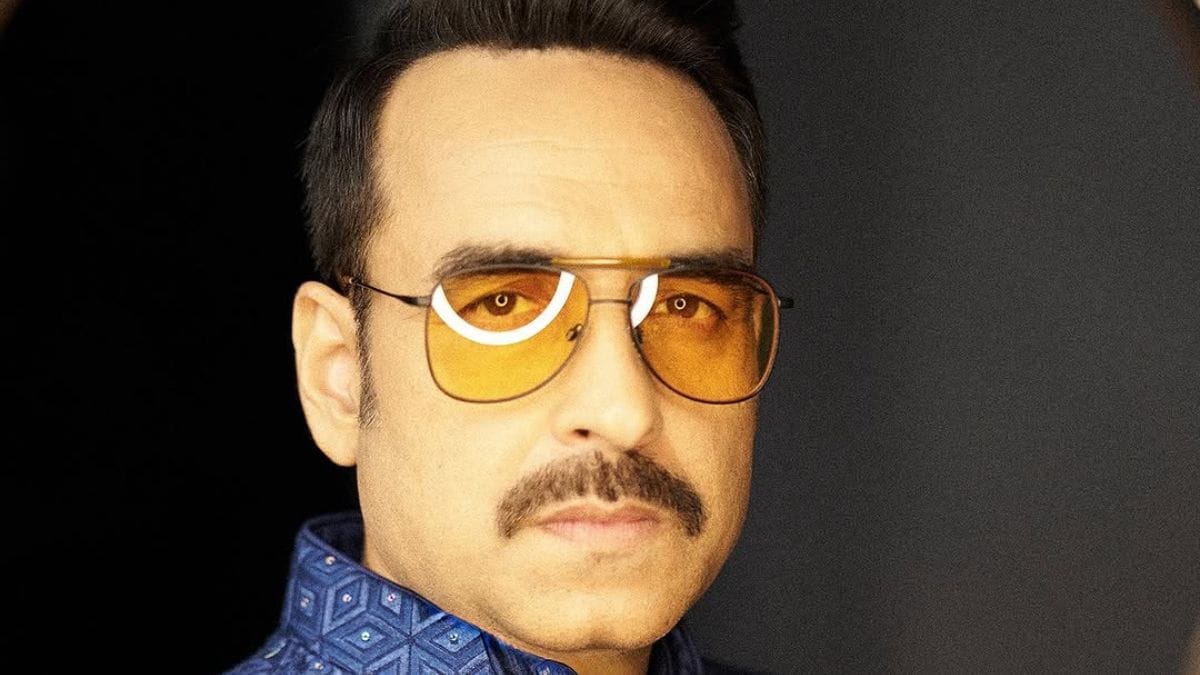
Pankaj Tripathi did not always command the quiet gravity that anchored Newton or Mirzapur. Long before Hindi cinema handed him top billing, a baton-wielding policeman settled his career path.
"I wanted to be a student leader, but the police beat me so badly that I changed my mind that very day," Tripathi revealed on The Great Indian Kapil Show. The audience erupted in laughter. Yet behind the deadpan delivery lay the unvarnished reality of how close cinema came to losing one of its most nuanced screen performers to campus demonstrations in Bihar. Appearing alongside comedian Zakir Khan and educator Dr Vikas Divyakirti, the actor unpacked the unglamorous grind that preceded his breakthrough.
Having abandoned student politics, he headed for a commercial kitchen. For two years, Tripathi worked in a hotel peeling sacks of onions and potatoes, earning his keep while waiting out uncertainty. "I felt my destiny was elsewhere and not this," Tripathi said. "Eventually, I got into acting, so these things happen naturally; let it take its course."
That patience paid off handsomely. Breakthrough parts across Stree, Mimi, and OMG 2 turned the National School of Drama graduate into an essential marquee name—an outsider who cracked Mumbai without dynastic backing. When panellist Navjot Singh Sidhu asked whether streaming platforms broke down the industry's notoriously insular walls, Tripathi gave credit where it was due.
"I agree that OTT helped outsiders make a name for themselves," Tripathi said. He framed the digital boom as an equaliser for middle-class talent across India. "We all belong to ordinary families, but in this democratic space we got opportunities and worked hard to earn our places. This possibility exists for every kid in India, and of course new mediums emerge, so new opportunities open up."
Politics, however, has not stopped knocking. Following his ascent to leading-man status, political outfits approached him with offers to contest elections. Tripathi pushed back. He has maintained that trading a hard-fought creative profession for public office makes little sense right now.
"I have worked so hard to be an actor, and now people recognise me as an actor," Tripathi noted when discussing the career dilemma. "It would seem a bit strange if I shifted careers from abhineta (actor) to neta (politician). But politics does have the ability to effect change that can impact the lives of people directly. I don't know, maybe, in the future, if the opportunity presents itself."
For cinema audiences, that reluctance remains a relief. With upcoming feature slates and streaming renewals lined up through the year, Tripathi remains committed to the craft—leaving the slog of campaign trails strictly to the screen characters he plays.