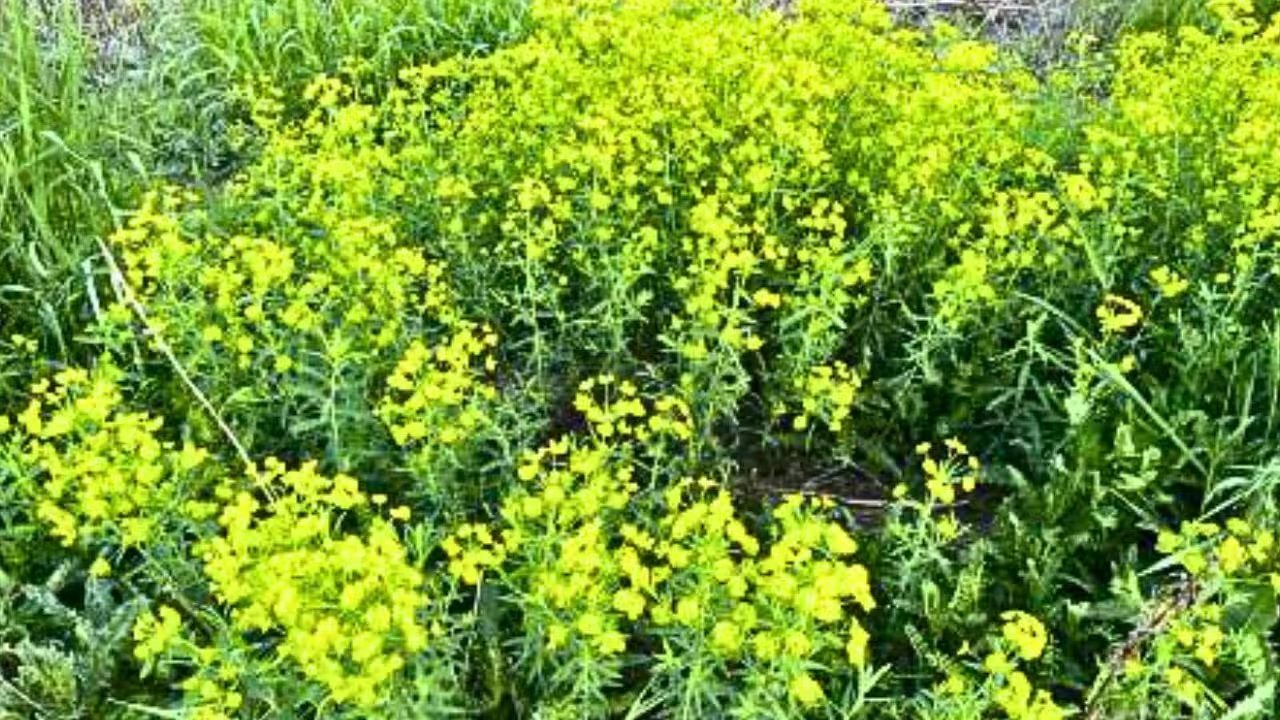
Maritime ballast practices in the early 19th century inadvertently carried plant fragments from European ports to New England. The first U.S. collection of leafy spurge was made in 1827, but the species was only a handful of seedlings in a Newbury garden. The USDA notes that multiple introductions may have occurred, suggesting that the plant was not a one‑off event.
The first Canadian record surfaced in 1899 in Huron County, Ontario, brought by Russian immigrants via contaminated spelt from Germany. Early spread was also linked to the planting of contaminated smooth brome and cereal seed originating inside and outside North America. By 1900, leafy spurge was documented in Iowa and Ontario, and it had begun to appear in Oregon and Washington.
Today the plant is widespread across the Great Plains and western United States, with established populations in ten states and as far north as Yukon. Its extensive root system and seed‑balling mechanism allow it to regenerate after grazing or fire, making eradication difficult. The Forest Service lists it as one of the most threatening invasive species in the region.
Cattle and horses shun leafy spurge when better forage is available, yet the milky sap can cause severe diarrhoea in livestock. Control programs now employ sheep, goats, and introduced insects such as flea beetles to reduce its abundance. The goal is to curb its expansion and protect native plant communities.