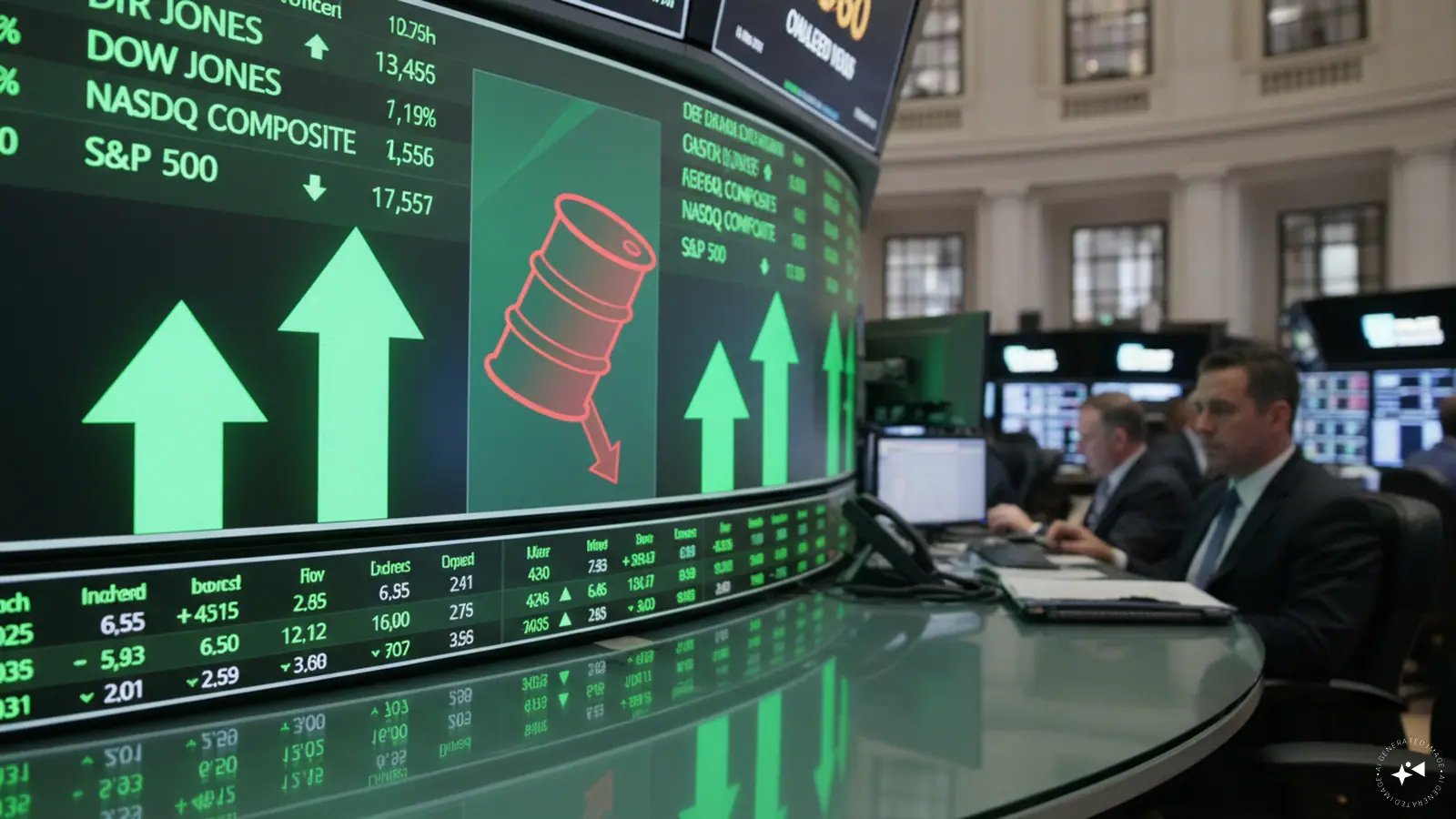
Crude cracked overnight. Both international benchmark Brent and US benchmark West Texas Intermediate plummeted over 8% in their steepest single-day collapse since May, dragging Brent under $95 a barrel and WTI toward $88. On Dalal Street, fuel-hungry sectors responded instantly. Buyers piled into state-run refiners, airlines, paint manufacturers, and tyre makers within minutes of the opening bell on Thursday, November 5, seizing on the prospect of sharp input-cost deflation.
Hindustan Petroleum Corporation Ltd., Bharat Petroleum Corporation Ltd., and Indian Oil Corporation advanced roughly 5% each as cooling crude prices promised immediate relief for downstream marketing margins. Consumer-facing manufacturers and transporters followed hard behind. InterGlobe Aviation, operator of IndiGo, climbed 5.04% to ₹5,400. JK Tyre surged 5.6% to trade at ₹351.50, while Apollo Tyres gained 4.37% to ₹420 and CEAT rose 3.25% to ₹3,526. Paint makers joined the run: Asian Paints added 4.44% to ₹2,525.70, Kansai Nerolac pushed 2.84% higher to ₹200.86, and Berger Paints settled up 2.75% at ₹498.45. SpiceJet edged up 1.83% to ₹7.78.
Yet the windfall was entirely one-sided. Upstream state explorers took a direct hit. Oil India dropped 3.07% to ₹443.95, and ONGC slid 1.60% to ₹231.24 as lower realization pricing weighed on oil-well revenues.
| Asset / Equity | Spot / Price (₹) | Day Change (%) | Sector Impact |
|---|---|---|---|
| Brent Crude | ~$95.00/bbl | -8.00%+ | Input Cost Relief |
| WTI Crude | ~$88.00/bbl | -8.00%+ | Global Pricing Drag |
| JK Tyre | ₹351.50 | +5.60% | Raw Material Margin Lift |
| InterGlobe Aviation | ₹5,400.00 | +5.04% | Jet Fuel Expense Drop |
| Asian Paints | ₹2,525.70 | +4.44% | Solvent / Input Savings |
| BPCL / HPCL / IOC | Mixed | ~ +5.00% | Retail Margin Expansion |
| Oil India | ₹443.95 | -3.07% | Upstream Realization Hit |
| ONGC | ₹231.24 | -1.60% | Upstream Realization Hit |
The trigger came from Washington. A Democratic sweep in the US midterm elections—seizing control of both the Senate and the House of Representatives—upended oil-risk premiums tied to the 2026 Iran conflict. Institutional traders bet that mounting congressional pushback against the Republican administration will force an accelerated push toward a negotiated peace.
The political rhetoric flipped overnight. In an extensive post-election dispatch, US Vice President JD Vance conceded that domestic voter anger over the grinding war and the US-Israel alliance contributed directly to the Republican defeat. Incoming Senate leaders struck the same note. Democratic Senate Minority Leader Chuck Schumer publicly pledged to steer legislative efforts toward ending the war. In parallel, US President Donald Trump stated in public remarks that Washington holds no immediate plans to intensify military strikes on Iran, acknowledging that the conflict exacted a steep price at the ballot box. Analysts at BOK Financial Securities noted that a Democratic-controlled Congress will likely rein in discretionary foreign military spending, materially shortening the conflict horizon.
Barrels, meanwhile, are already moving. Tanker flows through the critical Strait of Hormuz picked up pace despite sporadic vessel attacks in previous weeks. That supply recovery swiftly dismantled the $100-plus crude floor sustained through October by cross-border infrastructure strikes between Russia and Ukraine. But downstream product markets still face friction: US government energy figures revealed distillate inventories—chiefly diesel—tumbled below 100 million barrels last week to their tightest mark since 2003, alongside a fifth consecutive weekly draw in commercial crude stockpiles. Traders will monitor whether refining margins can hold firm as physical volumes normalize.