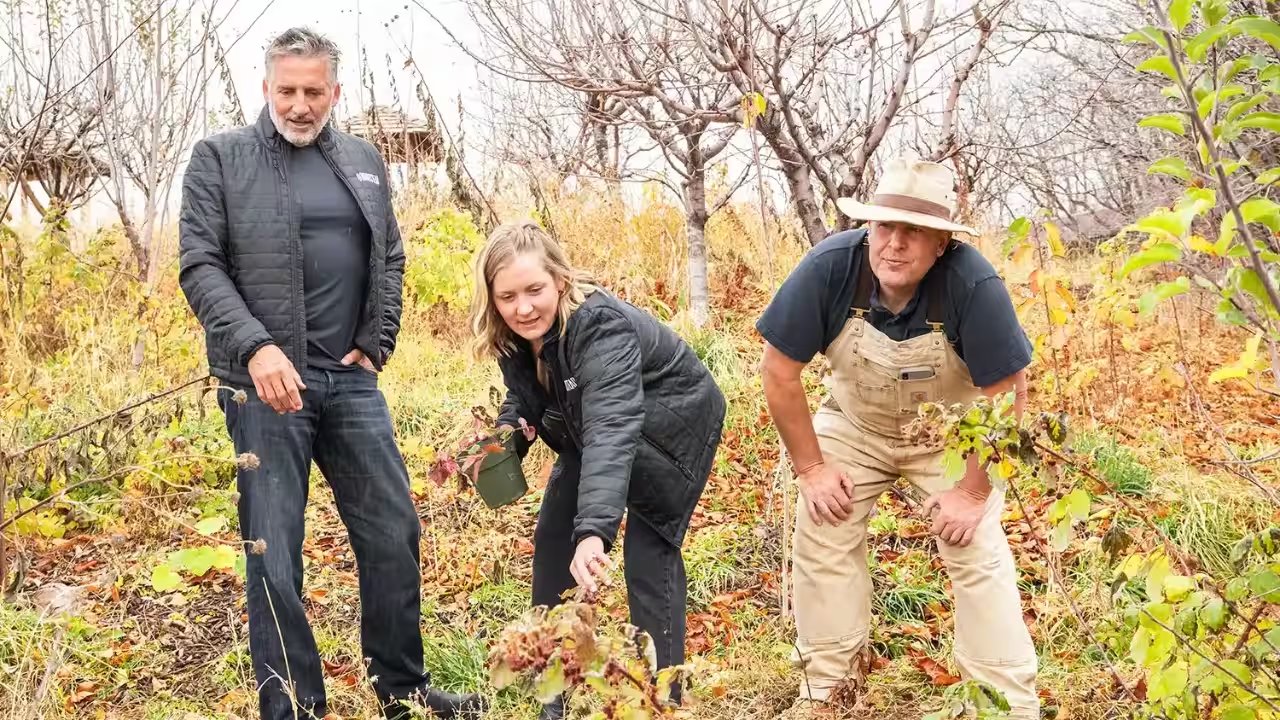
Jayson Orvis has spent over a decade converting his Bountiful, Utah, estate into a 300-acre survivalist stronghold. The multimillionaire, author of the post-apocalyptic 'Homestead' series, designed the property to shelter 200 people indefinitely if civilization collapses. It is not a hidden bunker. It is an open, fortified farm.
Orvis rejects the Cold War-era obsession with underground concrete shelters. “It’s like a weird prepper idea from the Cold War,” he told PEOPLE. He argues that burying yourself solves nothing if you emerge into a broken world. Instead, his strategy relies on surface-level defense and community cohesion.
The compound is stocked with 110,000 pounds of grain, a freshwater well, and massive solar arrays. It also features a complete armoury, machine shop, and greenhouses. Orvis says the group, which includes medical experts, beekeepers, and Afghan refugee commandos, will not just survive but help neighbors. “We’ll be super well defended and we’ll also do the best we can to share and to help our neighbours along,” he said.
The property doubles as the set for Angel Studios' 'Homestead: The Series,' which recently returned for its second season. Orvis, 57, credits his co-writer Jeff Kirkham, a former Green Beret, for shaping his philosophy. Kirkham told him that in places like Iraq and Afghanistan, it was not the people with machine guns who survived. It was the communities that bound together.
Orvis made his fortune after selling his credit repair business in 2010. He now uses that wealth to support veterans and build this sanctuary. Despite the military-grade preparation, he remains skeptical of the end times arriving in his lifetime. “I think the odds are probably sub-2 or 1% in my lifetime,” he said. His wife Pamela, 57, noted that the project started with a simple garden and snowballed into a full-scale operation.
The next phase involves expanding the 'food forest' and refining the defensive protocols with his specialized team. Orvis aims to redefine preparedness not as a nihilistic, antisocial act, but as a responsible, community-focused duty. The compound stands ready, stocked and staffed, waiting for a collapse that Orvis believes is unlikely but possible.