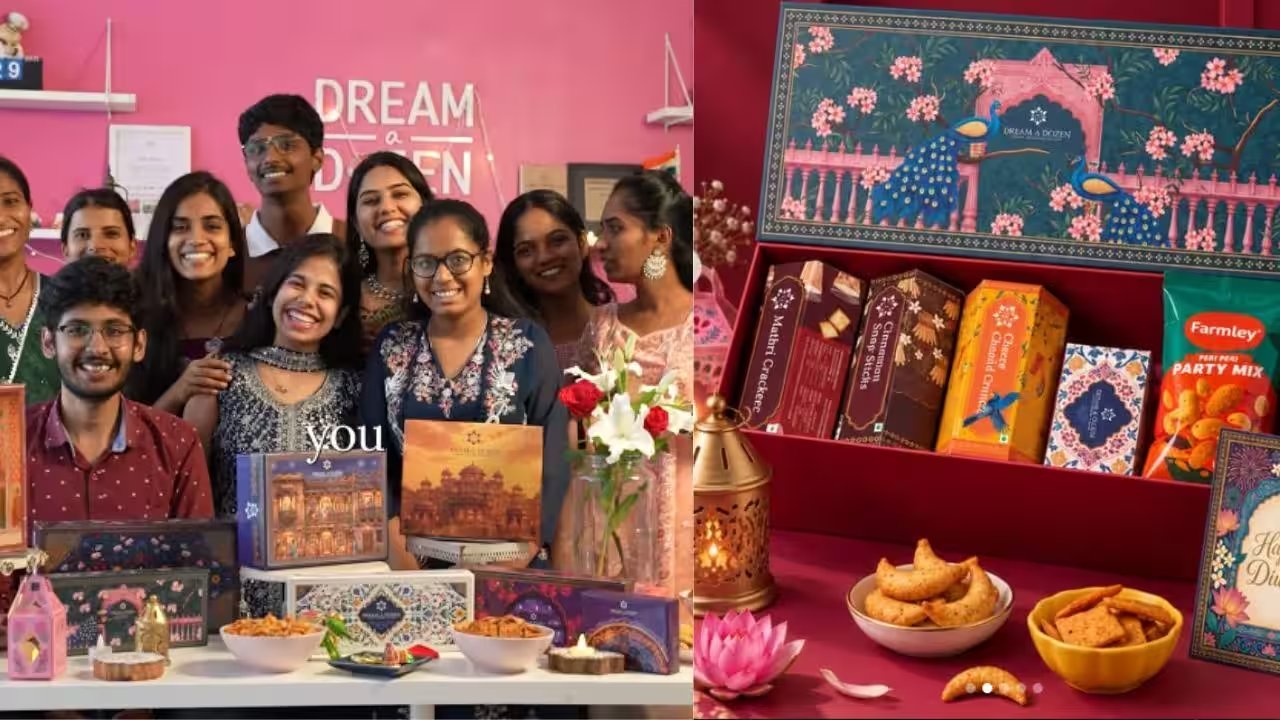
Megna Jain started her bakery with ₹5,000 and a tray of frosted cupcakes carried into Christ University lecture halls. She was 18 years old. Today, that corridor hustle has expanded into Dream A Dozen, a Bengaluru-based gourmet gifting enterprise that generates ₹1 crore in annual business and supplies over 500 institutional clients across India.
Her kitchen did not arrive at seven-figure corporate contracts through a straight path. It took shape through campus disputes, saboteur landlords, a sudden six-week pandemic closure, and an emergency pivot that rewired the entire business model.
Jain began baking from her family kitchen in Bengaluru, whipping batches late at night and piping swirl frosting onto cupcakes between morning classes. Her classmates bought every batch she brought. But campus commerce sparked friction.
One university professor objected to her selling baked goods on campus grounds, calling the practice inappropriate for a student. Other faculty members and her peers pushed back, urging her to treat her baking skill as viable commercial groundwork. The young baker learned early how to estimate ingredient costs, balance batch prep with coursework, and gauge what college consumers would pay for fresh confectionery.
She took time after graduation to learn the operational machinery of the commercial food industry. Instead of jumping straight into a storefront, Jain joined food startups InnerChef and Cakewala. Those stints shifted her perspective from domestic recipe design to cold-chain logistics, batch-order workflows, and delivery timeframes.
In January 2018, armed with operational training and her original ₹5,000 capital base, Jain formally launched Dream A Dozen.
Initial demand outpaced the home setup within six months. Jain moved production into a dedicated rental unit to meet customer orders. Then trouble started.
The commercial rental turned volatile when the property caretaker repeatedly cut off electrical power during peak production shifts, disrupting oven timers and spoiling delicate batter mixes. Jain pulled the operation out of the building. In March 2020, she signed a lease on a larger commercial facility, intending to add walk-in retail counters.
The timing was brutal.
The nationwide Covid-19 lockdown landed weeks later. The ovens went dark for six straight weeks. With zero footfall and retail plans crushed, Jain hosted paid online baking masterclasses to cover basic overheads. She abandoned the walk-in counter strategy entirely, shifting Dream A Dozen to a digital-first delivery architecture.
| Operational Milestone | Timeline / Metric | Key Business Impact |
|---|---|---|
| Initial College Sales | Age 18 (Christ University) | Tested retail pricing and recipes |
| Venture Launch | January 2018 | Bootstrapped on ₹5,000 capital |
| Commercial Facility Move | March 2020 | Disrupted by six-week pandemic closure |
| Corporate Pivot (Diwali) | October–November 2020 | Shipped 1,500 hampers; doubled sales |
| Current Operational Scale |
Survival came through a fundamental change in customer targeting ahead of Diwali 2020. Corporate HR teams, stuck managing remote workforces, were hunting for pan-India festive gifting options that went beyond conventional boxed sweets. Jain stepped directly into the gap.
She approached corporate buyers with custom food boxes packed with artisanal cookies, gourmet teas, crackers, and cakes. Shipping fresh baked goods across state borders meant mastering sturdy insulated packaging and nationwide courier links.
The festive shift helped the bakery deliver 1,500 gift hampers, wipe out accumulated lockdown losses, and double the sales volumes of previous operational cycles.
The seasonal experiment altered the company's financial base permanently. Corporate accounts brought bulk booking stability, high unit margins, and upfront purchase orders. Dream A Dozen began landing blue-chip client rosters, including Yahoo!, Accenture, Mediatech, and co-working firm IndiQube.
Dream A Dozen now operates from a centralised production facility in Bengaluru. The team has grown to 15 full-time personnel, anchored by an eight-woman baking kitchen that prepares hundreds of custom orders daily. While the product catalog has broadened into savouries, teas, and layered cakes, the ₹5,000 cupcake formula remains the core signature of the enterprise.
| ₹1 Crore Annual Revenue |
| 500+ clients; 15-member team with 8 women bakers |