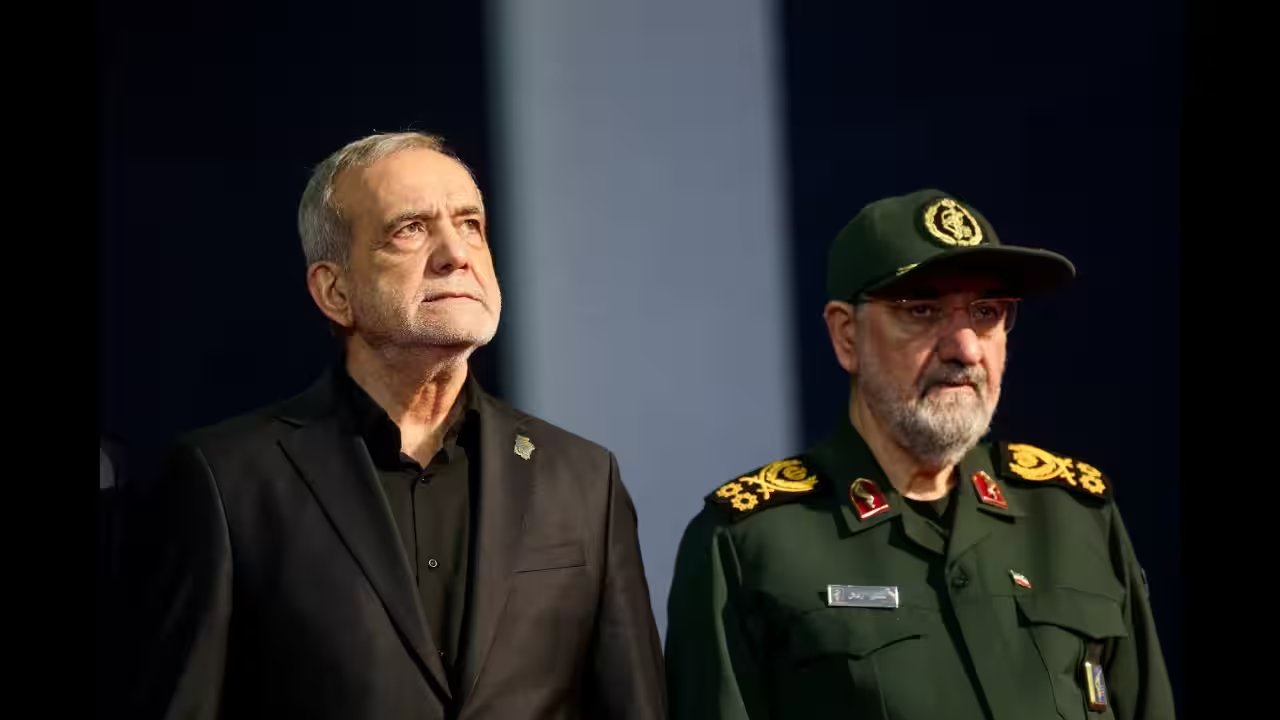
TEHRAN — Iran will not surrender a single particle of its enriched nuclear material to foreign custody and will retaliate against distant American military bases if Washington launches fresh strikes, Iranian security chief Mohsen Rezaei declared in a televised address.
Had Washington banked on concessions, Rezaei shut the door. The security chief dismissed suggestions of active bilateral diplomacy, stating firmly that no direct negotiations exist between Tehran and the White House. The defiant stance directly upholds a directive issued by Iran's Supreme Leader prohibiting the transfer of near-weapons-grade fissile stockpiles abroad, solidifying the Islamic Republic's diplomatic redlines even as American officials publicly downplay plans for immediate military escalation following Republican setbacks in the November 3 midterm elections.
Yet the shadow of conflict looms heavy over Tehran.
Before coordinated American and Israeli strikes hit Iranian atomic installations in June 2025, the International Atomic Energy Agency estimated Tehran possessed 440.9 kilograms of uranium enriched up to 60% purity. That concentration sits far above civilian nuclear power benchmarks and inches within technical reach of weapons-grade material. While the survival rate of those underground stockpiles following the bombardments remains unverified, Washington insists that dismantling or accounting for Iran's nuclear infrastructure must anchor any comprehensive peace framework to end the wider war.
Tehran, however, refuses to yield ground without upfront concessions. Diplomatic channels operating through Qatar delivered an Iranian proposal to the White House, but Iranian officials maintain that talks will not start until Washington satisfies seven core demands.
Any new US attacks will also be met with targeting US bases far away.
Mohsen Rezaei, Iranian Security Chief
Energy Infrastructure Damage and Winter Fuel Deficits
Away from the military frontlines, the war has battered the domestic home front. Iran faces crippling natural gas shortfalls this winter after combat operations damaged critical processing plants, compounded by an ongoing American naval blockade throttling commercial traffic at Iranian ports.
Supply cuts will strike deep into the interior. Government spokesperson Fatemeh Mohajerani issued a stark warning at a Tehran press briefing, cautioning that unchecked consumption could force authorities to ration or shut off domestic supplies in metropolitan centers, including the capital itself.
Pressures on the national grid are compounding rapidly. Mohajerani projected a gas supply shortfall of 430 million cubic metres this season, surging past the historical baseline deficit of roughly 300 million cubic metres recorded in previous years. Despite holding sovereign rights over portions of the world's largest offshore gas field, Iran has struggled for years against crumbling distribution infrastructure and restrictive international sanctions. The air campaigns initiated on February 28 converted chronic maintenance strains into an acute winter emergency.
| Energy & Nuclear Parameters | Verified Official Status |
|---|---|
| 60% Enriched Uranium Stockpile | 440.9 kg (IAEA June 2025 pre-strike estimate) |
| Projected Winter Gas Shortfall | 430 million cubic metres |
| Historical Winter Gas Deficit | Approximately 300 million cubic metres |
| Provinces Facing Severe Gas Strain | 11 of 31 provinces (including Mazandaran, Golestan, North Khorasan) |
| Active Diplomatic Channels | Qatari mediation contingent on 7 Iranian demands |
| Maritime Status | US blockade enforcing commercial port restrictions |
National grid operators have warned that northern provincial corridors—principally Mazandaran along the Caspian coast, alongside Golestan and North Khorasan flanking the Turkmenistan border—face imminent fuel collapse unless households slash baseline consumption immediately. With freezing weather descending from the north, Iranian state planners are drafting emergency power rotations while waiting to see if Washington responds to the seven-point framework tabled in Doha.