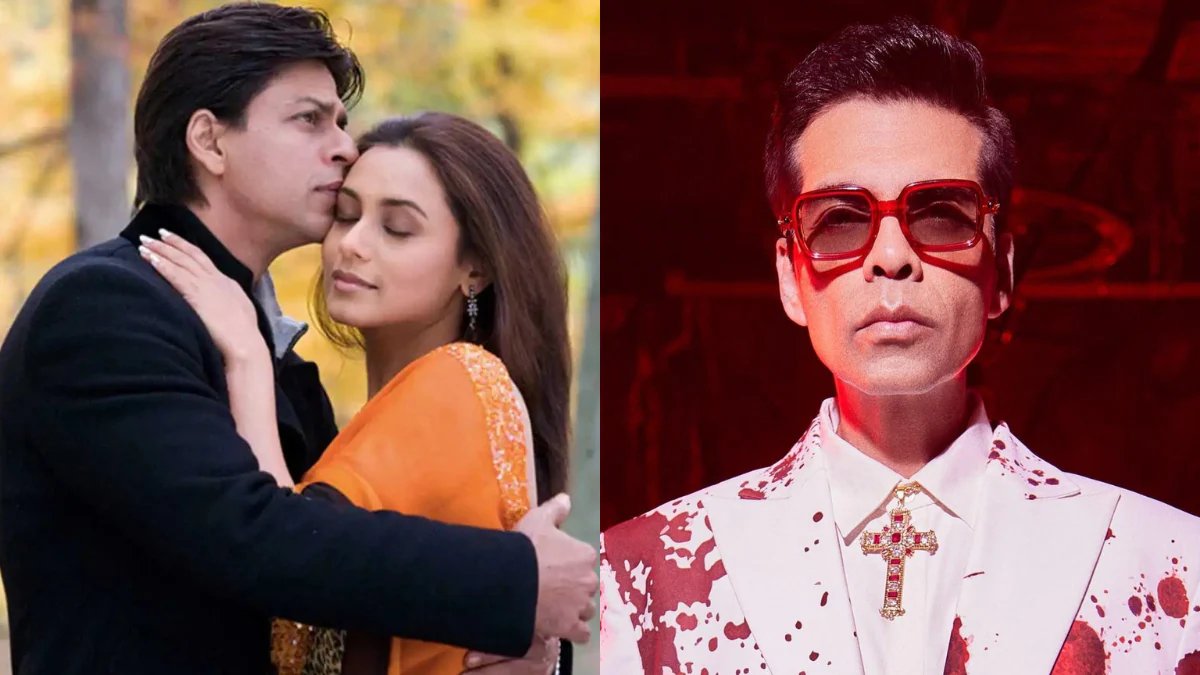
Karnan’s voice crackled through the Marrakech International Film Festival’s Conversation Series, as he admitted the film’s premise had once felt like a dare. He didn’t start with the usual “it was a bold move” trope; instead, he said, “My father, Yash Johar, would never have let me shoot a love story that turned a married man into a cheater.”
The story of Dev and Maya—played by Shah Rukh Khan and Rani Mukerji—was never meant to be a romantic cliché. Johar recalled pacing the shots, a thrum of dread in the air: “People were asking me how a man like Shah Rukh could be unfaithful.” He answered, “He’s Shah Rukh Khan—everyone loves him. If he’s in the wrong, the audience will still love him.” Those moments turned the set into a chessboard of risk and reward.
Yash Johar, the late patriarch of Dharma Productions, was a traditionalist who revered Shah Rukh as a saint‑like figure. “He held Shah Rukh in the highest esteem,” Johar said, “so he would have seen any hint of infidelity as a direct affront.” The director’s father died in April 2006, mere months before the film hit screens, leaving Karan to face the world on his own terms.
Kabhi Alvida Naa Kehna broke the mold in 2006, landing at ₹160 crore worldwide—a box‑office feat for its daring subject. Critics praised the ensemble, from Amitabh and Abhishek Bachchan to Preity Zinta, but audiences were split. The film’s verdict was clear: love can be messy, but the industry’s boundaries were not.
Today, the film is a reference point for any Bollywood story that dares to explore the grey zones of romance. Johar is already gearing up for new projects, hinting that the legacy of his father will stay as a moral compass—though with a modern twist. The conversation isn’t just about a past film; it’s about how Bollywood’s current generation negotiates legacy and daring.
If you’re watching the cinematic landscape shift, remember that the 2006 gamble still echoes. Kabhi Alvida Naa Kehna wasn’t just a film—it was a statement that even the biggest names could, and would, step outside the comfort zone. And that’s a lesson filmmakers keep replaying.