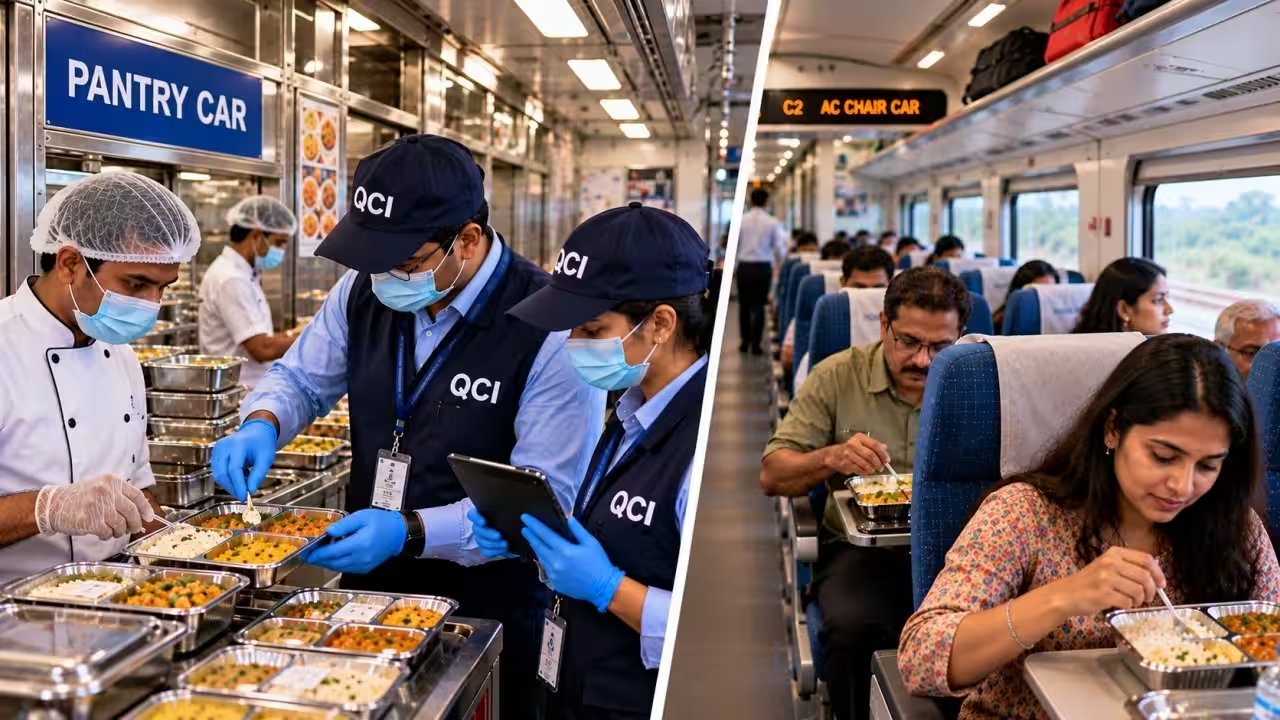
Indian Railways is tightening the noose on caterers. IRCTC signed a strategic Memorandum of Understanding with the Quality Council of India (QCI) to bring independent, technology-driven audits to the nation's railway network. This isn't just another internal review; it’s a full-scale operational overhaul aimed at eliminating data tampering and guaranteeing transparency in food preparation. The alliance, announced by the Railway Ministry, marks a significant shift in how the state handles one of its most frequent passenger grievances.
Under this framework, QCI will deploy certified professionals for intense, unannounced quarterly and half-yearly inspection cycles. Inspectors won't just walk through kitchens; they will use a dedicated mobile application to record findings. Geo-tagging, time-stamps, and photographic evidence are mandatory. Reports must hit the server within 24 hours, a tight deadline designed to force immediate corrective action rather than allowing issues to fester for weeks.
The pressure is mounting from below. Repeated passenger complaints about subpar meals and unhygienic practices forced the ministry's hand. Currently, Railway and IRCTC officials, including Food Safety Officers, conduct routine and surprise checks. But these internal inspections have often been criticized for lack of independence. By introducing QCI as a third-party auditor, the system seeks to enforce strict compliance with statutory Food Safety and Standards Authority of India (FSSAI) regulations and international culinary standards.
The stakes are high. Indian Railways serves an average of 58 crore meals annually. Over the past three years, IRCTC has already imposed fines of ₹5.13 crore, issued 54 show-cause notices, and terminated six contracts. The list of debarred licensees is public on the IRCTC website. Railway Minister Ashwini Vaishnaw recently detailed the existing measures in the Rajya Sabha, including the installation of CCTV cameras in base kitchens for real-time surveillance and the appointment of Food Safety Supervisors. Yet, the new QCI partnership adds an external layer of accountability that internal systems could not guarantee.
The next step is immediate implementation. QCI professionals are set to begin these digital audits shortly, targeting both major station-based static units and onboard pantry cars. The goal is uniform hygiene standards across the entire network. Passengers and vendors alike now face a system where every irregularity is digitally documented and time-stamped, leaving little room for excuses or delays in enforcement.