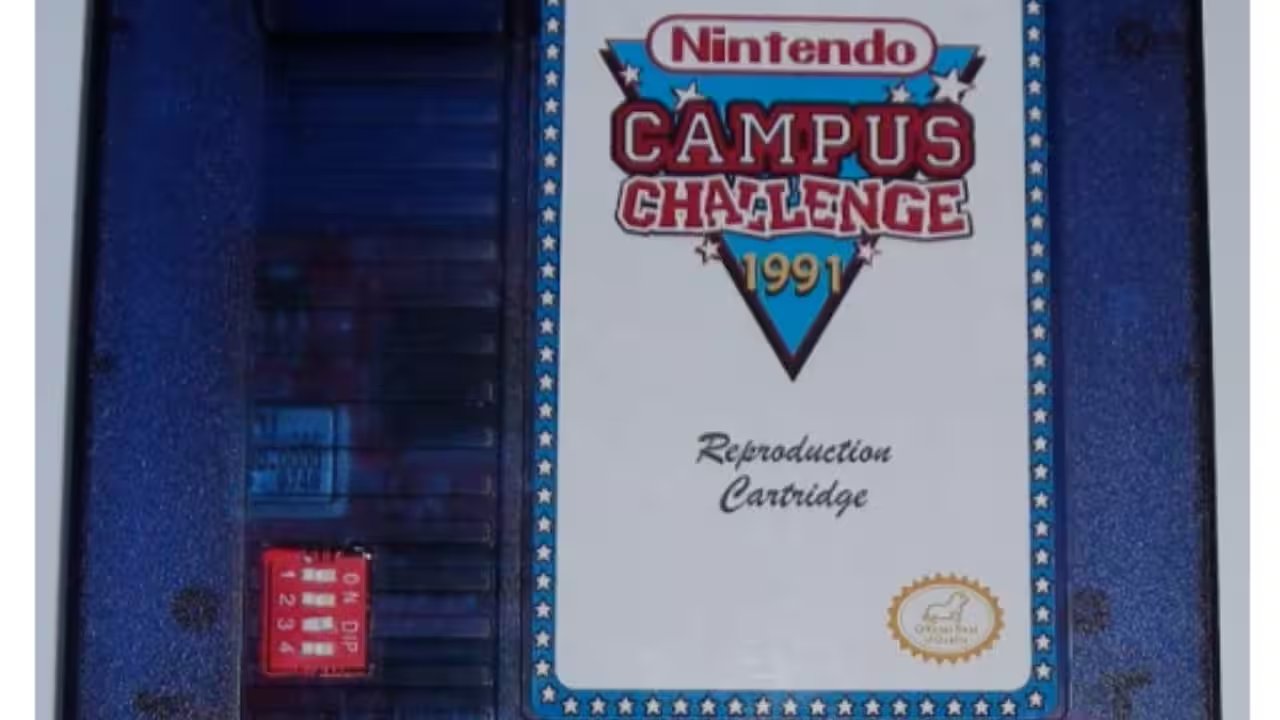
It was an ordinary day at a Brooklyn garage sale when Rob Walters found a battered NES cartridge that looked like a relic from another era. The casing was thick, the label faded, and a hard‑wired phone jack peeked out from the back as if it were ready to plug into a scoring system.
The cartridge wasn’t a regular retail release; it was a custom build for Nintendo’s 1991 Campus Challenge, a nationwide contest that brought Super Mario Bros. 3, PinBot, and Dr. Mario together on a single cartridge. Players had to rack up 25 coins in Mario, hit 100,000 points in PinBot, and then tackle a hard‑core Dr. Mario level—combining scores to decide the tournament winner.
After the January 1992 finals in Orlando, Nintendo had no use for the devices and almost all of them were shredded. According to a 2009 NintendoAGE exposé, only one cartridge survived, kept by a former employee who later sold it to Walters in 2006 for an estimated $1,000 worth of rare memorabilia.
Walters didn’t keep the cartridge for long. In July 2009 he listed it on eBay for a modest $99 start, and the bidding frenzy lifted the final price to $20,100—setting a Guinness World Record as the rarest Super Mario video game. The sale sparked a frenzy among collectors who now see the cartridge as a tangible piece of Nintendo’s competitive legacy.
The $20,100 price tag is more than a number; it’s a testament to how a single, forgotten tournament can become a prized artifact. Gaming historians note that the cartridge’s unique hardware—especially the phone jack—offers a glimpse into Nintendo’s early digital event infrastructure.
With the cartridge now in a private collection, the next big question is whether Nintendo will ever re‑release any of its competitive memorabilia. For fans, the story reminds us that the most valuable items are often the ones that were never meant to be sold.