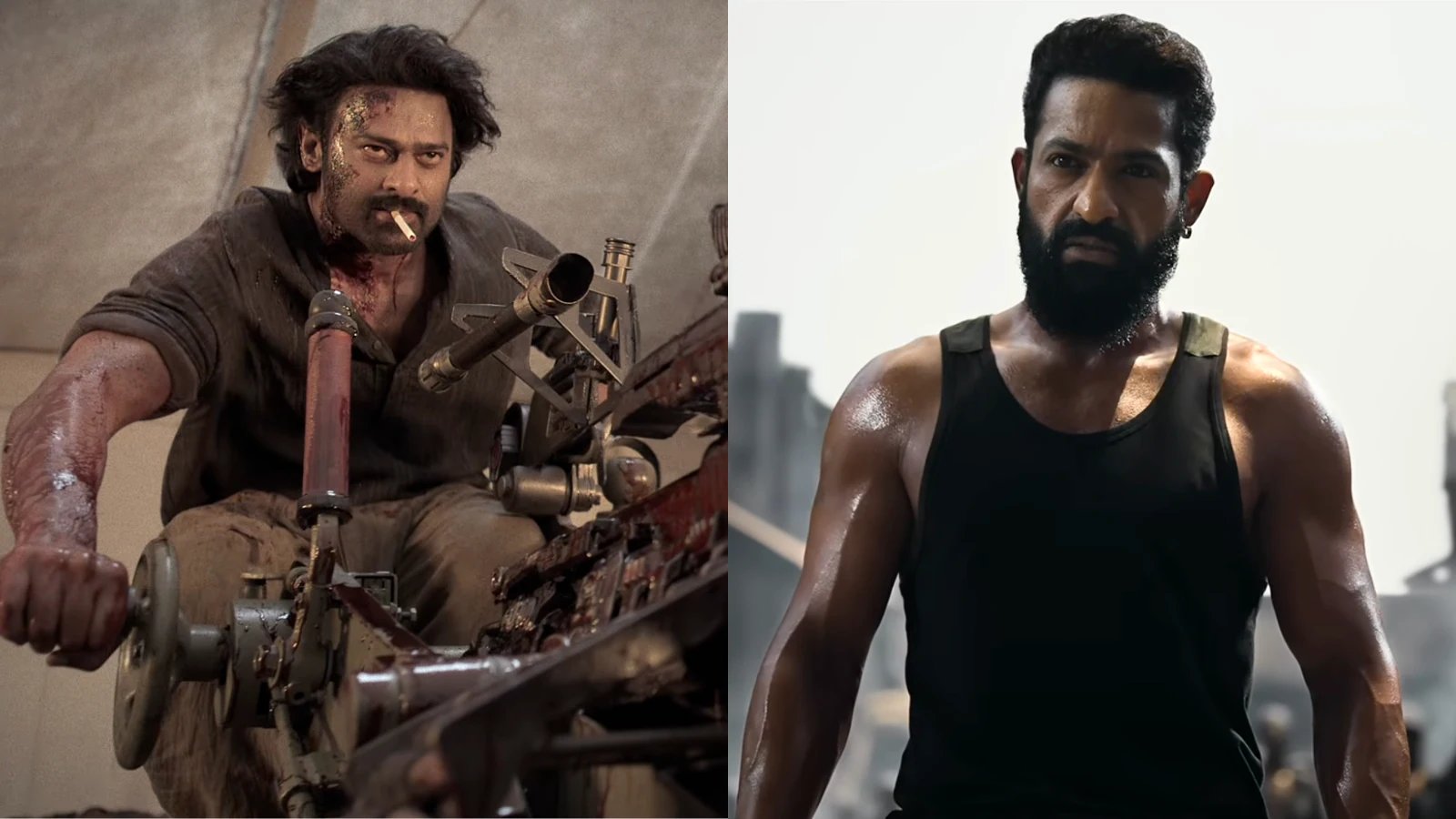
The era of flying henchmen is hitting a concrete wall.
Chethan D'Souza is deliberately pulling two of Indian cinema's most bankable heavyweights down to earth. Fresh off the fight choreography for Rajinikanth's Jailer 2, the action designer has constructed entirely separate combat templates for Jr NTR’s Dragon and Prabhas’s Fauzi—rejecting the interchangeable, slow-motion slugfests that have dominated mass action cinema for half a decade.
The goal is visceral impact. No aerial wire-hangs. No gravity-defying leaps. Just bone, grit, and sharp visual rhythm.
Prashanth Neel's directorial universe typically operates on operatic scale, but Dragon is taking a deliberate left turn. Jr NTR has trimmed down his frame to play a clinical assassin, forcing a complete overhaul in how the production shoots violent confrontations.
"Prashanth Neel’s films, including KGF and KGF 2, sometimes feature larger-than-life action that suits the actors’ stature," D’Souza explained, outlining the departure. "That approach works with someone like Prabhas. Here, Jr NTR’s physicality is different; he has toned down his physique and is playing an assassin, so the action must feel believable and relatable."
The fight scenes will sideline theatrical bravado for tight, tactical efficiency. Audience expectations will still get fed, but the mechanics rely entirely on close-quarters combat rather than camera trickery. For D'Souza—a martial artist with 22 years on the mat—the sequence must serve human anatomy before visual effects. When a fighter connects, the weight must register instantly on screen.
Where Jr NTR operates as a surgical weapon, Prabhas pivots toward stylized historical friction under director Hanu Raghavapudi. Fauzi frames the actor in grounded, emotionally driven brawls that rely on suspense over sheer force.
"We have often seen him in larger than life action," D’Souza said. "Here, his action will be grounded and highly stylised, with strong emotions running through it. An isolated action sequence might work on YouTube as a demo reel, but within a film it must tell a story."
Raghavapudi's narrative anchors each physical clash to high narrative stakes, weaving martial techniques directly into the character's survival instincts. The choreography prioritizes ambush, quick reversals, and sudden environmental panic over choreographed crowd clearing.
The industry will not have to wait indefinitely to see if this stylistic pivot holds up under box-office pressure. Fauzi is tracking for a theatrical debut in March 2027, followed by Dragon on June 11, 2027, setting up a decisive mid-year test for grounded South Indian action design.