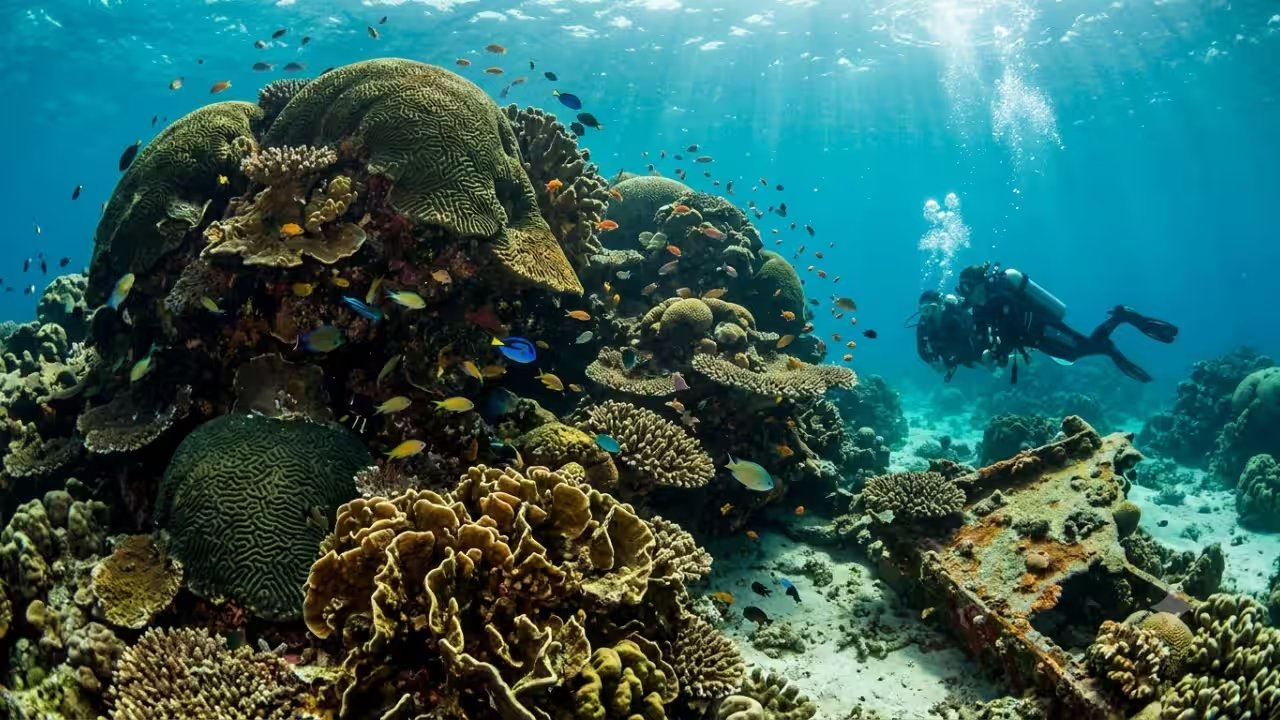
Bikini Atoll, once the epicentre of 23 U.S. nuclear detonations between 1946 and 1958, remains shrouded in radioactive contamination that keeps residents from returning. In 2024, a team led by Stanford University’s Stephen Palumbi entered the lagoon and catalogued a surprisingly vibrant ecosystem of fish, sharks, and colossal coral colonies. The corals’ presence contradicts the long‑standing narrative that the atoll is forever uninhabitable for marine life.
Coral cannot relocate, so its existence here implies that the colonies began growing roughly a decade after the last blast. Palumbi noted that these huge, long‑standing colonies are evidence that the organisms survived and continued to thrive despite the lingering radiation. This contrasts sharply with the ongoing impossibility of human resettlement, which still hinges on contamination thresholds that have yet to be met.
Palumbi’s early work on coral from Samoa—where samples came from sites with historical nuclear runoff—showed that radiation‑exposed specimens behaved differently under thermal stress. In controlled experiments, coral from the contaminated site maintained normal physiological responses, while a comparison sample from a clean site faltered. These findings hint at a potential evolutionary adaptation that warrants deeper investigation.
Radiation is notorious for damaging DNA and spawning mutations that can lead to cancer. If coral can tolerate chronic exposure, uncovering the mechanisms behind this resilience could inform future studies on DNA repair and cellular protection. However, the research remains at an exploratory stage; no immediate applications to human health have emerged.
Local fishermen who have long observed Bikini’s waters say the lagoon feels alive compared to the barren reefs of nearby atolls. Their observations underscore the ecological significance of the coral growth and hint at a complex interplay between radiation and marine life that scientists are only beginning to understand.