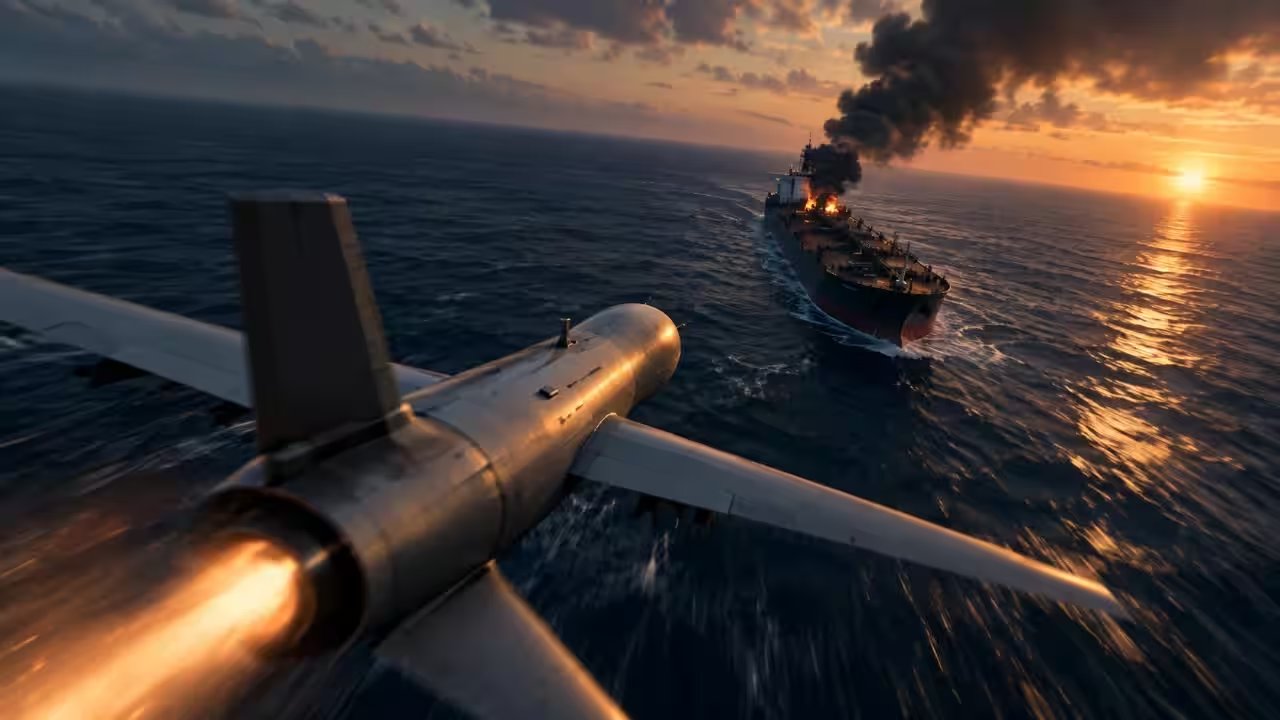
Iran’s navy and proxy forces intensified pressure on the Strait of Hormuz after the U.S. and Israel executed nearly 900 attacks in the first 12 hours of "Operation Epic Fury," and surpassed 2,000 strikes by March 2026, according to the Institute for the Study of War and the Critical Threats Project. The campaign stripped Iran of key missile, drone, and regional proxy capabilities, leaving it to play a war of attrition that hinges on the economic cost to the world.
The U.S. Energy Information Administration reports a collapse of oil throughput: from 21.6 million barrels per day in Q4 2025 to 4.9 million barrels per day by Q2 2026. Crude and condensate fell from 15.9 to 3.7 million barrels, while petroleum products dropped from 5.7 to 1.1 million barrels. LNG transit also plunged from 10.5 billion cubic feet to 0.8 billion cubic feet.
India, whose imports are 90 % oil, had about 2.5–2.7 million barrels per day passing through Hormuz before the conflict. Washington temporarily eased sanctions on Russian crude for India, granting a 30‑day waiver in March, as Treasury Secretary Scott Bessent said it was to keep the market flowing. Meanwhile, Russian tankers are rerouting through the Bab el‑Mandeb Strait, and Saudi infrastructure is now handling an 8.1 million‑barrel‑per‑day surge.
The long‑term objective, analysts argue, is to prove that prolonging the conflict inflates global prices, thereby forcing Washington to reconsider its hardline stance. Iran’s strategy also strains the fragile truce between Saudi Arabia and the Houthi rebels in Yemen, reopening fault lines that could spill into wider regional instability. The next major development will be a U.S. policy review on whether to negotiate concessions or intensify pressure, while India watches to secure its energy supply.