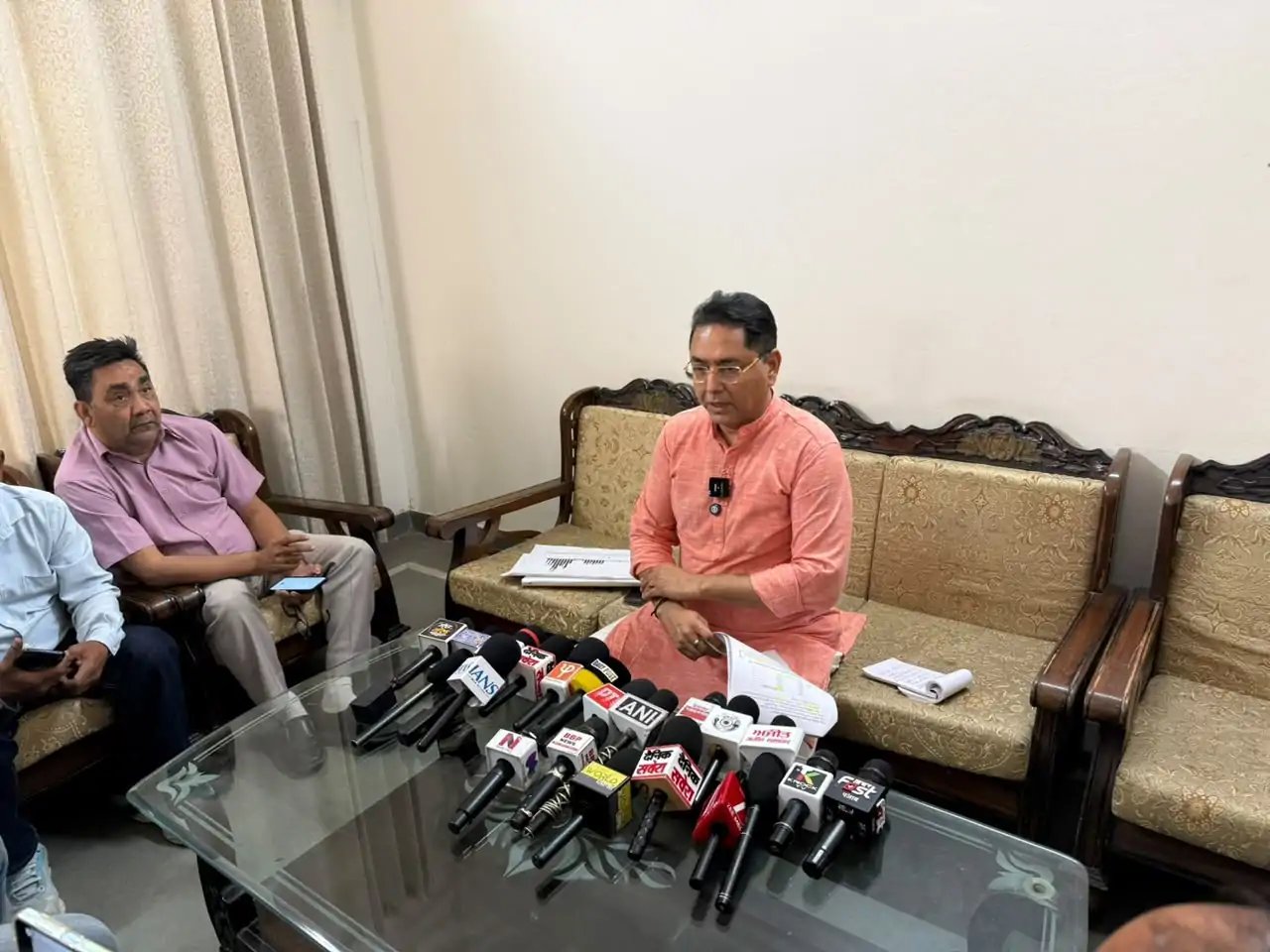
CHANDIGARH — Farm fires across Punjab plummeted by nearly 95% this season compared to 2020 levels, Punjab Cabinet Minister Aman Arora announced on Tuesday, citing verified satellite tracking data from the Indian Agricultural Research Institute.
Punjab recorded 4,657 stubble-burning incidents so far this harvesting season, down from 83,002 fire counts detected in 2020. The numbers fell to 5,114 in 2025 before sliding further during the ongoing harvest. Armed with these findings from the IARI's CREAMS laboratory, Arora slammed the Bharatiya Janata Party for orchestrating what he termed a politically driven campaign to vilify the state's agricultural community.
The math does not hold.
Arora challenged BJP leaders to demonstrate how agricultural smoke from Punjab fields could travel hundreds of kilometres to blanket Delhi in 20 minutes flat. He demanded an unconditional public apology from the party for targeting growers while turning a blind eye to internal urban emissions.
Tracking metrics compiled by the System of Air Quality and Weather Forecasting and Research alongside the Indian Institute of Tropical Meteorology show stubble burning accounted for 7.8% of Delhi's PM2.5 pollution on November 8, the day of Diwali. That share dropped to just 5% by November 9.
Save for two specific days, the cross-border smoke contribution averaged between 4% and 5% throughout the entire autumn season.
The BJP must explain why it is deliberately ignoring this scientific evidence and attempting to make Punjab’s farmers the scapegoats for Delhi’s pollution crisis.
Aman Arora, Punjab Cabinet Minister and AAP State President
The minister cited empirical assessments by the Council on Energy, Environment and Water, peer-reviewed studies by Kulkarni and co-authors, and technical evaluations from the central Decision Support System. These independent analyses established that localized municipal sources inside the National Capital Region generate the overwhelming bulk of Delhi's toxic winter smog.
Punjab managed this turnaround through physical machinery deployments on the ground. The state government supplied more than 1.62 lakh crop residue management machines at subsidised rates to individual cultivators, gram panchayats, Farmer Producer Organisations, and Custom Hiring Centres since 2022.
That equipment drive accelerated this year. State agencies delivered 25,917 residue management units during the current cycle alone.
The Bhagwant Mann administration structured programs to process 1.14 crore tonnes of paddy straw directly inside crop fields through in-situ methods, while diverting another 78 lakh tonnes toward ex-situ industrial applications across adjoining districts.
| Parameter / Operational Metric | Recorded Count / Target Volume | Baseline Comparison |
|---|---|---|
| Stubble Burning Incidents (Current Season) | 4,657 fires | 83,002 fires (2020 baseline) |
| Multi-Year Stubble Reduction Rate | ~95% decrease | Base year 2020 |
| Total Subsidised CRM Machinery Dispatched | Over 162,000 units | Since 2022 rollout |
| Machinery Distributed in Current Year | 25,917 units | Single-year deployment |
Punjab redirected millions of quintals of agro-waste into active commercial supply chains through the Punjab Energy Development Agency. Arora confirmed that 83 industrial boilers running directly on baled paddy straw are firing in manufacturing hubs, with 16 additional units under active construction.
Pelletization units followed a similar trajectory. Private operators run 78 operational stubble pellet projects, while engineering teams erect another 69 facilities across rural belts.
Eleven commercial biomass power generating plants and nine compressed biogas production stations are now feeding the grid. PEDA issued formal Letters of Intent to clear another 44 compressed biogas projects across southern and central agrarian zones.
Beyond the environmental balance sheet, Arora pushed the Union government for immediate operational clearances on farm finances, demanding the Centre sanction an immediate enhancement of the Cash Credit Limit to guarantee uninterrupted payments to growers across state grain mandis.
| Field-Managed Straw Target (In-Situ) |
| 1.14 crore tonnes |
| Active field processing |
| Off-Field Straw Diversion (Ex-Situ) | 78 lakh tonnes | Industrial & bio-fuel use |
| Operational Stubble-Fired Boilers | 83 plants (16 installing) | Heavy industrial conversion |
| Operational Compressed Biogas (CBG) Plants | 9 plants (44 LOIs issued) | Alternative fuel grid |