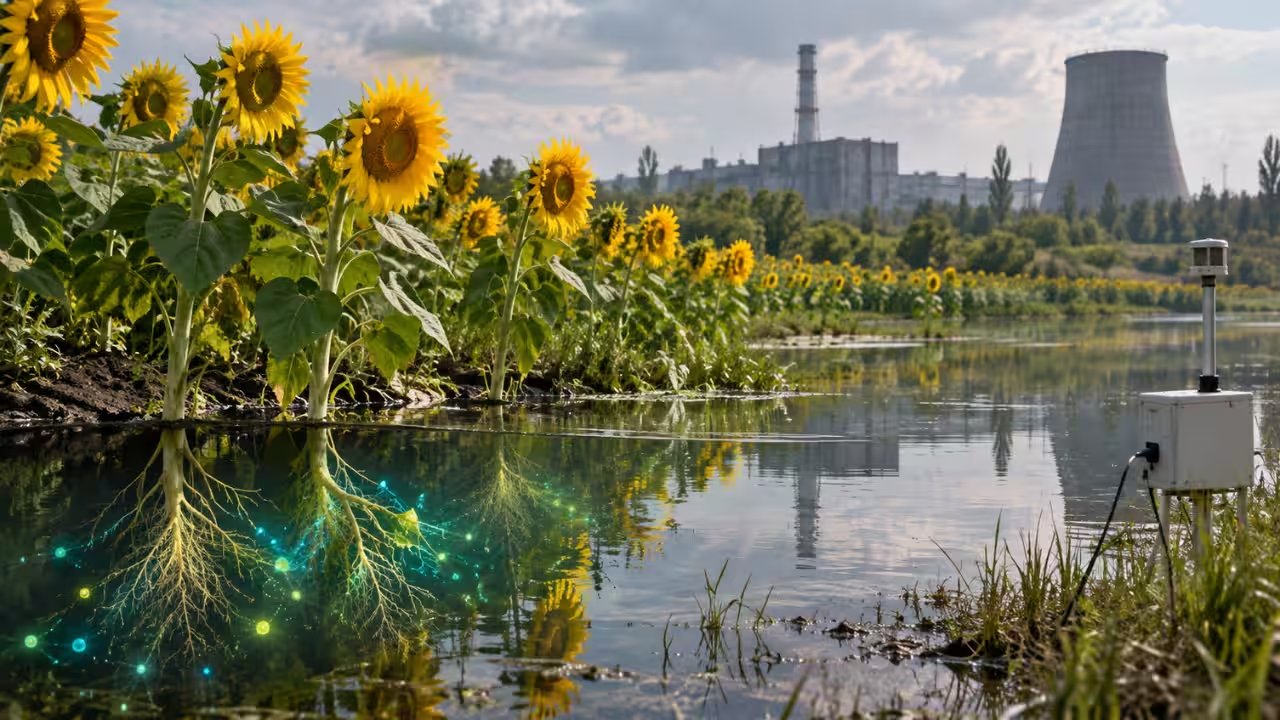
The ashes of Chernobyl sent a new wave of science into overgrown fields, as researchers eyed living organisms that could mop up the invisible threat. Sunflowers—tall, fast‑growing, and heavy‑bearing—offered a natural filter because their roots absorb potassium and calcium analogues, meaning they can mistake radioactive cesium and strontium for essential nutrients.
In 1987, a team anchored sunflowers on floating rafts in a 2‑meter‑deep pond that had been saturated with fire‑hazardous levels of cesium‑137 and strontium‑90. Within ten days the plants had siphoned about 95% of the radionuclides, a figure attested by a US EPA assessment that praised the method as a rapid, low‑cost cleanup.
The science behind the uptake is simple chemistry: cesium‑137 mimics potassium, while strontium‑90 mirrors calcium. Plants use the same ion‑transporters to bring in the nutrients, so the radioactive cousins sneak in too, accumulating in roots, stems and leaves.
Water worked, but soil proved stubborn. The Fukushima trials in Iitate Village measured 7,715 becquerels of radiocesium per kilogram in clay‑rich fields, yet the sunflowers absorbed only a fraction because the isotope had bonded to mineral surfaces. Japan’s Ministry of the Environment warned that such fixation limits the practicality of phytoremediation on large acreage.
Scientists now focus on engineering plants or soil amendments that can loosen the cesium bonds, while pilot projects test hybrid systems of floating plants and mechanical filtration. The goal: a scalable, eco‑friendly decontamination strategy that could replace or supplement the costly, long‑term radiological monitoring currently required on contaminated farmlands.