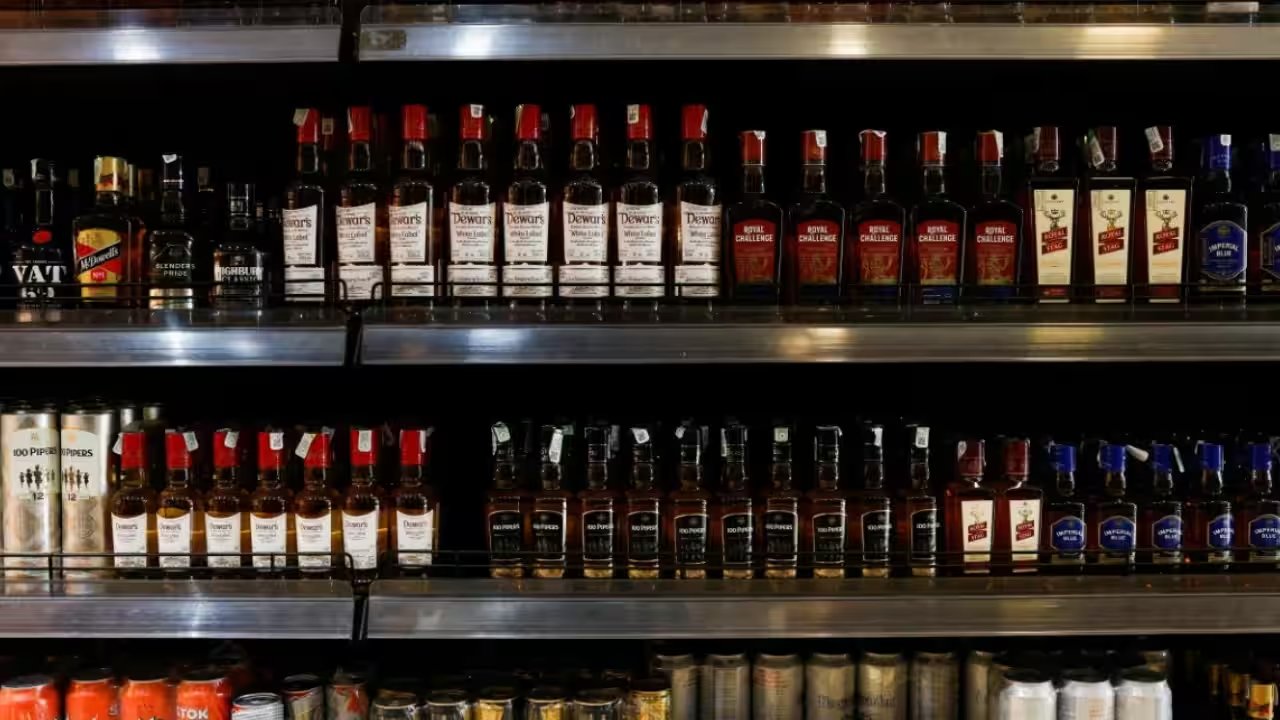
Indian customs authorities have impounded more than 85 shipping containers of bulk Scotch whisky across major ports, triggering a sharp trade dispute between foreign distillers and domestic tax enforcement agencies.
Customs inspectors are demanding a 150% import tariff on the shipments, defying the concessional 75% rate introduced under the bilateral India-UK trade agreement that took effect in July. The distillers refused to pay. Now, critical blending supplies for India’s massive spirits market sit stranded on the docks.
The dispute exposes a direct policy rift within the central government. On November 2, the Commerce Ministry gave private assurances to senior alcohol executives that New Delhi would honour the lower trade pact tariffs and push for a swift clearance mechanism. That assurance collapsed within forty-eight hours. On November 4, the Finance Ministry's Directorate of Revenue Intelligence (DRI) issued a confidential directive ordering customs commissioners nationwide to enforce the unyielding 150% tariff on all bulk Scotch imports.
Revenue officials insist that importers are gaming the system. In the November 4 circular, the DRI argued that global spirits houses are incorrectly pocketing tariff concessions meant solely for finished goods. The reduced 75% duty applies strictly to bottled, shelf-ready Scotch whisky, investigators asserted—not industrial concentrates destined for domestic bottling lines.
Customs investigators classified the shipments under a May 1 rule covering "compound alcoholic preparations," which carries the full 150% levy. The DRI memo cautioned field officials that permitting the lower duty would create "large-scale, recurring substantial revenue implications" for the government exchequer.
Preliminary investigation revealed that the imported goods are not finished whisky/brand/rum as such, but are concentrates/compound preparations which are subjected to further manufacturing.
Directorate of Revenue Intelligence Directive
Tax investigators escalated the dispute beyond port checkpoints in recent weeks. Enforcement teams searched the domestic corporate offices of Pernod Ricard and Diageo, summoning senior executives for formal questioning over import declarations and manufacturing workflows.
Pernod Ricard and Diageo hold more than 40 stranded containers each at Indian marine terminals. Bacardi faces five held shipments. Distillers warn that continued impoundments will choke bottling runs within weeks.
| Scotch Import Dispute Parameter | Official Status / Operational Detail |
|---|---|
| Disputed Duty Baseline | 150% demanded by DRI vs. 75% under trade pact |
| Detained Cargo Volume | 85+ total containers (Pernod: 40+, Diageo: 40+, Bacardi: 5) |
| Regulatory Classification | May 1 rule for 'compound alcoholic preparations' |
| Annual Scotch Inflow Value (2024) | $335 million |
| Projected 5-Year Trade Expansion | $1.34 billion (Scotch Whisky Association estimate) |
| Primary Port Entry Format | Bulk concentrate (80% of total UK Scotch volume) |
Bulk shipments form the lifeblood of India's branded spirits sector. Roughly 80% of all Scotch imported from Britain arrives in high-strength bulk containers. Domestic distillers blend these concentrates with neutral grain spirits to produce popular Indian-Made Foreign Liquor (IMFL) labels. By hitting bulk spirit with the full 150% tariff, customs authorities erase the commercial margin that drove the trade pact's liquor negotiations.
Private industry pushback has grown urgent. The International Spirits and Wines Association of India submitted a formal representation warning central ministries that the customs clampdown risks dismantling negotiated market access before the ink on the trade agreement dries.
Inter-ministerial negotiations between the Finance Ministry and the Commerce Ministry are now underway in New Delhi to settle the tariff interpretation, with customs commissioners ordered to hold the cargo until North Block issues revised clearance parameters.