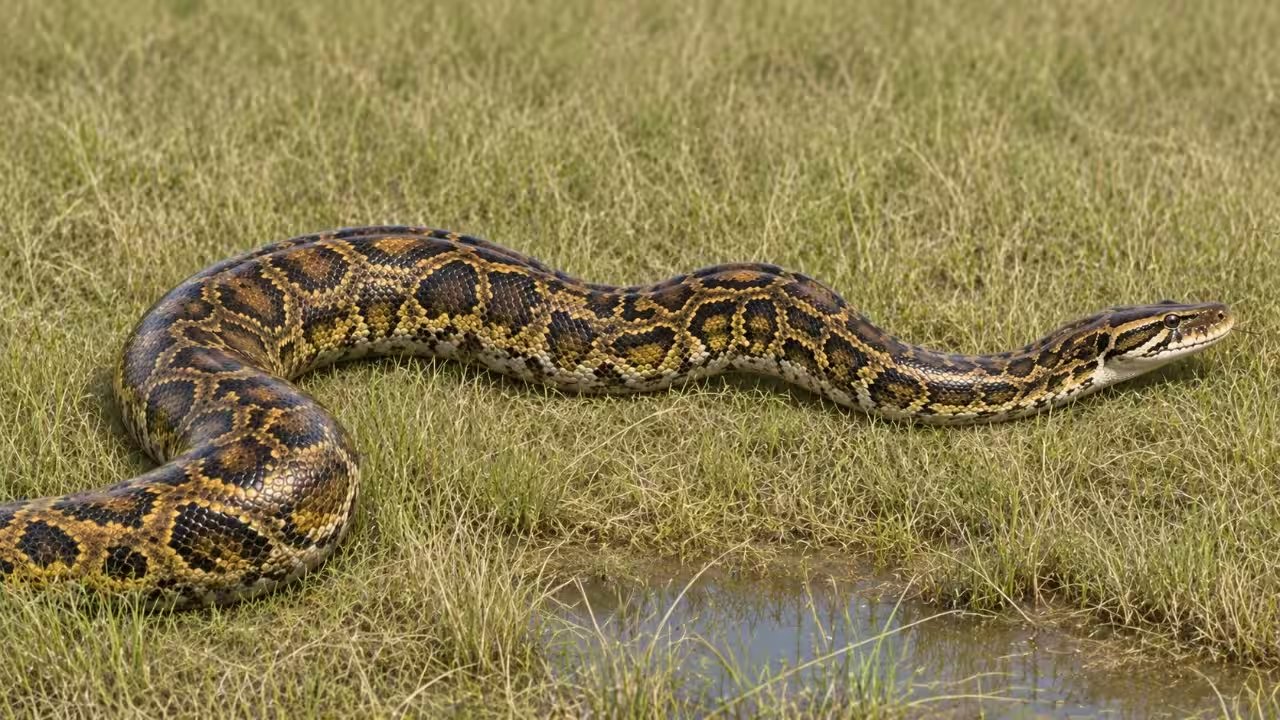
The study, published in the Journal of Zoology, shows that 25 seed types were recovered from the digestive tracts of Burmese pythons in the Everglades.
Secondary seed dispersal occurs when a predator consumes animals that have already ingested seeds. In this case, the snakes ate birds and mammals that had eaten fruit, allowing the seeds to survive the digestive tract. Experiments revealed that nearly 40% of cabbage palm seeds survived passage and germinated, indicating viable seed transport across the wetland.
Burmese pythons, native to Southeast Asia, have devastated native mammal populations in South Florida, disrupting ecological functions such as seed dispersal. Their expansion has altered the movement of seeds that native mammals normally spread, creating a feedback loop that may reshape plant communities.
Researchers also examined Argentine black‑and‑white tegus and found 73 seed types, spanning 38 plant families, in their digestive systems. Unlike pythons, tegus consume fruit directly, but together the two reptiles now link 38 families of plants to the invasive reptile network.
The dual role of these predators as both predators and indirect seed carriers could accelerate the spread of both native and invasive plant species. Monitoring teams plan a comprehensive field survey in July to track changes in vegetation and seed deposition patterns across the Everglades.