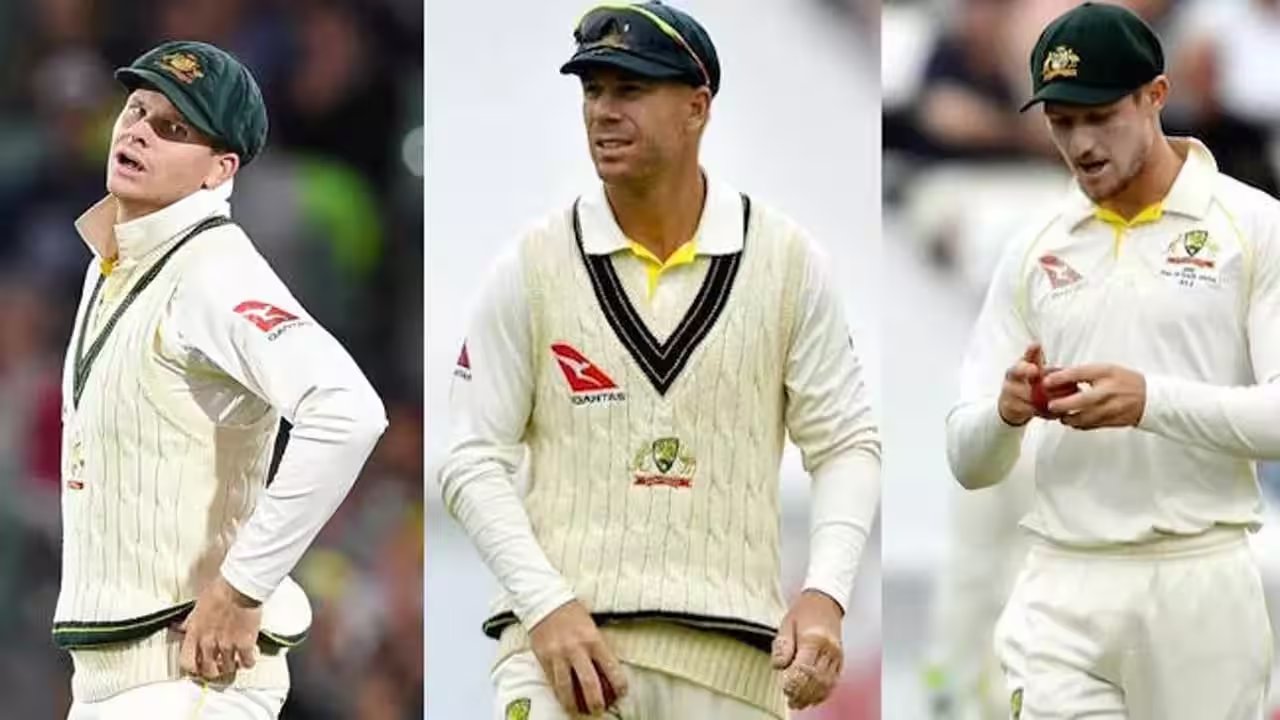
The ghosts of Cape Town are rattling Australian cricket's locker room once again.
Dr Simon Longstaff, the independent ethics expert commissioned by Cricket Australia to scrutinize the national team's toxic culture after the 2018 Sandpapergate affair, has broken his silence. He revealed he heard persistent whispers that the ball-tampering operation extended well beyond the trio punished at Newlands. Yet when he gave senior dressing-room figures an open window to come clean, nobody flinched.
They handed him silence.
"Along the way, there were whispers, and I can't put it any more strongly than that, that something else had gone on earlier and that more people had known," Longstaff said in an interview on Saturday. "When we came to look into that — because I couldn’t turn a blind eye to it once the suggestion was made — I afforded the senior people I spoke with an opportunity … 'Well, is there something else you want to say about the whole circumstance?'"
The response was stone.
Nobody chose to make any alteration to their statement, so I was left with basically a blank wall. Some people saying one thing, others another, but not sufficient to be able to say there needs to be a further inquiry at that time.
Longstaff's disclosure pushes past the borders of the infamous 2018 third Test against South Africa. The whispers he encountered suggested illegal ball management had taken root prior to Cape Town.
"We're talking effectively about … good people who made bad decisions, so that's where we looked," Longstaff said.
The review itself cast a sweeping net across administrative staff, sponsors, supporters, and former Test players under ironclad confidentiality conditions. But holes in the witness ledger continue to surface. Former Test opener Usman Khawaja revealed in his autobiography, Sabr, that investigators never interviewed him despite his readiness to deliver evidence.
Longstaff could not recall if his panel formally invited Khawaja, emphasizing that participation was never compulsory.
"Not everybody we invited to participate in our review chose to accept that invitation," Longstaff explained. "They had the liberty not to."
When current captain Pat Cummins stepped to the microphone to dismiss Khawaja's accusations, Longstaff watched closely. He called Cummins' press conference "absolutely convincing in his sincerity."
"If Cummins did not know, and I believe he didn't, then not everybody knew," Longstaff said. "But that leaves a different question." He argued that Cricket Australia executives must now confront the conflicting versions and decide whether to reopen the file.
| Player Penalized (2018) | Role at Cape Town | Sanction Handed Down |
|---|---|---|
| Steve Smith | Captain | 12-Month Ban |
| David Warner | Vice-Captain | 12-Month Ban |
| Cameron Bancroft | Opening Batter | 9-Month Suspension |
David Warner refused to let the narrative settle. The former vice-captain took aim directly at the integrity of Cricket Australia's original 2018 inquiry, alleging that board officials deliberately shielded the team's frontline bowling attack from questioning.
Warner singled out pace spearheads Mitchell Starc and Josh Hazlewood alongside off-spinner Nathan Lyon in a scathing public statement.
"As far as I am aware, CA did not interview Josh Hazlewood, Mitchell Starc or Nathan Lyon in their 2018 investigation," Warner posted on Instagram. "If that's correct, then how can CA push the idea that the bowlers didn't know?"
Warner did not pull his punches on the motive.
It looks like they had decided who they wanted to blame from the very beginning, ran a shoddy investigation to serve the purpose, and now they want to maintain the false narrative that the bowlers had no idea. That stinks of a cover up.
Cricket Australia now faces an immediate institutional crossroads: stand behind the narrow findings of its 2018 probe, or formally re-interview the senior players who built a blank wall six years ago.