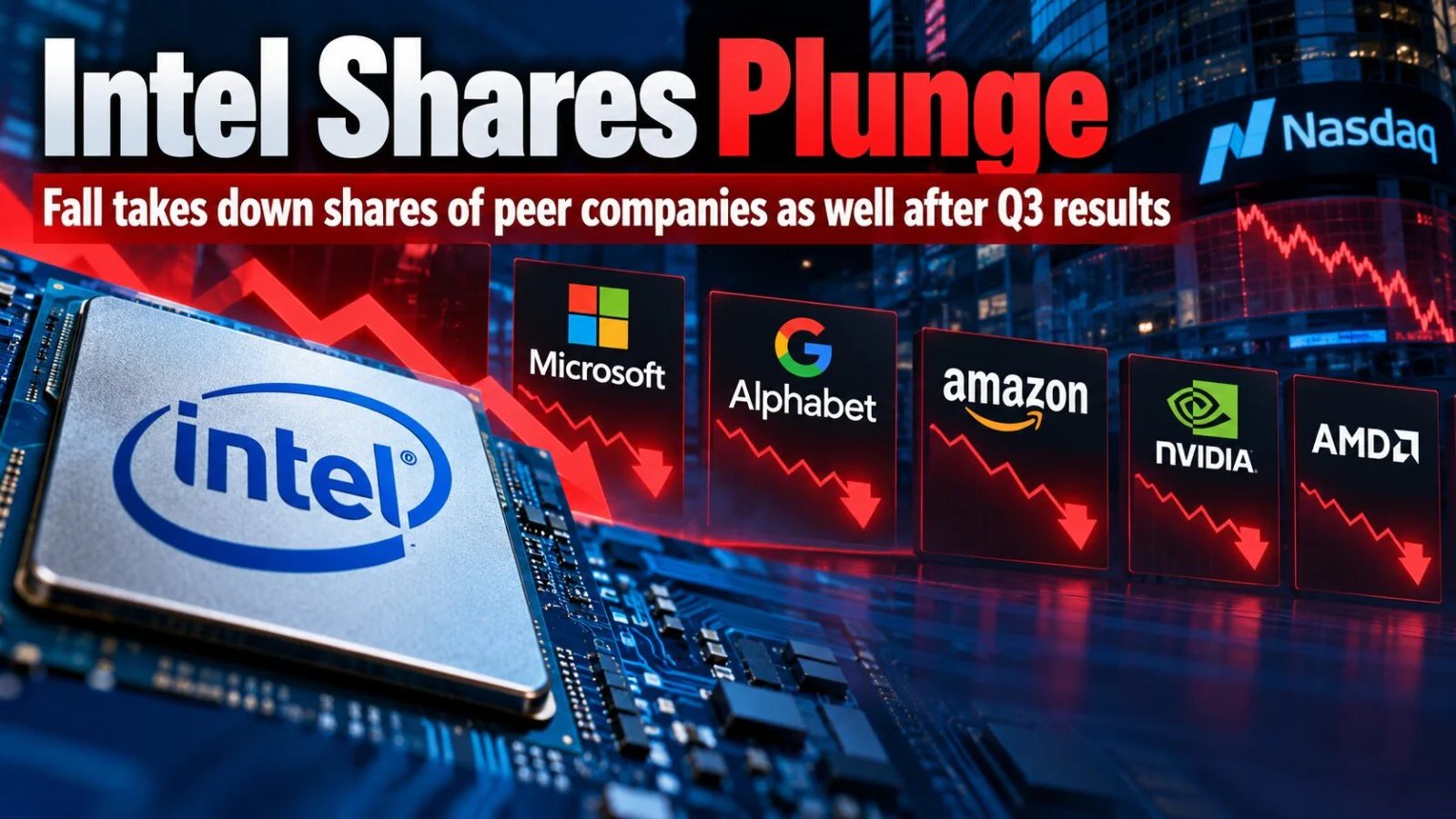
The rally is over. Intel shares shed 23% in extended trading on Thursday, October 29, wiping out significant gains from a year where the stock had surged more than 200% on the back of agentic AI hype. While the headline numbers looked decent on paper—revenue of $16.5 billion and an EPS of $0.52 against a $0.40 estimate—the market cared less about the past and more about the future. And that future, according to Intel's own spreadsheet, looks grim.
The problem lies in the guidance. For the ongoing quarter, Intel projected an EPS of $0.25, sitting below the $0.23 analysts were comfortable with, and a revenue range of $15 billion to $16 billion that fell short of the $17.1 billion consensus. CFO David Zinsner didn't soften the blow, stating that the PC segment slowdown is likely to persist through at least the first half of next year. It’s a direct admission that the consumer hardware recovery is stalled, not just paused.
Beneath the surface, the quarter showed a stark divergence. The AI and data center business jumped 78% year-over-year, a massive outlier that masked the bleeding elsewhere. Client computing and physical AI declined 5%. But the real shocker was the operational hiccup: an explosion at Intel’s Israel fab earlier this month has already cost the company roughly $600 million in revenue across two quarters. That isn't a rounding error; it's a material hit to the bottom line that complicates any near-term turnaround narrative.
The contagion effect was immediate. AMD shares dropped 6.5% in after-hours, while NVIDIA slipped 2.5%. Qualcomm, Broadcom, and Micron all fell between 4% and 5%. The sector is reacting to a broader signal: memory costs are rising (driving global PC shipments down 4% in Q2, per Counterpoint research), and the hardware cycle is tightening.
Investors now face a binary choice. Do they trust the 78% growth in data centers to offset the PC drag and the fab losses? Or do they believe Zinsner’s warning that the consumer slump is here to stay? With the stock still up 133% year-to-date as of Thursday's close, the valuation premium for perfection has been stripped away. The next catalyst will be the Q4 board decision on dividends and any further updates on the Israel fab recovery timeline. Until then, the air is thin for chipmakers.