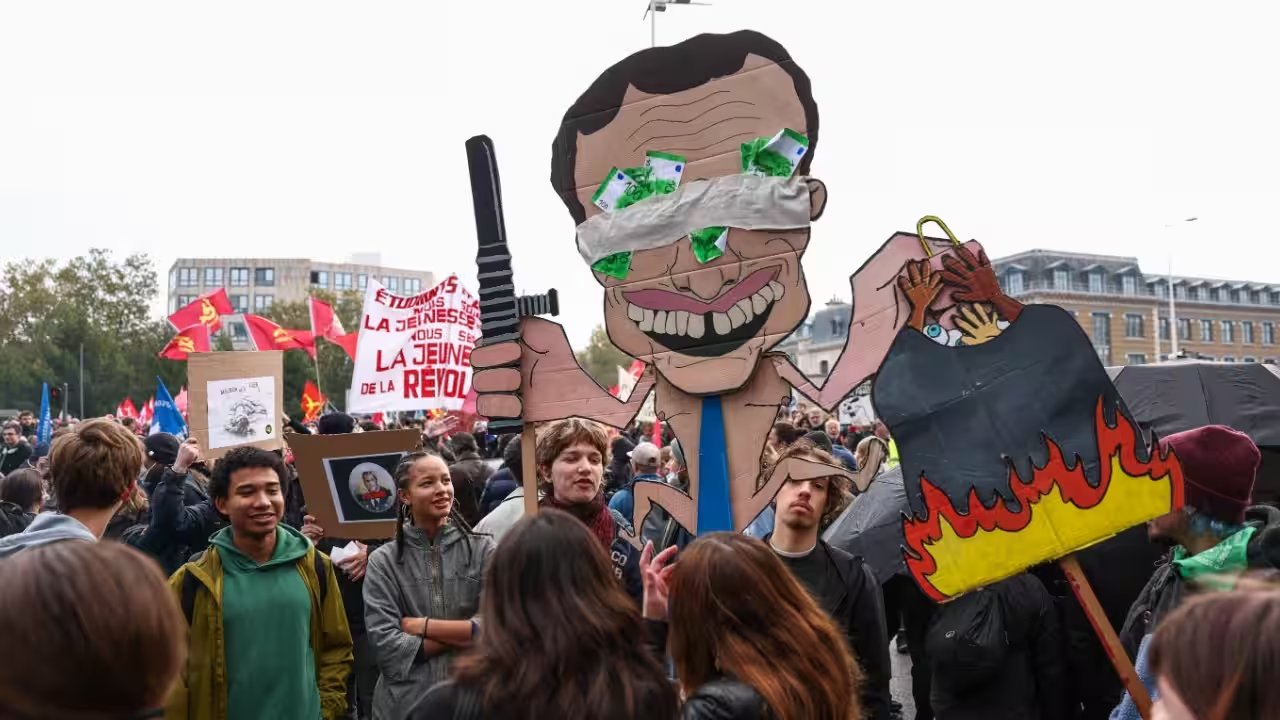
Interior Minister Laurent Nuñez confirmed that 70,000 police officers and security personnel will flood French streets on Saturday, a massive mobilization aimed at containing fresh unrest and a controversial rally in the capital. The deployment signals a hardline stance from Paris as trade unions and student groups prepare for an authorized march against the cost of living. But the real tension lies at Place de la Concorde, where Yellow Vests activists have defied an official ban to stage a separate demonstration near the presidential palace.
This is not just another weekend of street noise. The protests follow a volatile month marked by youth-led riots and nationwide strikes, culminating in 642 arrests on Thursday alone. The Interior Ministry estimated 575,000 people joined Thursday's demonstrations, though the CGT trade union claims the figure hit 1.6 million. While authorities described the day as having "generally gone well," tear gas was fired in Paris and Lyon, and 53 police officers were injured. The scale of mobilization has rattled the government, particularly with the presidential election less than six months away and Emmanuel Macron unable to seek a third term.
The political stakes are high. Prime Minister Sébastien Lecornu faces mounting pressure as the far right leads in opinion polls, fueled by public frustration over stagnant wages and deteriorating public services. Unions are demanding a discretionary boost to the minimum wage—a request untouched since 2012—along with tax reforms and better conditions for young people. An inter-union coalition stated bluntly that only a direct response to these demands will end the protests. Lecornu sits down with union and employer representatives on Monday, a meeting that could either de-escalate tensions or signal a deeper rift.
The Yellow Vests movement, which rose to prominence eight years ago over fuel tax hikes, is pushing for "mass disobedience." Benjamin Ball, a member of the movement's coordinating committee, urged supporters to attend the banned rally, framing it as a direct challenge to state authority. This refusal to merge with the authorized march has created a dangerous parallel track of protests, increasing the risk of sporadic violence. Recent clashes have also sparked internal investigations into police brutality, with dozens of cases opened as the government defends its officers while promising to review allegations of excessive force.
France’s economy, the second-largest in the EU, is grappling with public debt constraints that limit the government's ability to fund the wage hikes protesters demand. The coming days will be a test of the state's capacity to balance public order with political stability. With the election cycle heating up, every protest counts as a data point for voters deciding between the centrist status quo and a far-right shift. The outcome of Monday's talks will determine whether the government offers concessions or doubles down on the 70,000-strong security cordon.