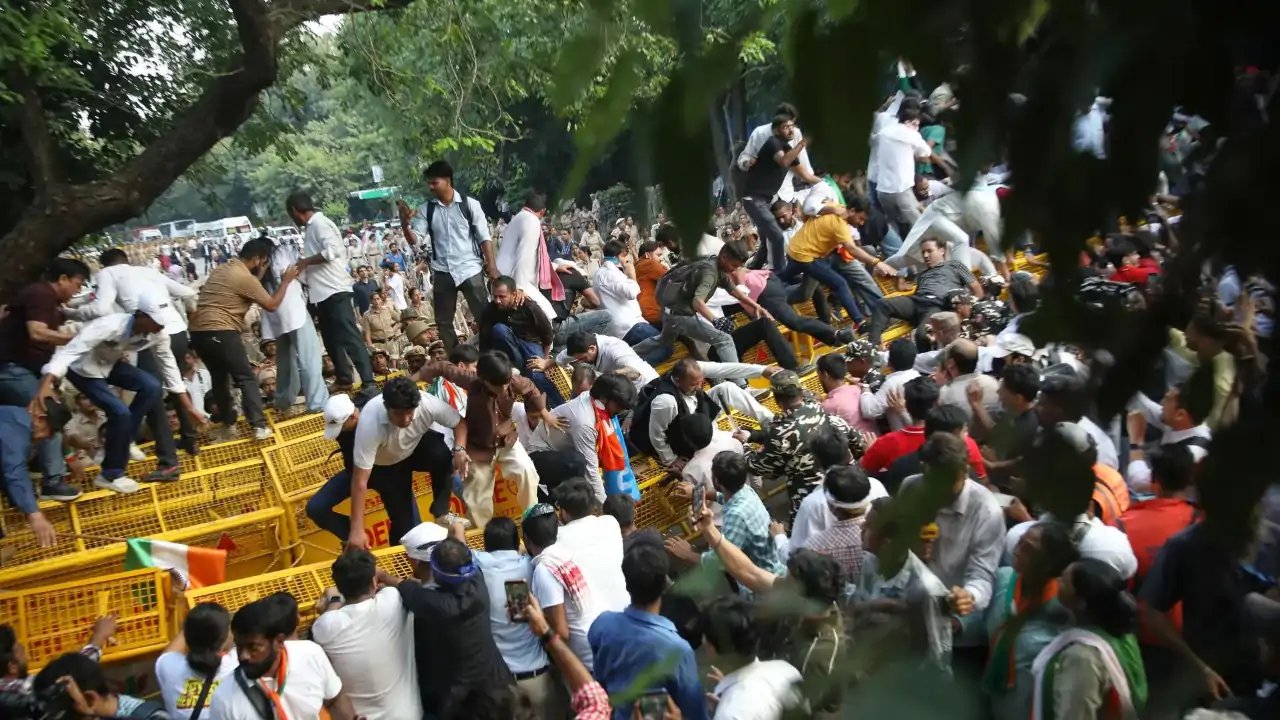
On October 11, Police Commissioner Anurag Kumar released a notice that Jantar Mantar would be closed for protests and that three new venues would be used: Ramlila Maidan in central Delhi, Burari Ground in the northwest and CBD Ground in Shahdara. The decision follows a Home Ministry committee’s recommendation and was formalised by the police commissioner.
Ramlila Maidan, a 12‑acre plot just 4 km from the city’s heart, is steeped in political history but comes at a price. A senior MCD official told ANI that a full‑day booking costs ₹50,000, with a refundable security deposit of ₹55,000, and organisers must secure a no‑objection certificate from the Delhi Traffic Police. Half the space is occupied by parked heavy vehicles, leaving little room for smaller groups, and the ground offers minimal shade compared with the tree‑lined Jantar Mantar. MCD data shows 27 bookings from January 2024 to September 2026.
Burari Ground, also known as Nirankari Ground, spreads over roughly 50 acres 18 km from the capital’s core. Its vast expanse is not the problem; visibility is. Protest organisers who tried the venue during earlier farmers’ agitations called it an "open jail" because its fencing and location would isolate demonstrators from the public eye, making it difficult to attract attention.
CBD Ground in Shahdara, another 12‑acre site managed by the DDA, sits amidst residential homes, shops, malls and hotels. BS Vohra, head of the East Delhi RWA Joint Front, warned that barricades and traffic restrictions typical of protests would be hard to manage in such a densely populated area and could disrupt the neighbourhoods that surround the ground.
Delhi has shifted protest sites before: the Boat Club lawns near India Gate, Jantar Mantar itself, and the 2017 National Green Tribunal ban that led to a 2018 Supreme Court ruling. Until a Standard Operating Procedure arrives from the authorities, protesters have three new addresses but no clear path forward. Delhi officials are expected to issue detailed rules in the coming weeks, while protest organisers scramble to secure dates and plan logistics.
A shop owner near the CBD Ground lamented that the noise and traffic from a potential rally would cut off shoppers for days, echoing concerns from neighbours across the city. The community’s reaction underscores the balancing act Delhi must perform between the right to protest and the rights of residents.
Protest groups have already begun filing booking requests, but the heavy fees and lack of clear guidelines mean that many will postpone or cancel their plans until the government finalises the operating procedures. Delhi’s next move will determine whether dissent can find a viable home in the capital’s crowded streets.