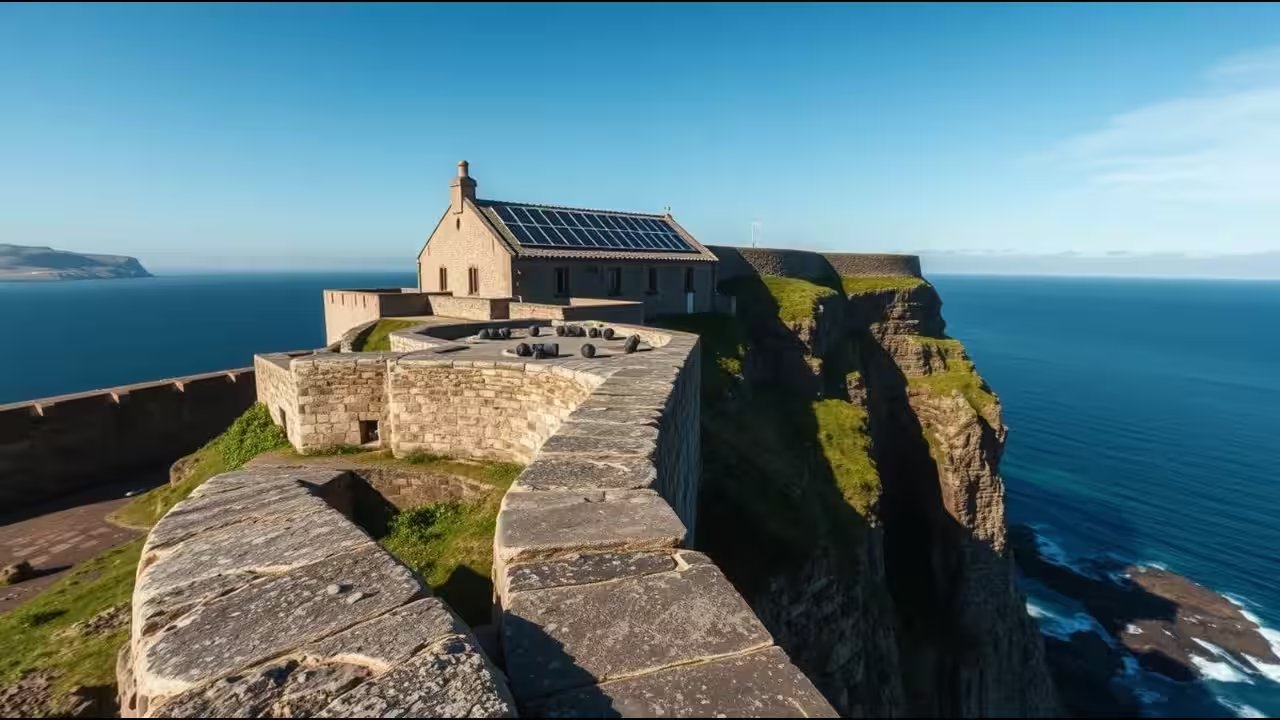
Mike Conner, former CEO of Appsbroker, snapped up Thorne Island in 2017 for a modest £500,000 after spotting a viral video of the derelict fort. He poured roughly £2 million into a decade‑long overhaul that replaced rusted artillery with solar panels, battery storage and heat pumps, turning the 19th‑century bastion into an off‑grid retreat capable of hosting 20 guests.
The island’s isolation forced the project to rely on helicopter and boat lifts; hundreds of flights ferried timber, fixtures and a crew that camped on the rocks for years. The restoration preserved exposed granite walls and vaulted ceilings, but added a modern plumbing network, a dedicated sewage treatment plant and a water‑treatment system that lets the fort operate without mainland utilities.
Today the property spans just over 8,000 square feet, with five bedrooms, an open‑plan kitchen, a games room, a rooftop bar and a private jetty and helipad. Its Grade II* listing and 2.5‑acre footprint offer a unique blend of heritage and self‑sufficiency that appeals to high‑net‑worth buyers and boutique hospitality operators.
Strutt & Parker launched the sale in August 2025 at a price of £3 million, a 20‑percent premium over Conner’s purchase price. The agency will close the deal by the end of October, inviting offers from investors, developers and luxury homeowners.
For local fisherman Tomas Hughes, the island’s new status feels like a fresh chapter: "We used to bring supplies by boat, now the helipad brings a different kind of traffic," he says. If the sale goes through, the fort could host exclusive events or even a boutique hotel, breathing new life into Pembrokeshire’s maritime heritage.