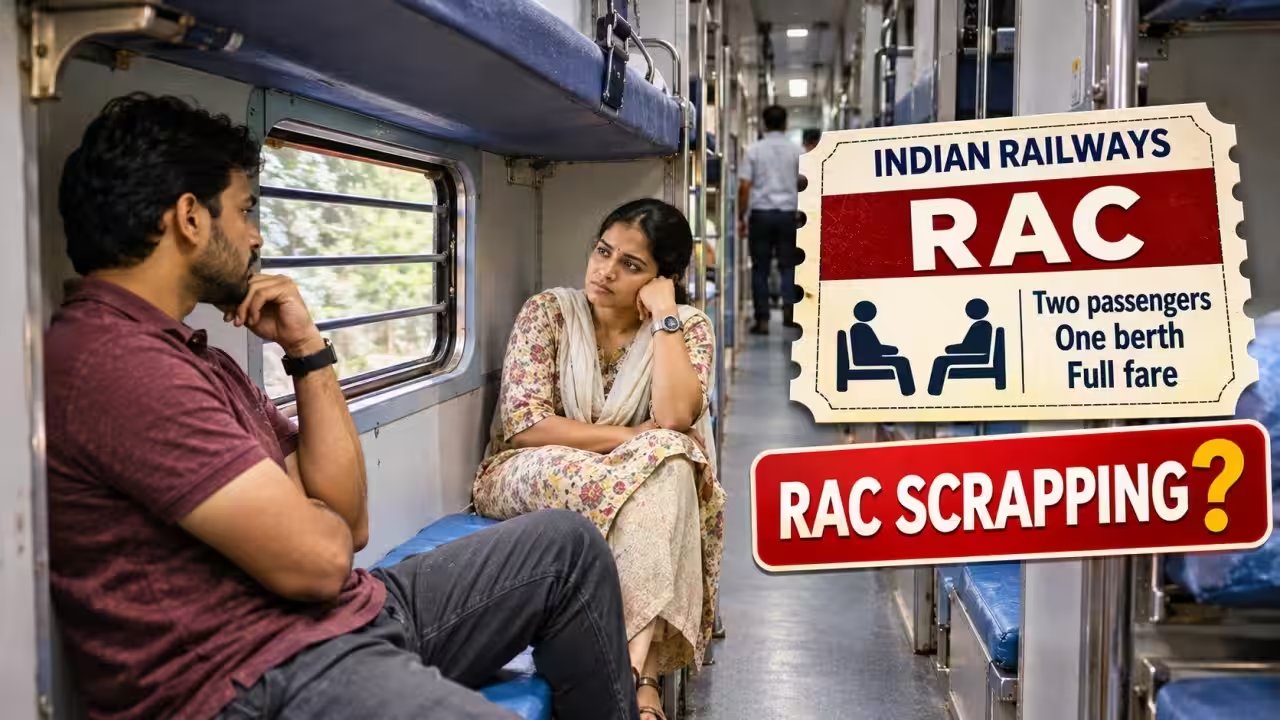
Indian Railways is actively examining a proposal to scrap its decades-old Reservation Against Cancellation (RAC) ticket system, targeting an arrangement that compels two passengers to split a single berth while charging each traveler full rail fare.
The math has drawn fire. Two passengers occupy one side-lower berth, yet the national transporter extracts two full tickets for half the sleeping space.
Now, the railway administration is weighing whether to overhaul or entirely discontinue the arrangement. The move addresses growing passenger grievances over travel discomfort, personal privacy, and the financial equity of charging full price for a half-seat.
The RAC mechanism dates back to an era when railway reservations were processed manually on paper charts, long before digital networks tracked cancellations and vacant berths in real time. Back then, allocating two passengers to one berth served as an operational buffer. If one passenger failed to turn up or canceled, the other inherited the full berth.
Yet the digital booking era transformed operations while the legacy ticketing rule stayed frozen in time.
Under current rules, an RAC ticket guarantees boarding access and a confirmed sitting berth in a reserved coach. It guarantees nothing more. Full sleeping space remains contingent on cancellations or no-shows before departure.
There is a view that when a passenger isn’t getting full sleeping space, it may not be appropriate to charge the full fare.
Senior Railway Official
A parliamentary panel recently escalated the issue, questioning the justification of collecting full fares without delivering full berths. The panel urged Indian Railways to reform the structure so that travelers are not penalized financially while enduring cramped journeys.
Beyond ticket costs, on-board logistics create friction. Ticket checking staff face persistent conflicts when male and female strangers are allotted the same shared berth. Train ticket examiners often find it impossible to reassign seating in fully packed coaches.
| Reservation Parameter | Existing RAC Framework | Scrutiny & Proposed Change |
|---|---|---|
| Berth Allocation | Two passengers share one berth (sitting space only) | Potential discontinuation of shared-berth bookings |
| Fare Structure | 100% full passenger fare charged to both travelers | Scrutinized by parliamentary panel as unjustified |
| Upgrade Hierarchy | Priority over waitlisted passengers on cancellations | Direct confirmed allotment under consideration |
| Cancellation Window | Online refund valid up to 30 minutes before departure | Retained under standardized railway refund rules |
RAC ticket holders currently enjoy first priority when cancellations occur. When passengers cancel before departure, those vacant berths transfer to RAC travelers before waitlisted passengers receive confirmed accommodation. Berths that open up en route are likewise reassigned under existing travel rules.
Passengers who retain RAC status up to departure can cancel tickets online or claim refunds up to 30 minutes before the scheduled departure of the train. If a train is canceled outright, the system processes refunds automatically.
Railway authorities are continuing internal assessments on coach capacity and revenue implications before finalizing a formal recommendation for ministerial sign-off.