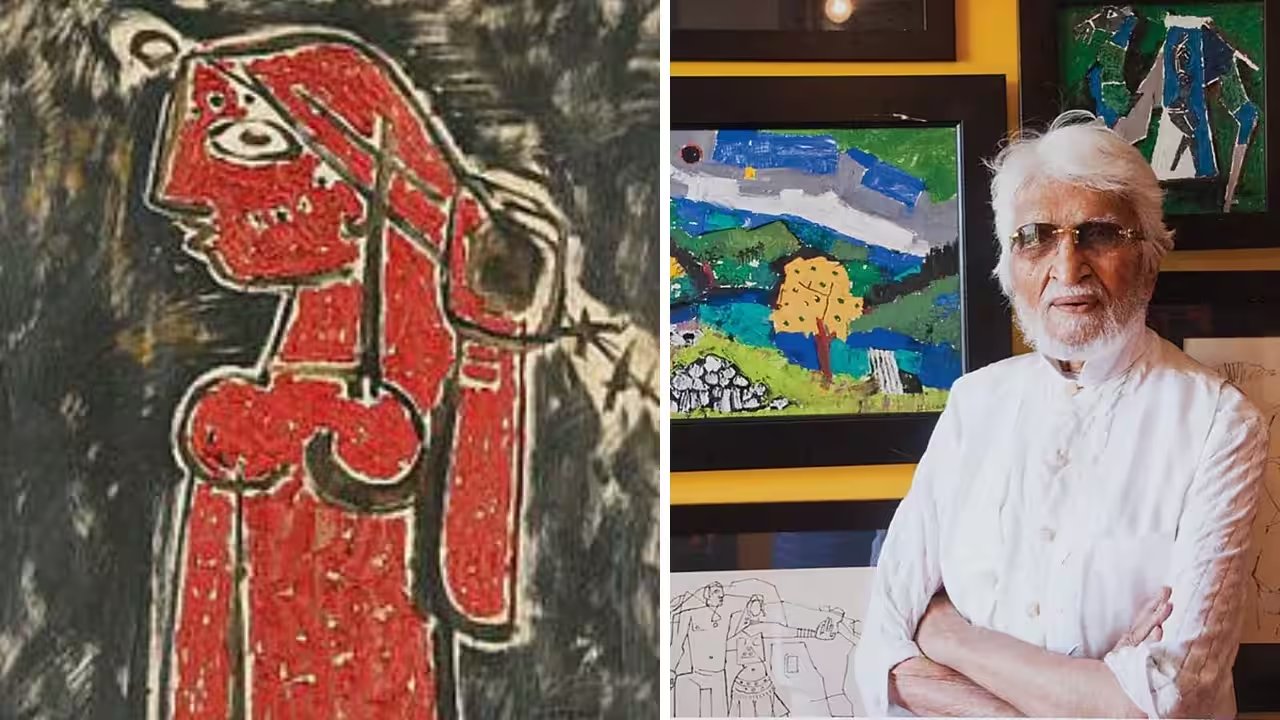
The number is almost absurd. ₹65 crore for a canvas that was estimated to fetch a mere ₹3-5 crore. At Pundole’s Fine Art Sale in Mumbai on September 24, bidders went to war over M.F. Husain’s 'The Red Girl,' a 1952 piece that has now become the top-selling lot of the 81-lot auction. To put the scale in perspective, the final price was 13 times the upper limit of what experts thought the market would bear.
But why this specific painting? It’s not just a Husain. It’s a visual bridge between ancient Indian sculpture and the raw, abstract energy of the Progressive Artists’ Group. The figure is painted in a deep, earthy red, echoing the sandstone of Mathura’s yakshi figures, yet Husain broke the form. The lower limbs are fragmented, deliberately incomplete, a nod to a broken statue he likely saw during a 1952 visit to the National Museum with F.N. Souza. It’s a modernist deconstruction of a classical icon, and collectors are paying a premium for that specific historical DNA.
The provenance is just as juicy as the price tag. This wasn't some dusty attic find. It’s documented back to 1955 in Peerbhoy’s 'Paintings of Husain' and was part of the collection of Emanuel Schlesinger, the Austrian émigré who was a critical patron of Bombay’s modern art scene. In an era where 'provenance' is just a buzzword, this piece has a paper trail that stretches back to the very foundations of post-Independence Indian art. That kind of history commands a premium.
This hammer price isn't an anomaly, either. The same sale saw Jangarh Singh Shyam’s 1999 'Untitled' jump from a ₹4-6 crore estimate to a ₹18 crore sale. Reports from Mint indicate that Indian auction sales have spiked sharply in early 2026, driven by a widening collector base that values rarity and transparency. The market is maturing, and the entry price for serious modernist pieces has officially jumped.
For the average reader, this is a marker. If you’ve been waiting for a dip in the Indian modern art market to step in, the 'dip' is gone. The floor price for documented Husain, Raza, or Souza works has been reset. If you’re tracking the space, keep an eye on Pundole’s upcoming catalogues; the appetite for works with this level of historical documentation is only getting hungrier.