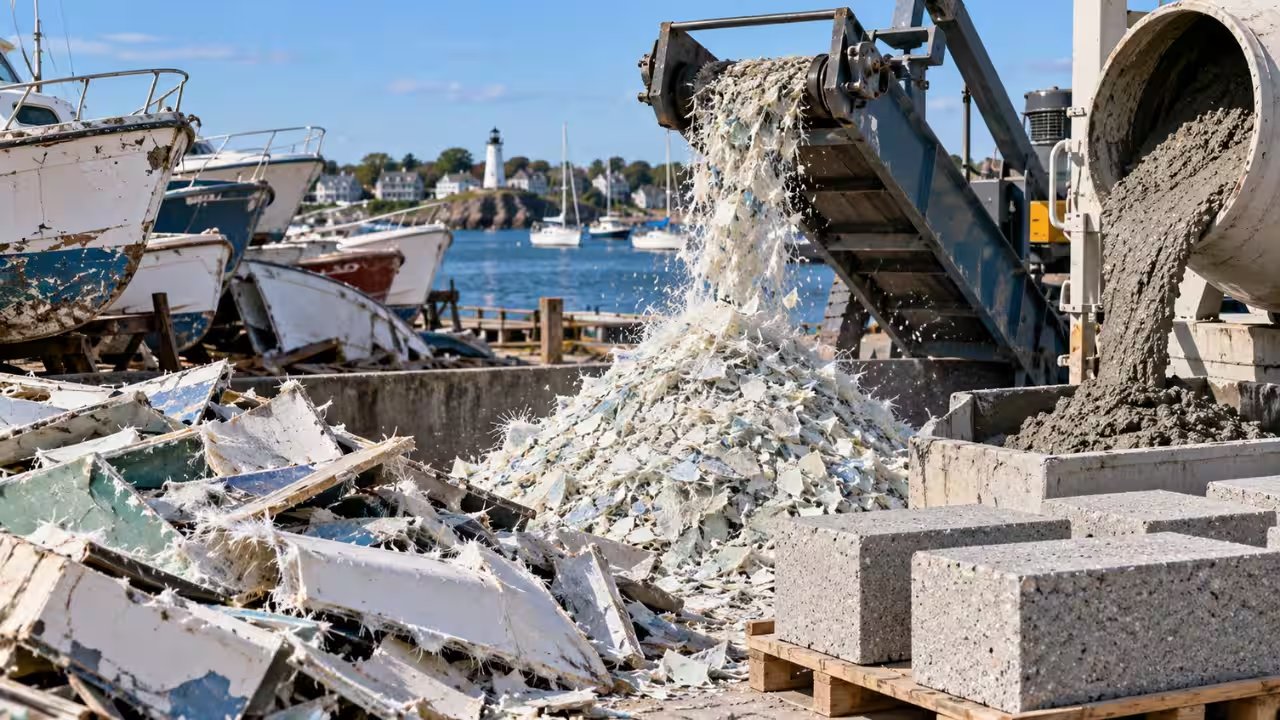
Brian Dursi and the Rhode Island Marine Trade Association (RIMTA) completed a pilot that shredded 80 short tons of fiberglass from abandoned boats and shipped the shredded material to a cement plant in Rhode Island in early 2024. The project ran under a $105,000 grant from NOAA and aimed to show that fiberglass could be co‑processed in cement kilns, replacing some raw materials and providing heat.
The program’s success attracted interest from New England states—Massachusetts, Connecticut, Maine—and prompted exploration by Virginia, Maryland, and California. RIMTA’s report, released in May, noted that the pilot recycled nearly 20 metric tonnes of fiberglass across New England during the grant period.
Cost remains a hurdle. Dismantling, shredding, transporting and kiln integration add up, and the pilot paused when the NOAA grant ran out. RIMTA is now seeking private partners to make the process financially sustainable.
If RIMTA can secure further funding, the model could help process the 200,000 recreational boats that reach end‑of‑life each year, cutting landfill waste and providing a new feedstock for the cement industry.
The next step will be a national rollout plan, with the federal government expected to outline a vessel‑recycling framework by the end of 2025.