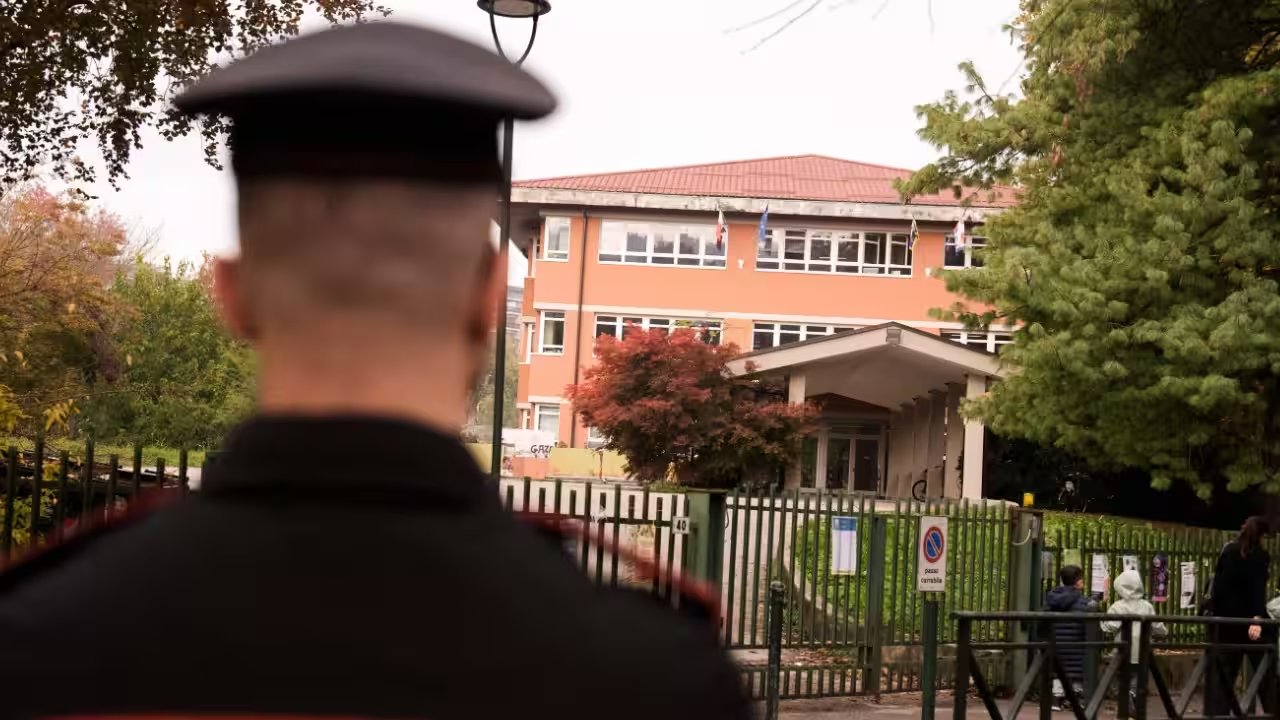
Italian police ordered the immediate evacuation of more than 300 schools across the country on Wednesday after coordinated digital bomb threats warned of a mass civilian attack and claimed an explosive device had been planted inside Prime Minister Giorgia Meloni's vehicle.
Panic rippled through classrooms from Rome to Friuli in the north down to Basilicata in the south. Tens of thousands of students spilled onto streets and sports grounds as anti-sabotage units deployed with bomb-sniffing dogs to sweep classrooms, gymnasiums, and administrative wings. Classes ground to a halt. Classes stayed suspended for hours.
No explosives were uncovered.
A government source confirmed the threatening email bore the signature of an individual identifying himself as “Mikhail Andropov, leader of the Vilayat of Misoginistan.” The dispatch warned of a looming “genocide against the Italians,” claiming a remote-detonated weapon sat primed inside an educational institution alongside charges strapped directly to Meloni’s official vehicle engine.
Education Minister Giuseppe Valditara confirmed that at least 300 schools logged the identical alert before mid-day, warning that the final tally could climb higher as district authorities audit internal servers. In Rome, headmasters dispatched emergency notices to parents confirming students had been moved out of school yards into monitored safety zones.
The coordinated alert struck the republic less than ten days after an identical wave hit more than 270 Italian schools on November 2. Those alerts triggered massive security deployments across Rome and northern provinces before investigators determined them to be false. Rome police confirmed a specialized cyber-investigation is underway to track the digital origins of the transmission.
| Security Metric | Operational Detail |
|---|---|
| Educational Facilities Evacuated | 300+ schools across Italy |
| Regions Affected | Rome, Friuli (North), Basilicata (South) |
| Sender Alias | 'Mikhail Andropov, leader of the Vilayat of Misoginistan' |
| Prior Incident Benchmark | 270 schools targeted on November 2 |
| Target Allegations | School detonator; vehicle engine of PM Giorgia Meloni |
Yet the digital signature extends far beyond the Italian peninsula. The pseudonym “Mikhail Andropov” previously surfaced in menacing communiqués dispatched to European television broadcasters, where the author claimed responsibility for a string of recent bomb threats directed at commercial passenger flights.
The school evacuations coincide with a widening pattern of low-level hybrid friction across Europe. Recent weeks saw anonymous threats ground civilian flights and cyber strikes hit commercial refrigeration infrastructure. In France, malicious digital intrusions against industrial cold-storage units forced medical staff to rush critical blood bank reserves to backup freezers to avert catastrophic spoilages.
Investigators have not yet established direct operational links tying the Italian school threats, aviation hoaxes, and European refrigeration breaches into a unified command structure. But state leadership remains on edge.
Defence Minister Guido Crosetto slammed the maneuvers as calculated psychological warfare intended to paralyse public life through dread.
Law enforcement agencies are working to distinguish genuine dangers from threats made by people seeking to cause disruption. Such incidents could become increasingly frequent.
Guido Crosetto, Defence Minister
Interior Minister Matteo Piantedosi convened an emergency summit with Italy’s senior intelligence and security directors on Tuesday to formulate countermeasures against escalating cyber provocations. The national security review concluded that the recent wave of disruptions aims not merely to stall daily routines, but to trigger unfounded alarm, undermine state apparatuses, and erode citizen faith in public institutions.
Former Interior Minister Marco Minniti urged the government to establish an elite intelligence command dedicated exclusively to cyber sovereignty. Minniti stressed that the threats transcend partisan politics and strike directly at the core of national security.
Italian postal police and anti-terrorism investigators are currently tracing the server nodes, proxy relays, and encrypted networks utilized to route Wednesday's dispatches. Police commands across all 20 Italian administrative regions will maintain tightened vigilance around municipal schools and state infrastructure over the coming days.