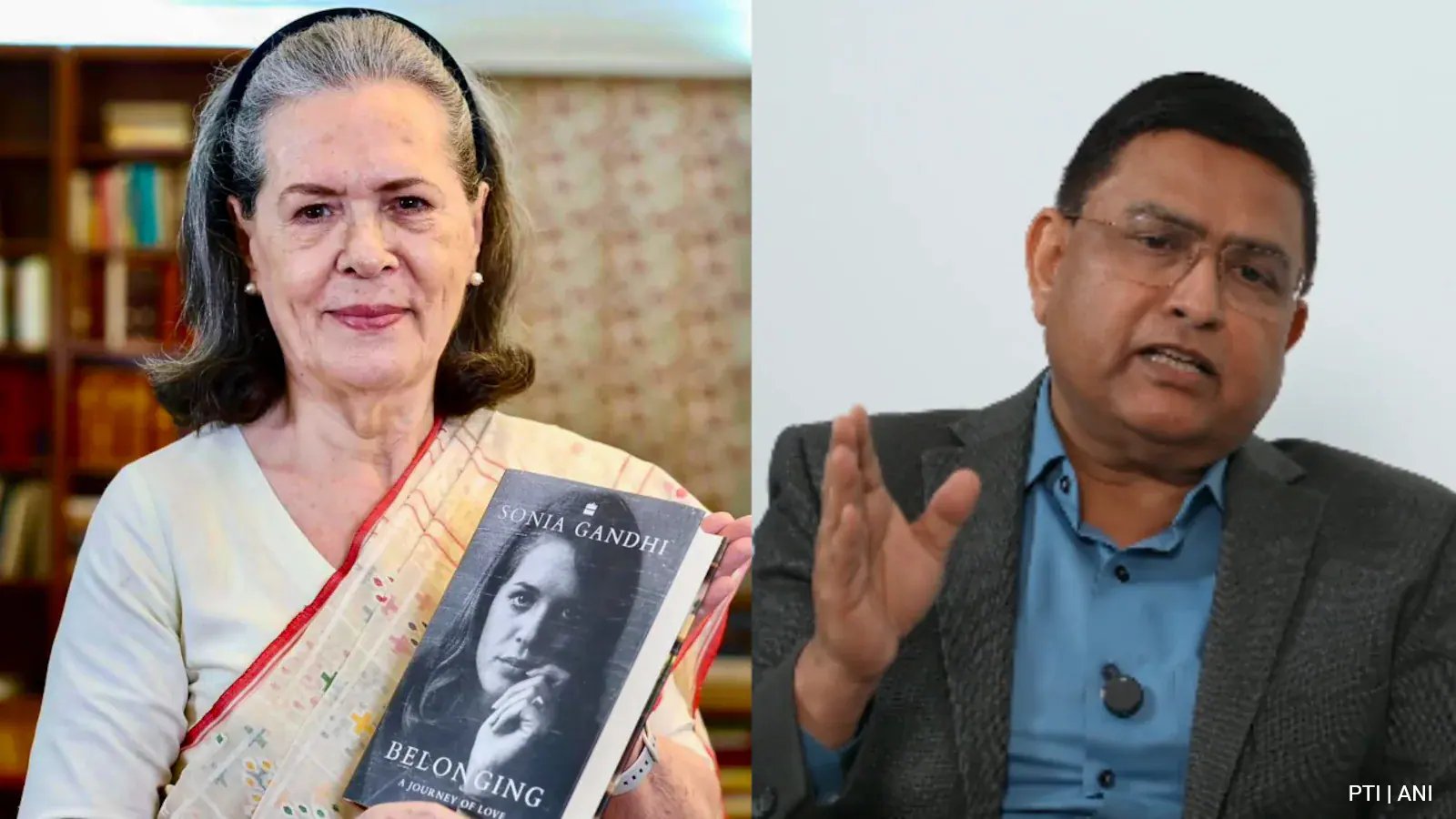
Former Central Bureau of Investigation Special Director Rakesh Asthana has forcefully rejected assertions in Sonia Gandhi’s memoir describing the cause of the 2002 Godhra train burning as "disputed."
The case is legally settled. Asthana, who spearheaded the Gujarat Police Special Investigation Team that probed the carnage, stated that exhaustive forensic testing and subsequent judicial rulings had established intentional arson beyond any doubt.
In her memoir, Belonging: A Journey of Love, Gandhi addressed the flashpoint that precipitated the statewide 2002 Gujarat riots:
The riots were triggered when four coaches of the Sabarmati Express were set on fire and 59 pilgrims died. The train was returning to the state capital Ahmedabad from Ayodhya, carrying Hindu karsevaks, volunteers for the Ram temple. The cause of the fire remains disputed, but the turmoil that followed spread to many parts of the state.
Sonia Gandhi, *Belonging: A Journey of Love*
Asthana dismantled the claim directly.
"That is completely wrong, the investigation is authentic," Asthana stated. "It has been proved in the court of law. Even now, if someone is creating doubt about it, then it is for political reasons; there can be no other explanation for it."
The former investigator emphasized that scientific analysis conducted during the probe established that an inflammable liquid accelerated the blaze inside the train.
"Investigations have been completed; conviction has been secured," Asthana said. "It has been an intentional fire caused by an inflammable liquid. I disagree with the statement that the cause of fire is still uncertain. Secondly, only S6 bogie was targeted and set on fire."
Asthana pushed back against accusations that the investigation had been weaponized or colored by sectarian motives.
"All the people who died in Godhra were Hindus," Asthana noted. "And whoever's death it may be — whether a Hindu's, a Muslim's, a Christian's, or a Sikh's — death is death, murder is murder. So we investigated it as a criminal act. But unfortunately, the issue was made out in such a way that an attempt was made to investigate the case to benefit Mr. Modi."
The fatal incident occurred on February 27, 2002, when a violent mob targeted the Sabarmati Express at Godhra railway station as it carried Hindu karsevaks returning from Ayodhya. The blaze consumed the S6 compartment, killing 59 people, including women and children. Communal riots erupted across Gujarat in the immediate aftermath, leaving hundreds dead across the state.
The findings of Asthana's investigative team underwent rigorous scrutiny across three tiers of the Indian judicial system over the course of two decades.
| Judicial Forum | Year | Legal Determination |
|---|---|---|
| Special SIT Court | 2011 | Convicted 31 individuals for involvement in the train arson |
| Gujarat High Court | 2014 | Upheld conviction of 11 convicts while acquitting 20 others |
| Supreme Court of India | Final Appeal | Dismissed convicts' appeals; affirmed the High Court verdict |
With the Supreme Court of India having formally dismissed all substantive appeals filed by the convicts, the judicial record remains locked in Indian jurisprudence.